

Today in the World Tour peloton we only see integrated handlebars. Premium framesets work as a system, both aerodynamically and in terms of design. This system includes both the seatpost and the cockpit. This review is about one of these integrated handlebars.
We recently published the review of the Triaero Flyee frameset, which is the foundation of our Chinese road bike project. The Blade-R cockpit was designed specifically for this frameset. However, it is sold separately. This allows the frameset to remain under the US$1,000 price point.
 Aero aspects and material quality
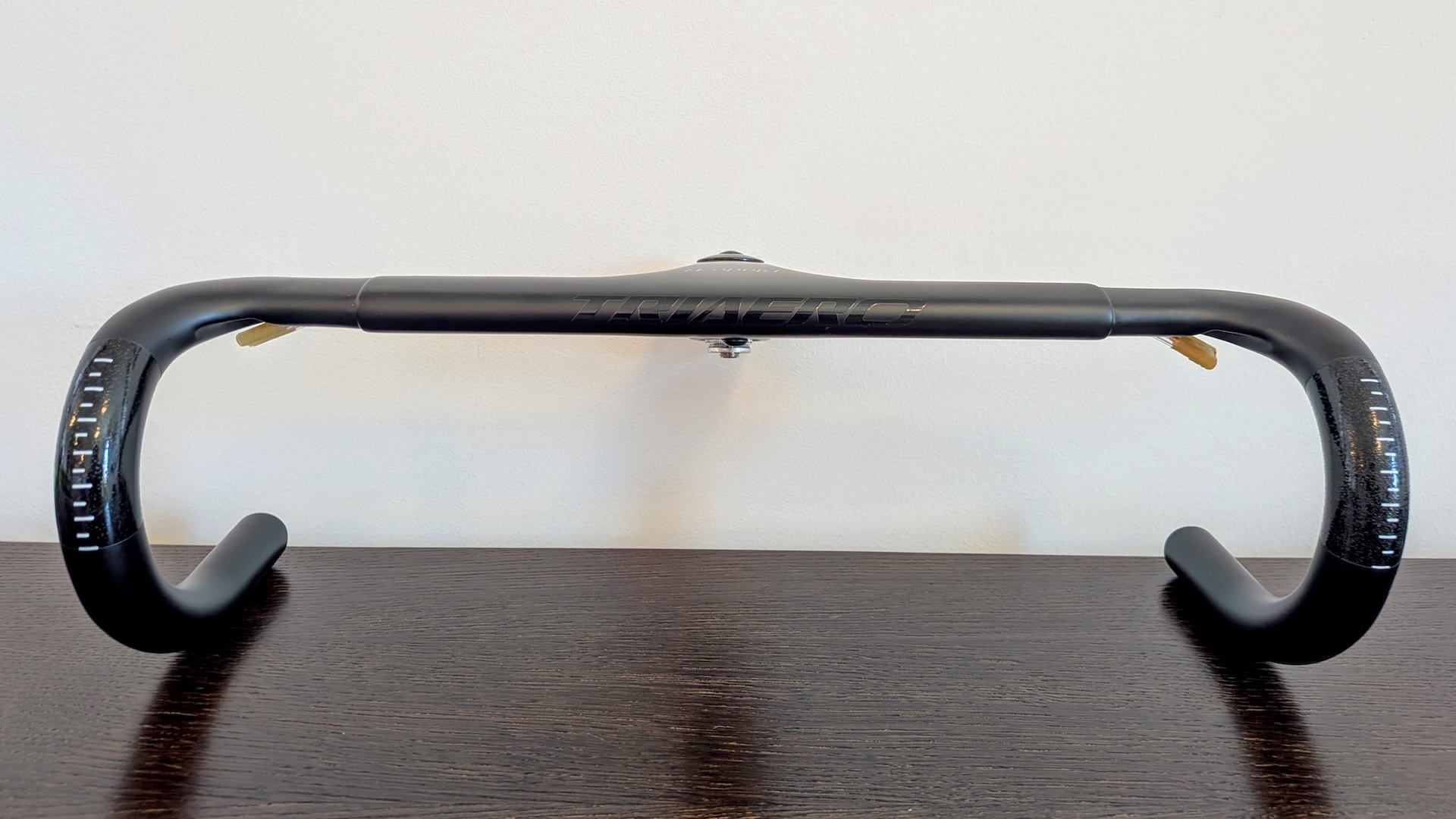
Aerodynamics is an important aspect of modern road bikes. The Blade name comes from the flat, blade-like shape of the top section, while the R stands for Road, because a gravel version is also available. In line with today’s trends, the bar tape ends just after the upper bend. A small ridge separates the two sections. The stem section gradually widens towards the handlebar clamp area, giving it an ergonomic appearance.
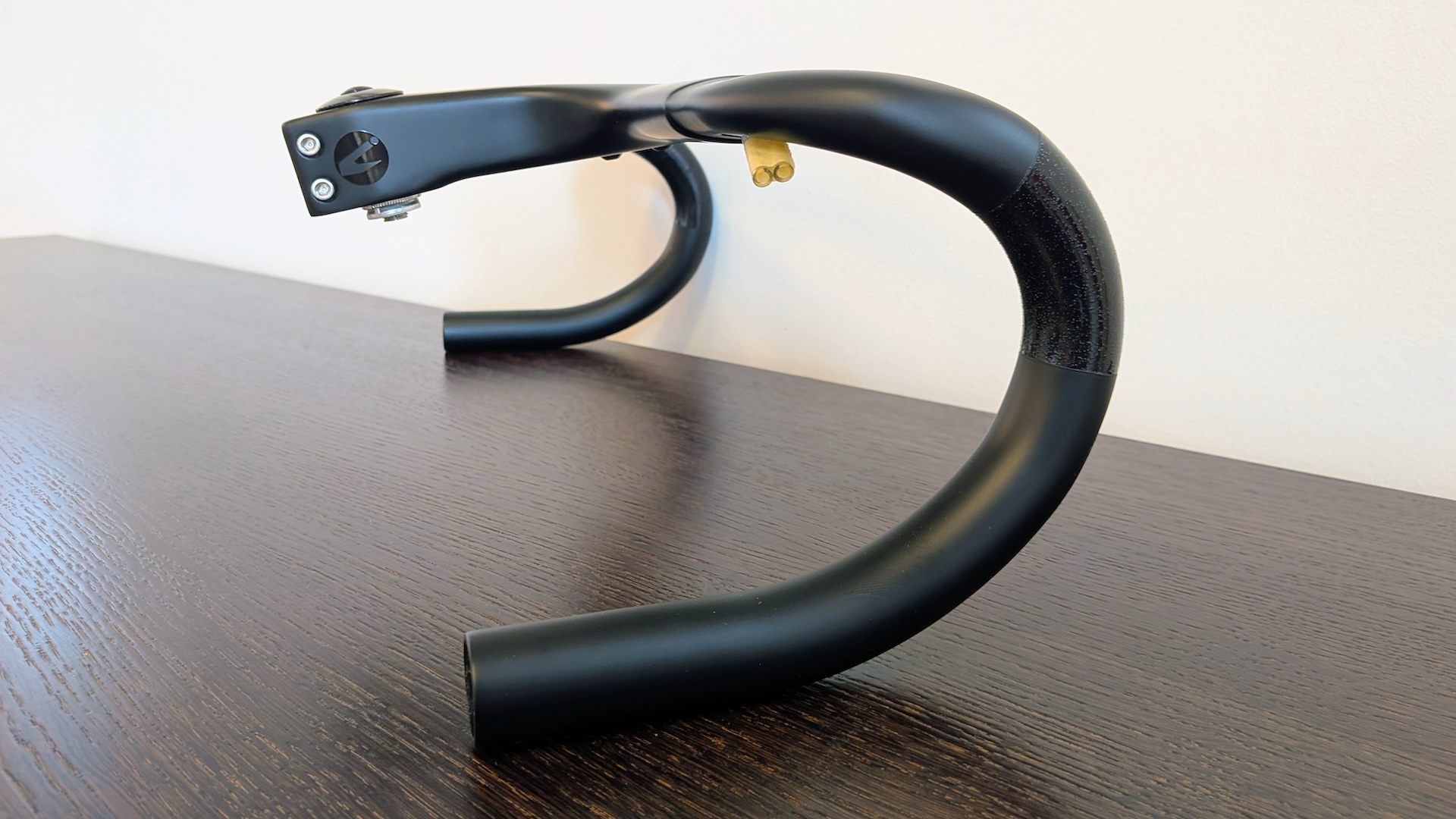 The cockpit is, of course, full carbon and made from Toray T700 material. This material choice suggests that vibration damping and flexibility were considered more important than achieving the lowest possible weight. I chose the 420×100 mm version. The claimed weight is 370 grams, and my scale showed exactly the same.
Sizing and other details
The cockpit is available in five sizes: 380×90, 400×90, 400×100, 420×100 and 440×110 mm. The drops flare slightly outwards, and the quoted 420 mm width refers to the drops. This means the handlebar is only 400 mm wide at the brake lever position, so it is worth keeping this in mind when choosing a size.
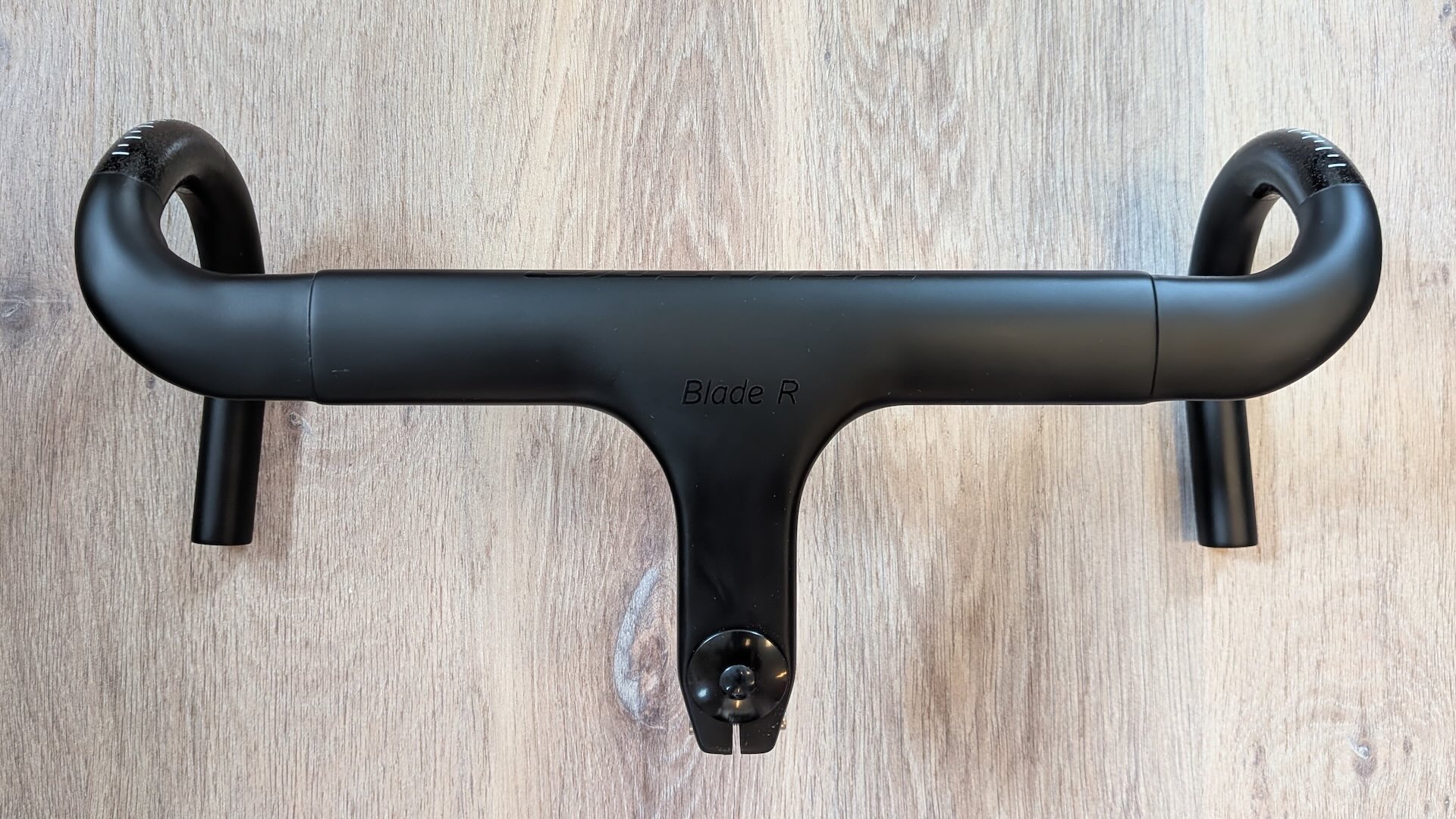 The handlebar has compact dimensions, with a 70 mm reach and a 125 mm drop. It was designed specifically for internal cable routing. It comes with pre-installed guide tubes not only for the brake hoses but also for optional shift cables. For bike computers there is a standard two-bolt mounting interface.
Build quality and included parts
The Blade-R cockpit costs US$198, approximately €175, including shipping and import duties. If you order it together with the Flyee frameset, it comes with everything needed between the headset bearing and the cockpit.
A C-shaped compression ring sits on top of the headset bearing. It allows the two brake hoses and, if used, the two shift cables to pass through. On top of this sits the plastic bearing cover, followed by three spacers in 20+10+5 mm sizes, and finally an upper cover that guides the cables between the spacers and the cockpit.
I really like the build quality. The surface has a simple UD matte finish. There is a Triaero logo on the front of the top section and a small Blade-R logo on the stem section. I also like that it uses a standard round top cap. They didn’t try to hide the stem bolts with a cheap moulded plastic cover like Trek does.
My initial concerns
I prefer the top forward section of the handlebar to be flat, with the brake lever also being flat or rising slightly, so the two form an almost continuous line. With a separate handlebar and stem, we can adjust the angle to achieve this. Here, however, the position is fixed.
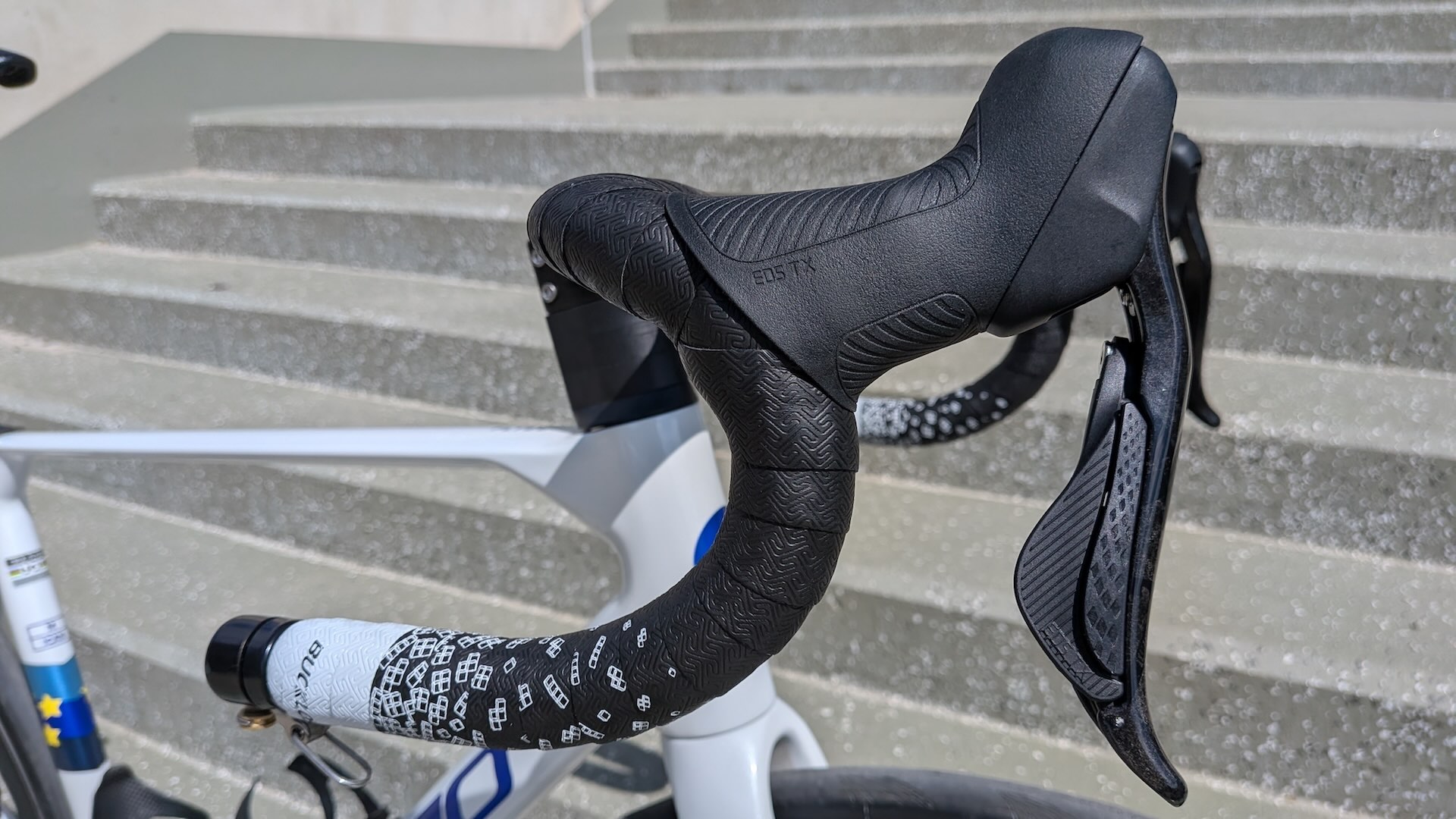
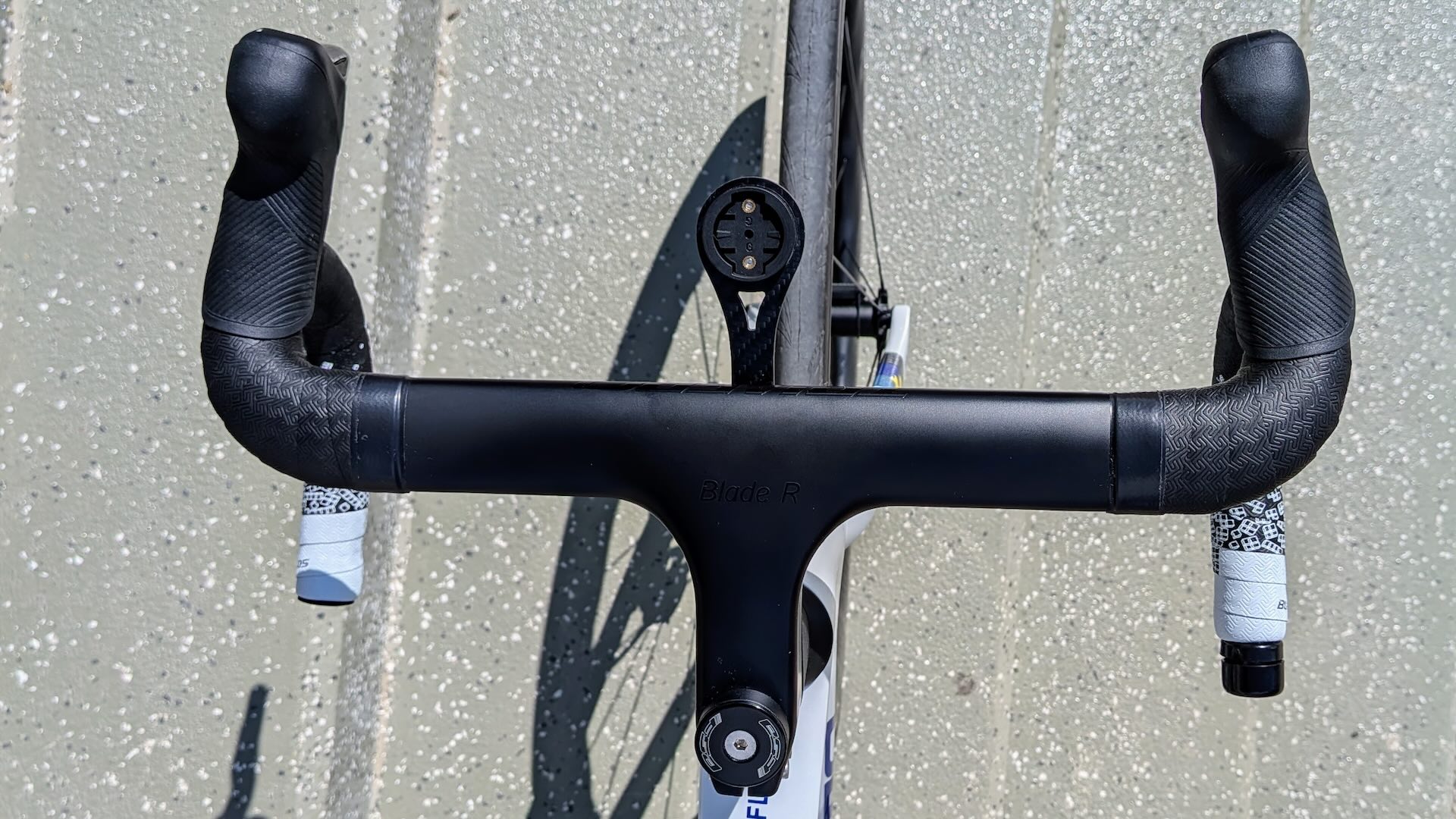 As the handlebar turns forward, it immediately starts to slope down. In my case, this means the point where the brake lever meets the handlebar sits about 5–6 mm below the top section. It is not ideal, but it isn’t uncomfortable either, and I got used to it.
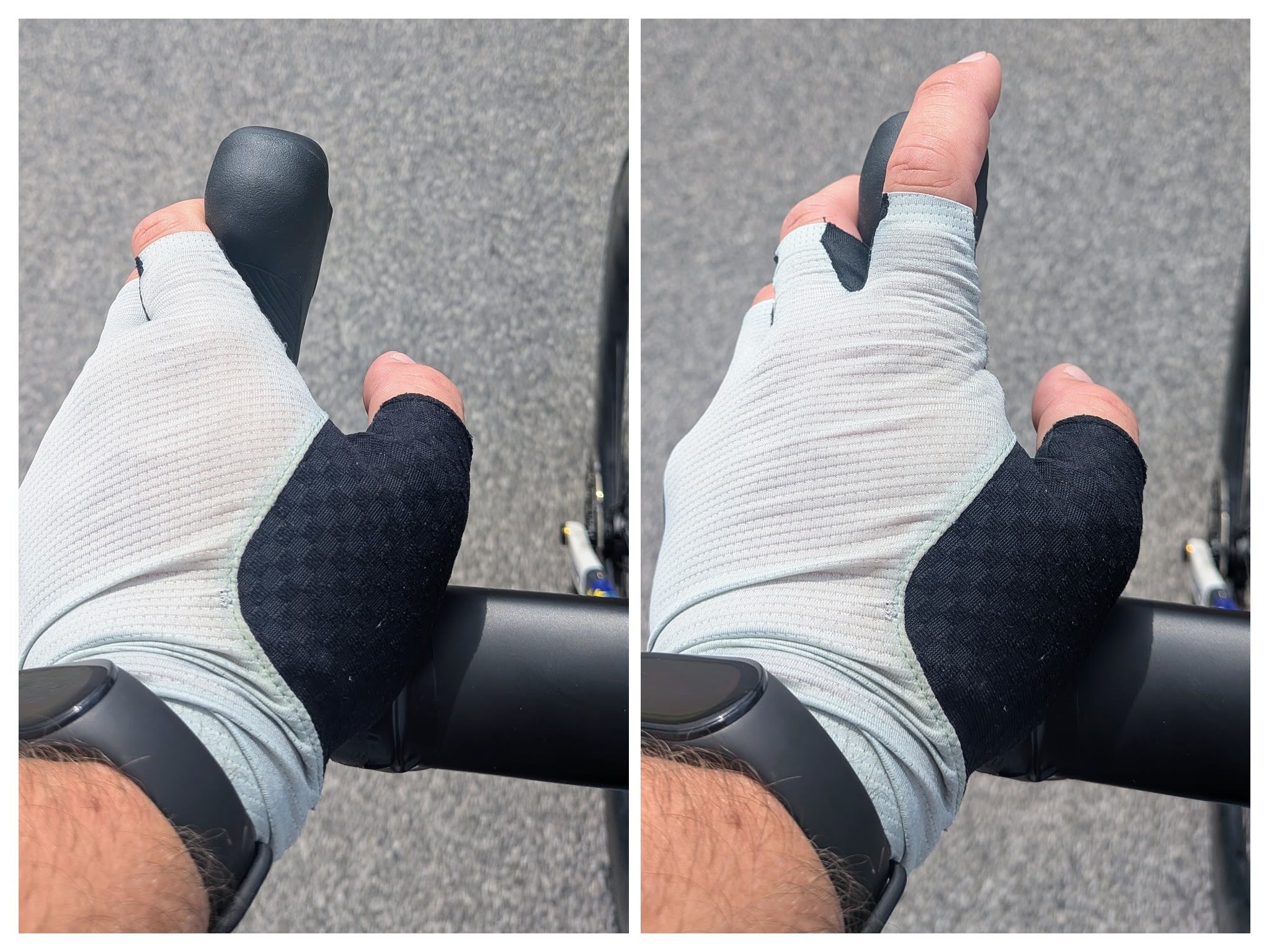
I also like to hold the handlebar on the tops, so I was concerned that the bar tape ending early would bother me. However, I got used to it quite quickly and found hand positions that are comfortable.
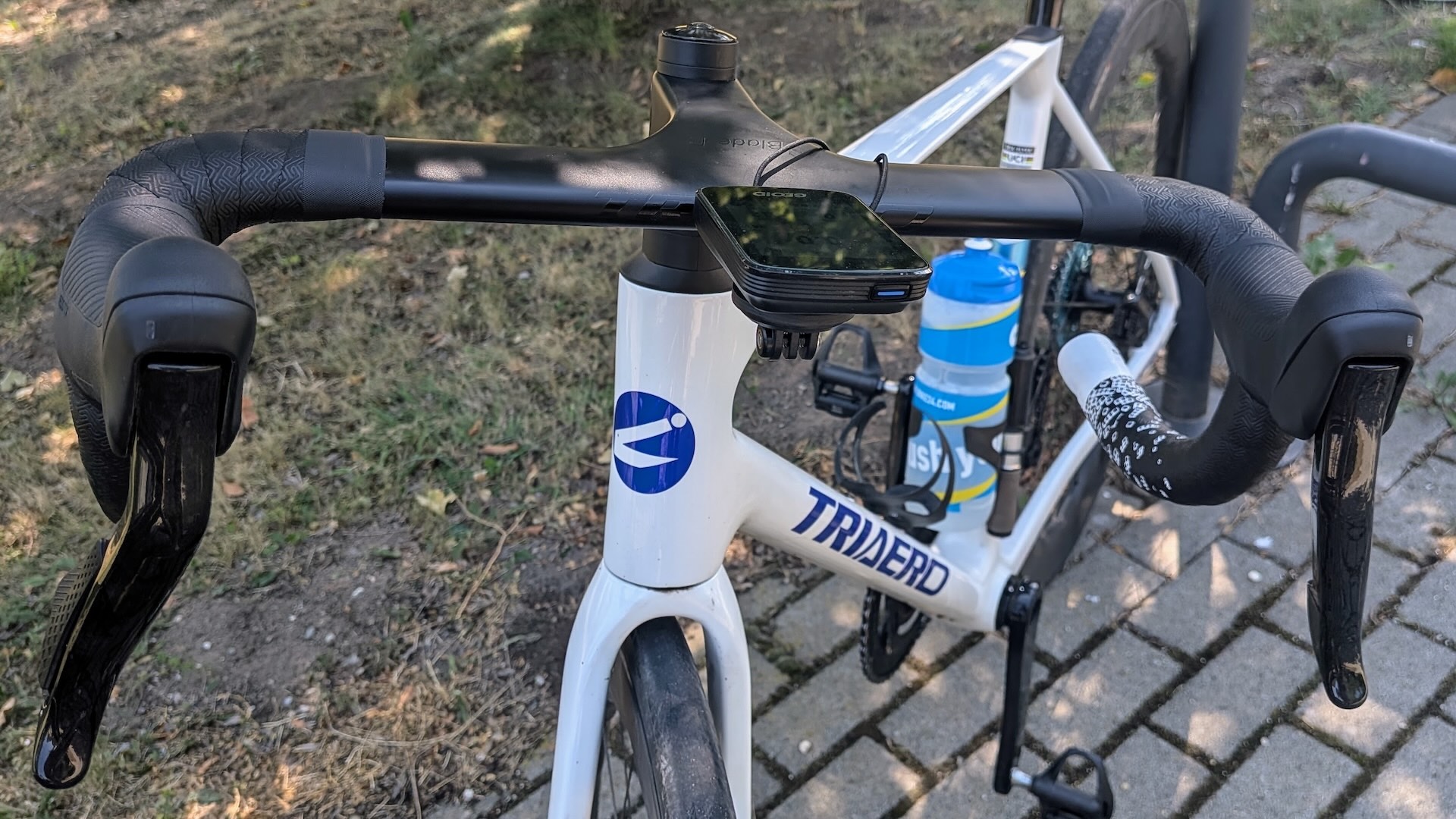 I was also slightly concerned about the 400 mm top width of the 420 mm handlebar, because I had always used 420 mm handlebars before. This also turned out not to be a problem. I don’t really miss those extra 20 mm when riding on the tops.
During the ride: agility and comfort
The Flyee is a really agile bike, and the cockpit plays its part in this. I like the short 70 mm reach, and the 400 mm top width also contributes to the sportscar-like handling. The additional width in the drops is especially beneficial on twisty mountain descents.
 I can’t separate how much the fork and the cockpit each contribute to vibration damping and flexibility. However, they work really well as a system. I’m satisfied with the comfort on rough, coarse asphalt.
Verdict
I had some concerns about integrated cockpits before building the bike, but they turned out to be unfounded. I don’t say the Blade-R is perfect in every aspect. However, it didn’t give me any disadvantages that would make me prefer a separate handlebar and stem.
On the other hand, this is what visually completes the Flyee frameset. Without it, the bike wouldn’t feel complete to me.
I’m satisfied with this product. My opinion is simple: if you decide to buy a Triaero Flyee frameset, buy it together with the Blade-R cockpit. That’s how the whole package feels complete.
Further articles in this project:
Superteam S-All Carbon Ultra H2 review: Premium Chinese Carbon Wheelset
A New Challenger in Electronic Shifting: Inside the WheelTop EDS Platform and TX Road Groupset
The Chinese road bike project – How Does a €3,300 Build Perform in 2026?
ICAN Triaero Flyee test – How performs a $899 chinese carbon road frameset?
WheelTop EDS TX review – A Competitive Chinese Road Groupset?



