

The Chinese bike industry is evolving rapidly, and their own brands are becoming increasingly accepted in the Western cycling community. However, derailleur systems remain particularly challenging territory. Is it possible to break through in this category? The WheelTop EDS system is definitely something to reckon with in the future.
In recent years, Chinese engineers have been investing heavily in R&D. As a result, more and more Chinese brands are entering the market and gaining acceptance among Western riders. Nowadays, many riders are buying Chinese carbon wheelsets. For example, the Superteam H2 wheelset we tested last autumn is also used by the Hungarian U23 team, Kőbánya Cycling Team.
Framesets are a more complex topic, as far fewer riders build bikes from scratch — but but here too, Chinese brands are steadily gaining ground. However, the world of derailleur systems is dominated by two manufacturers. This is an area where we are reluctant to make compromises. But is the WheelTop EDS system a compromise? That’s exactly what we set out to find out this season.
What You Need to Know About WheelTop
The company was founded in 1951 and has long been an OEM manufacturer for major Western brands such as Giant, Trek and Decathlon. It also holds a majority stake in the Spanish company Rotor, which is well known for its high-quality cranksets and chainrings.
A few years ago, the company moved beyond OEM business and introduced its first electronic derailleur system for MTB. This was followed by a gravel version, then a road system, and most recently a time trial and triathlon setup, which is currently available for pre-order.
The Electronic Derailleur System platform – key features
One of the key characteristics of the system is its fully wireless operation, making installation straightforward on almost any bike, without the need for internal cable routing.
With mechanical shifting, a fixed number of gears is standard, and this logic has been carried over to electronic systems by the major manufacturers. In an indexed mechanical drivetrain, the shifter defines the number of gears. In an electronic system, however, the motor can move in virtually any increment, with gear steps determined by software.
WheelTop EDS derailleurs can be configured between 3 and 14 speeds via the dedicated WheelTop app on a smartphone. The batteries are integrated into the derailleurs and are not user-removable; they are charged via cable, using magnetic connectors. The system is rated IP67 for dust and water resistance.
EDS OX and EDS GeX – the off-road platform
The MTB version was the first to be released, and it is now already in its second revision. It consists of just two components: a rear derailleur and a shifter. The clutch-equipped rear derailleur can handle 10–52T cassettes. The integrated battery has a capacity of 800 mAh, which according to the manufacturer is enough for up to 20,000 shifts on a single charge.
 MTB version was followed by a gravel setup, offered only in a 1x configuration, in line with modern trends. The derailleur remains unchanged, but is also available with a shorter cage option, supporting up to a 10–46T cassette. WheelTop also developed a pair of drop bar brake/shift levers, and to complete the system, hydraulic disc brake calipers.
The mineral oil-operated calipers use Shimano-standard pads. This is not only beneficial because of the wide range of available options, but also because replacement pads are easy to find when needed.
EDS TX and EDS TT – road platform and TT specialisation
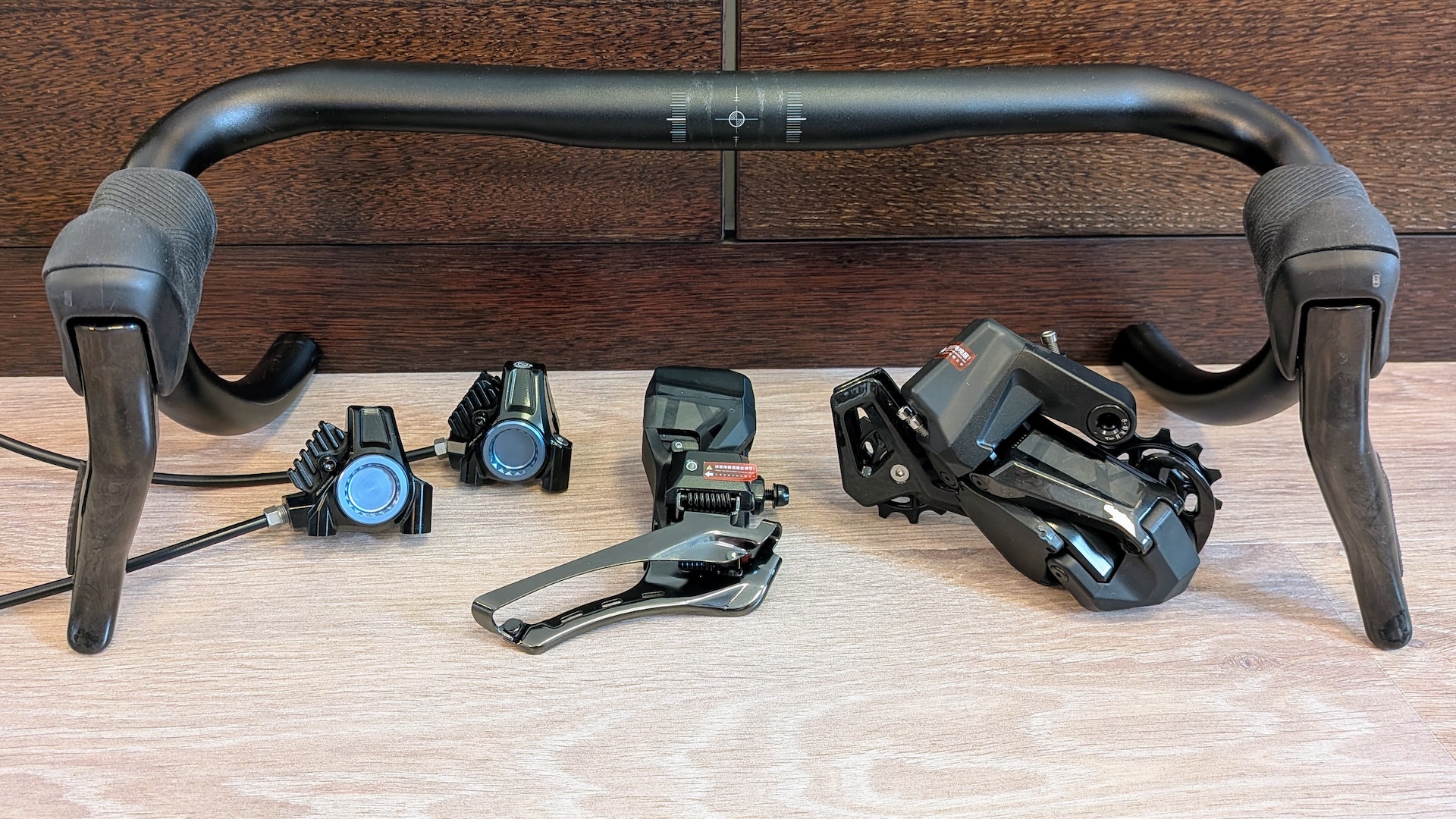
Because levers and brakes are exists, only road-specific front and rear derailleurs were needed to create the EDS TX road groupset. This rear derailleur can be handle 10-36T cassetes, has no clutch, and uses the same 800 mAh battery.
Front derailleur can handle a 16T difference, and the maximum chainring size is 53T, which is a bit unusual, as 54–40T is now standard for Dura-Ace, and pros often use even larger chainrings. The battery is logically only 500 mAh, as front shifting is used much less frequently.
The disc brake calipers are the same as on the gravel version, but the road set is also available for cable brakes, so it can be used to upgrade a rim brake road bike to electronic shifting.
Main difference between the road and the TT/triathlon set is the handlebar-end brake levers and the aerobar-end shifter buttons. This is a great move from WheelTop, because Shimano, for example, only offers such parts at the Dura-Ace level. The price of a pair of Dura-Ace brake levers and brake calipers is roughly the same as a complete EDS TT groupset, so it could have a strong future on the market.
Why is it so hard for new players to break into the drivetrain market?
When I started riding in the early 2000s, I mostly saw bikes equipped with Shimano systems. The rare exceptions were some SRAM-equipped MTBs and road bikes with Campagnolo. Later, SRAM started to gain market share, and with the acquisition of Truvativ and Avid they were able to offer complete groupsets. For about a decade now, they have been a serious competitor, on par with Shimano.
Some riders stayed, others switched, and of course many use both. We got used to the ergonomics and the way these systems work. We also got used to the fact that they perform reliably when properly maintained. Over the years, derailleur systems have essentially become a trust-based product, which makes it much harder for new players to enter the market.
I have to admit that among Chinese bike components, derailleur systems are the ones I am most skeptical about. Somehow my brain resists the idea, with a question in the back of my mind: can anyone else make a properly working drivetrain? We will soon find out, as I will be testing the WheelTop EDS TX groupset over the course of this season.
Why is it worth considering a WheelTop EDS TX groupset?
If we want to upgrade our road bike to electronic shifting, the ‘entry-level’ options from the two big players are 105 Di2 and Rival AXS. A 105 Di2 “upgrade kit” costs around €1000 based on pricing from a major European retailer. This includes two derailleurs, two levers, two brake calipers, the battery and cables, as well as a cassette and chain. If we exclude the latter two, the comparable price is around €930.
SRAM Rival E1 AXS costs about €1150, but this price also includes a crankset and two brake rotors. If we exclude the crankset, cassette, chain and rotors, the comparable price comes to around €820 — again based on the same retailer.
In comparison, the WheelTop EDS TX costs €659, shipped from an EU warehouse with delivery included. The package includes two derailleurs, two levers, two brake calipers and charging cables — which is why the above comparisons only consider equivalent components.
So in terms of price, the WheelTop system comes in at roughly 70% of Shimano and 80% of SRAM. It’s also worth noting that if we already have, for example, a 2×11-speed road bike, there is no need to replace the existing crankset, cassette or chain — unlike in the other two cases.
First impressions of the EDS TX
The quality of the parts doesn’t feel like what we associated with Chinese components twelve years ago. In fact, it feels very similar to what we get from Western brands today, and carbon is used in many areas.
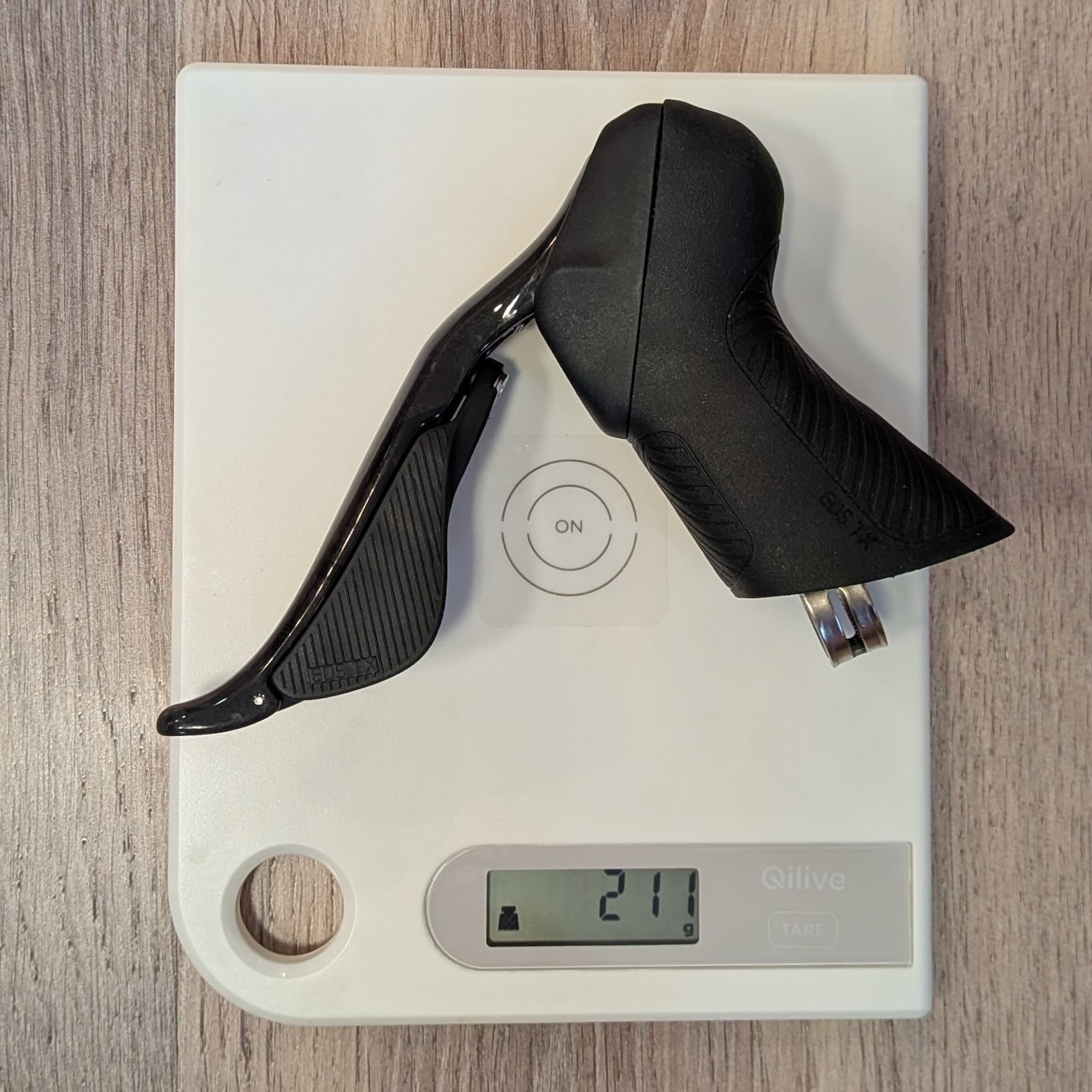
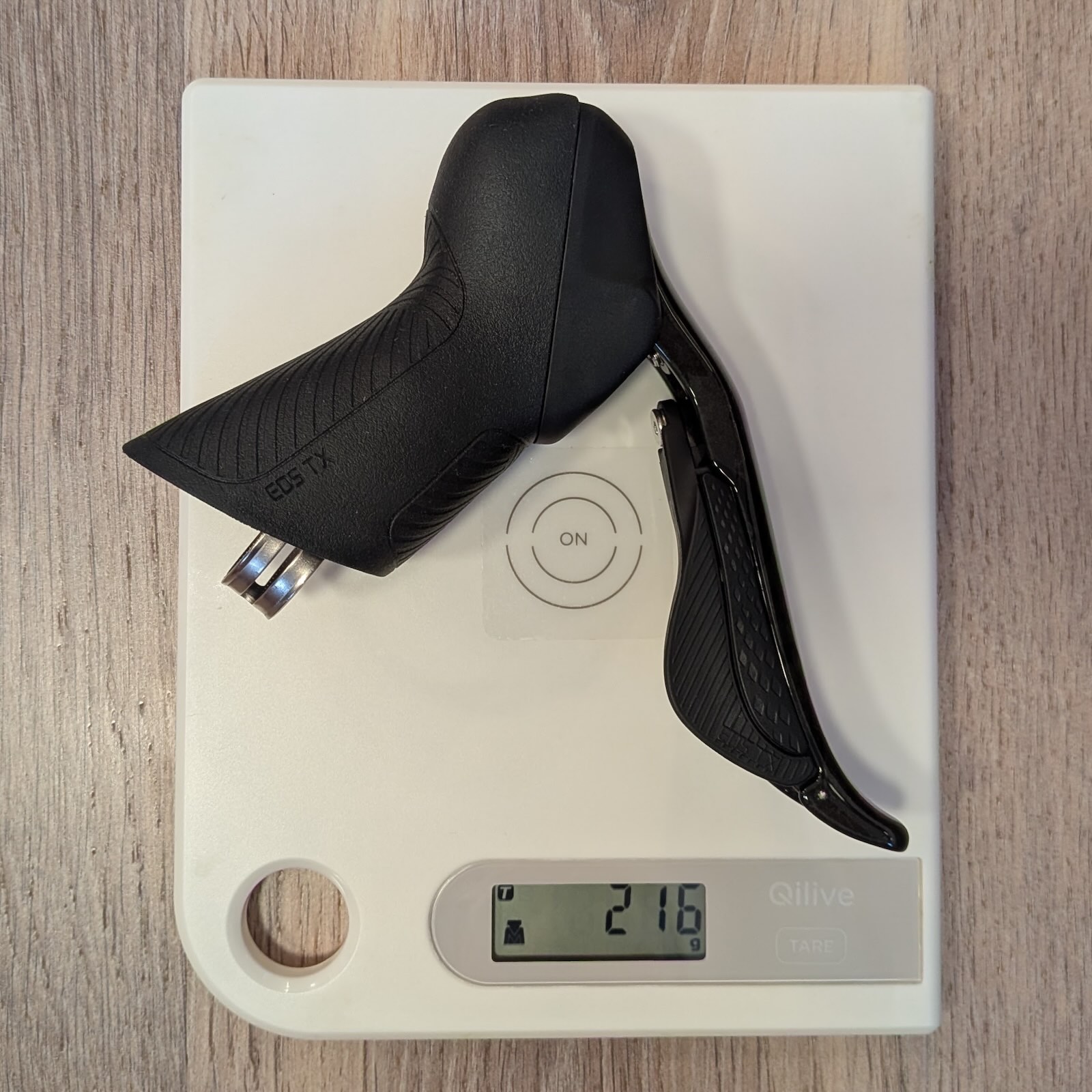
The levers are the most important components, as we are constantly in contact with them while riding. Ergonomically, they are similar to Shimano — comparable in length, but slimmer in width. The tip is noticeably smaller than on my current Tiagra setup, and the lever blades are made of carbon.
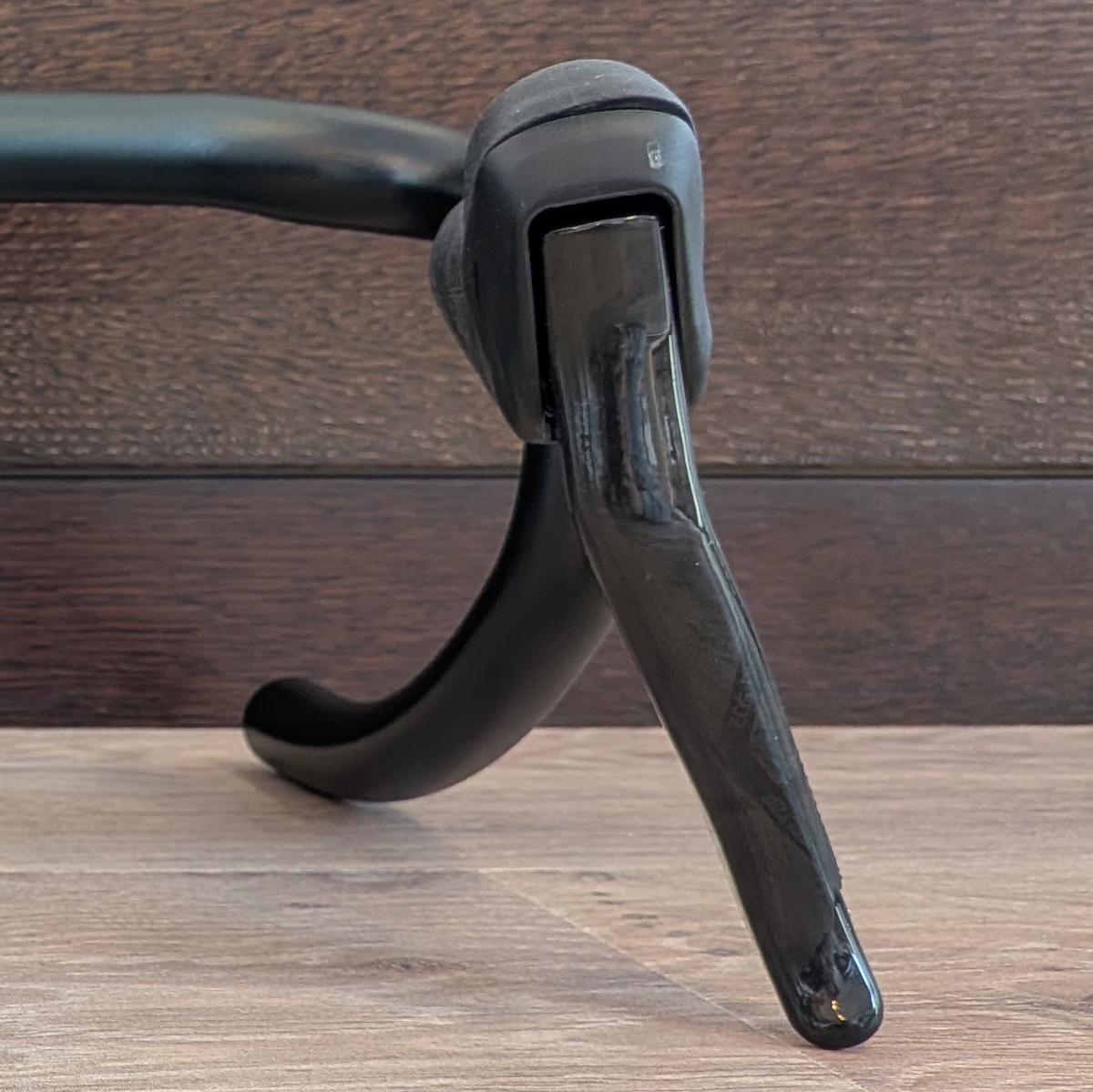
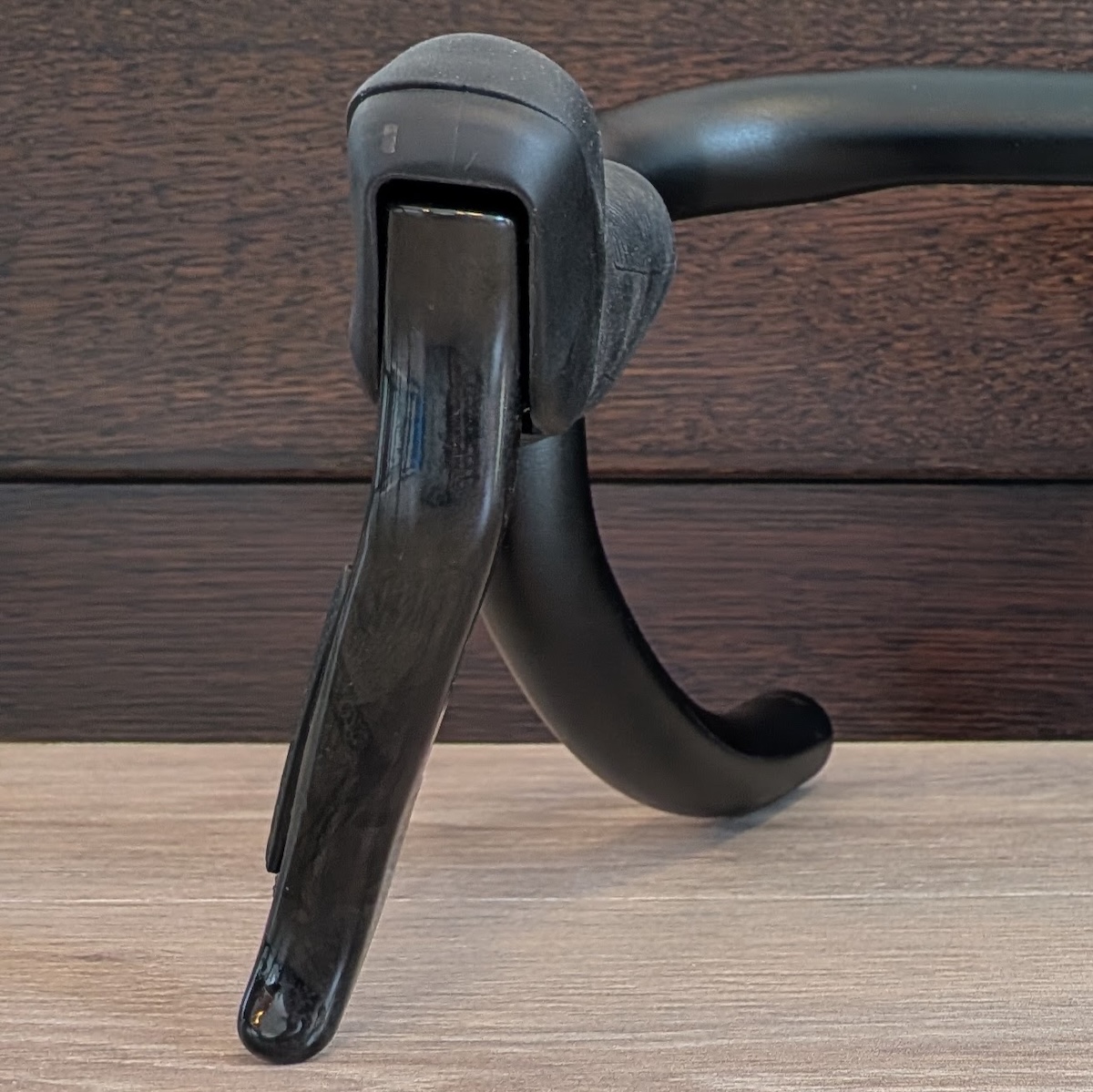
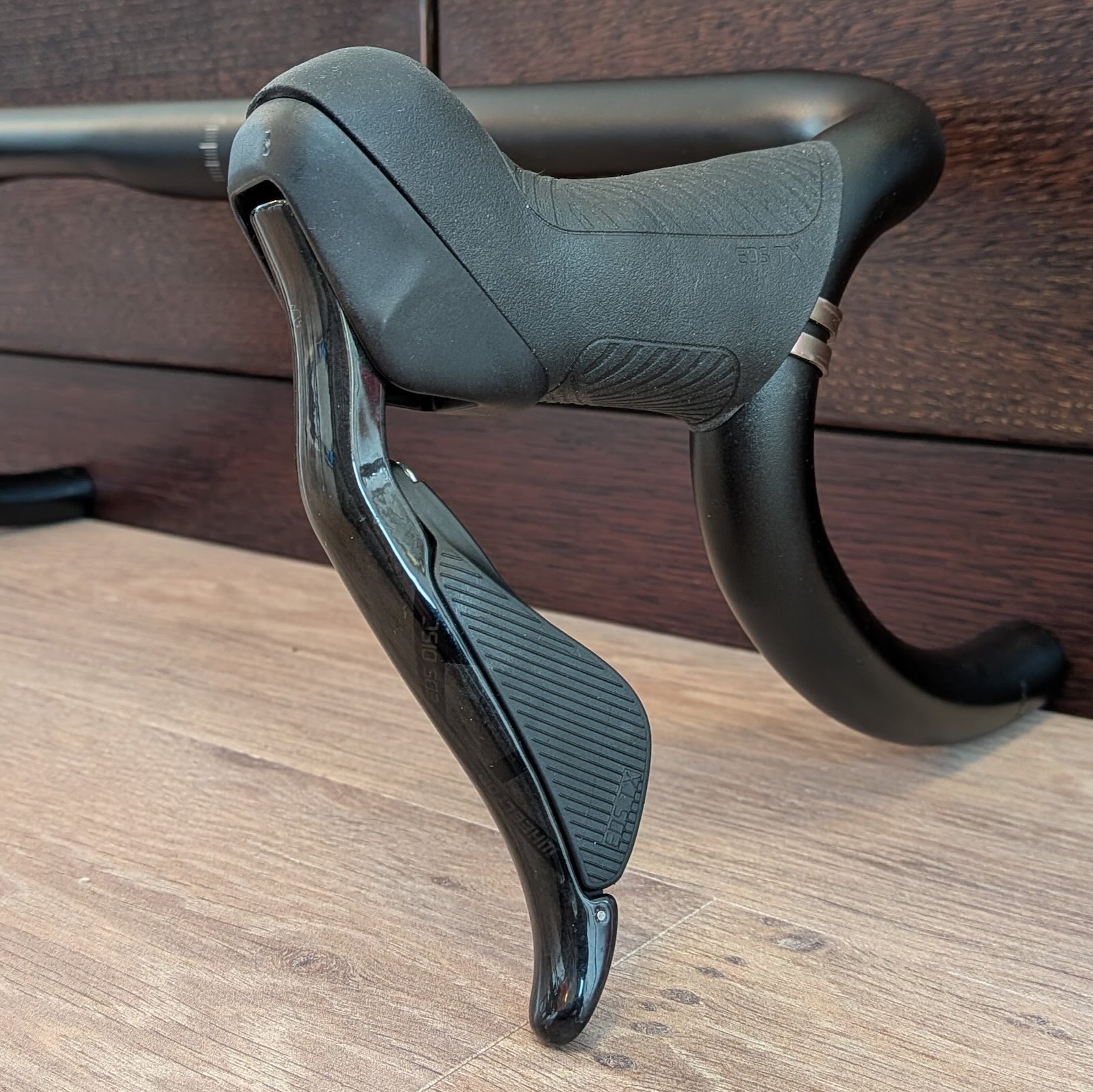
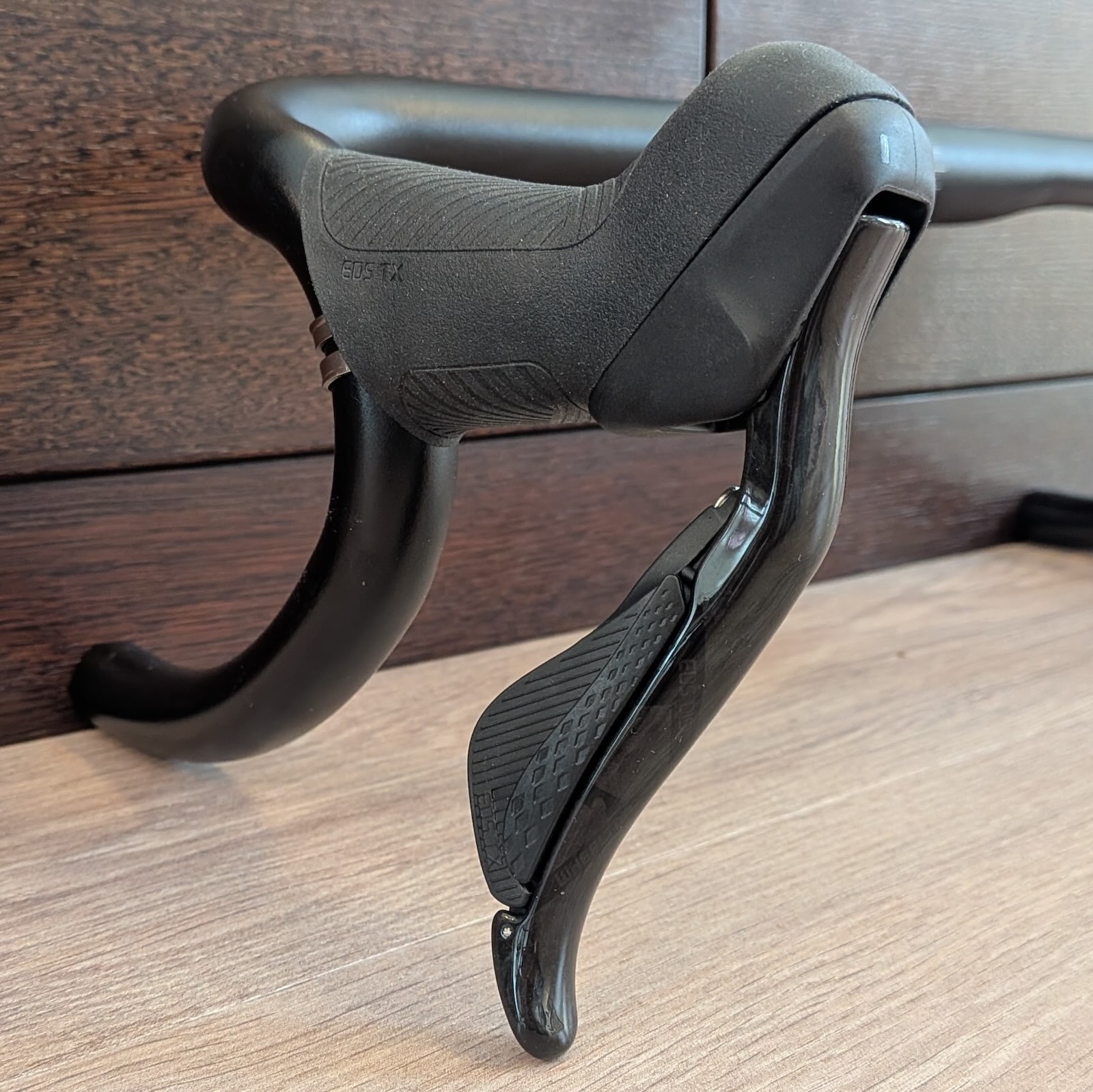
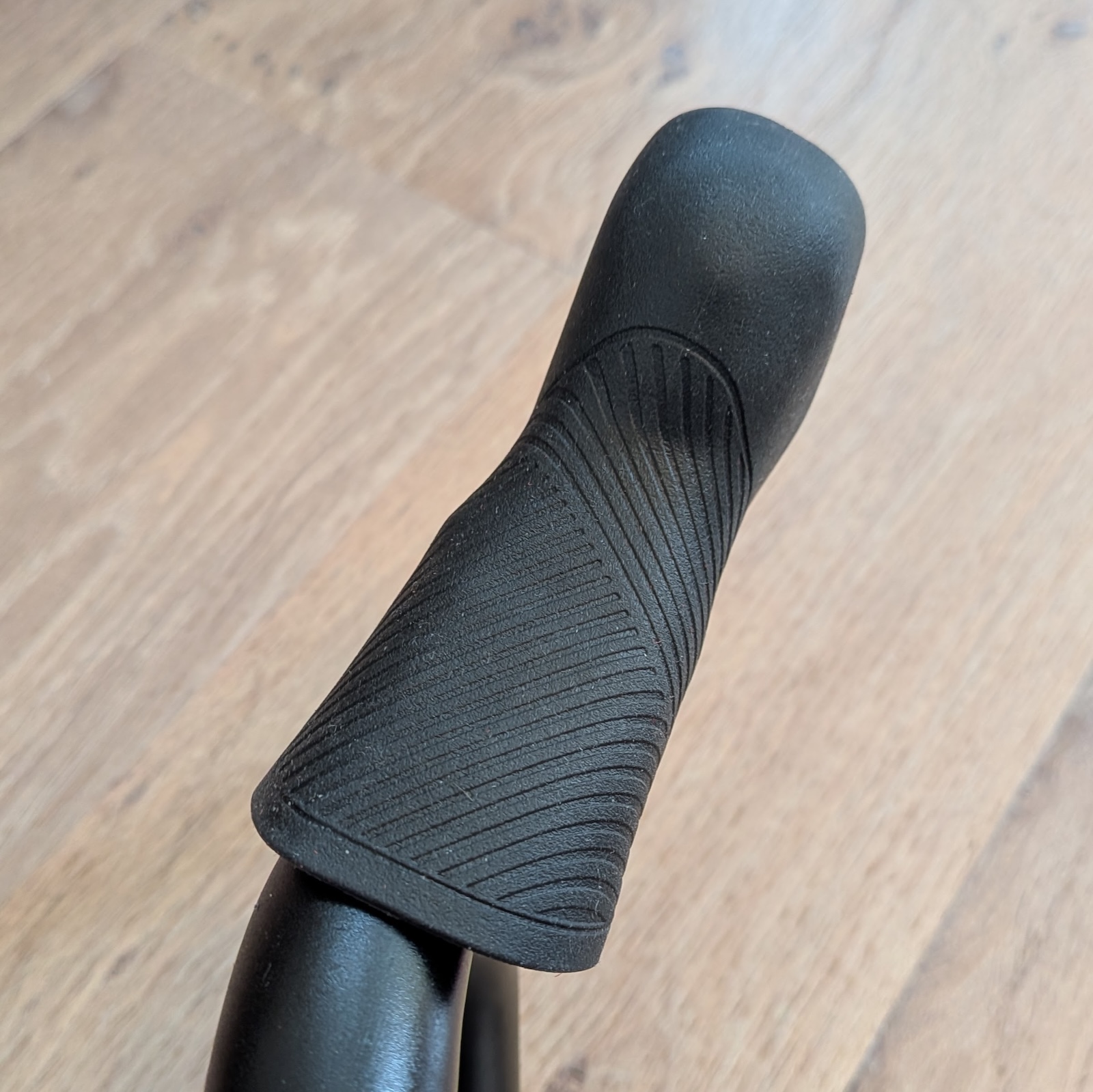
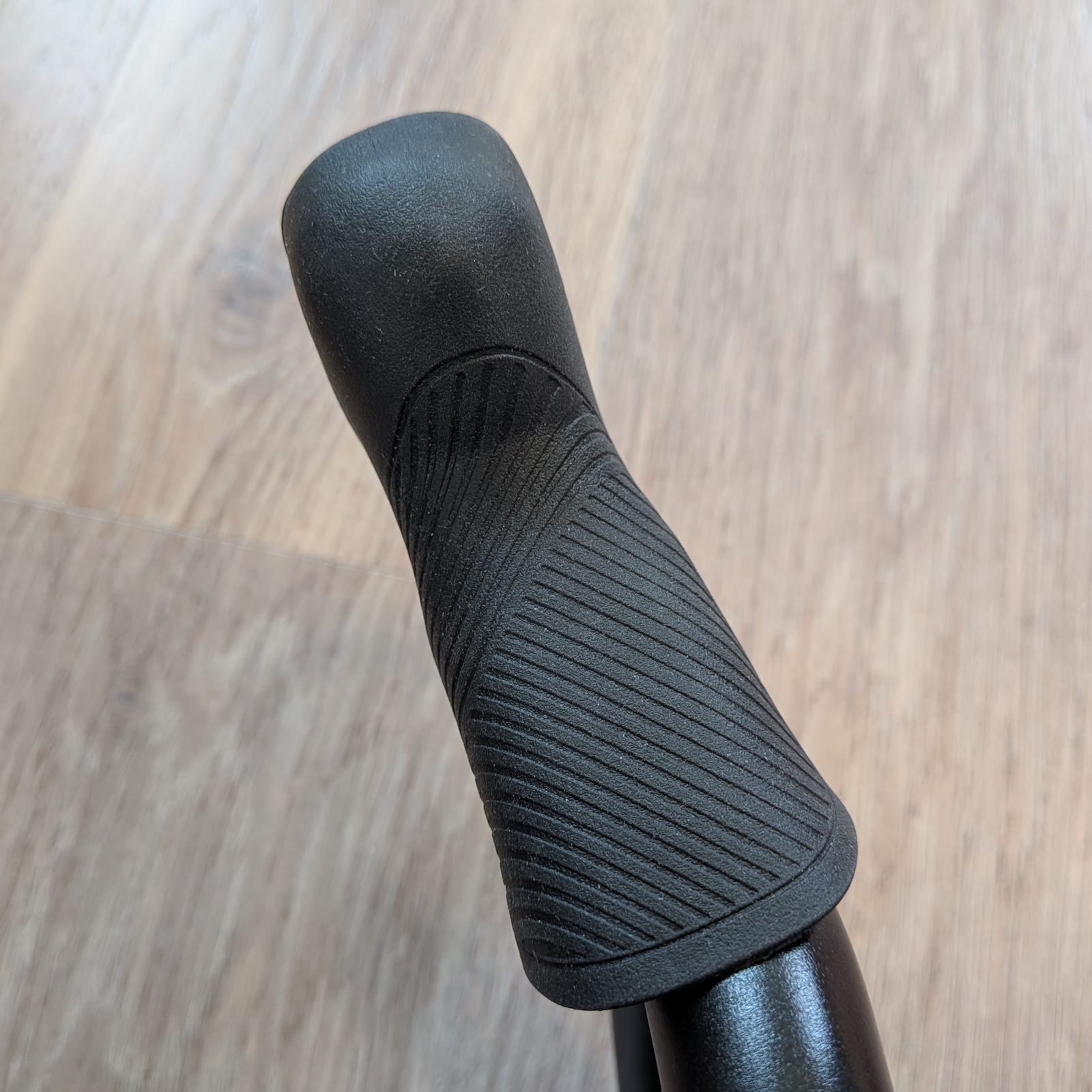
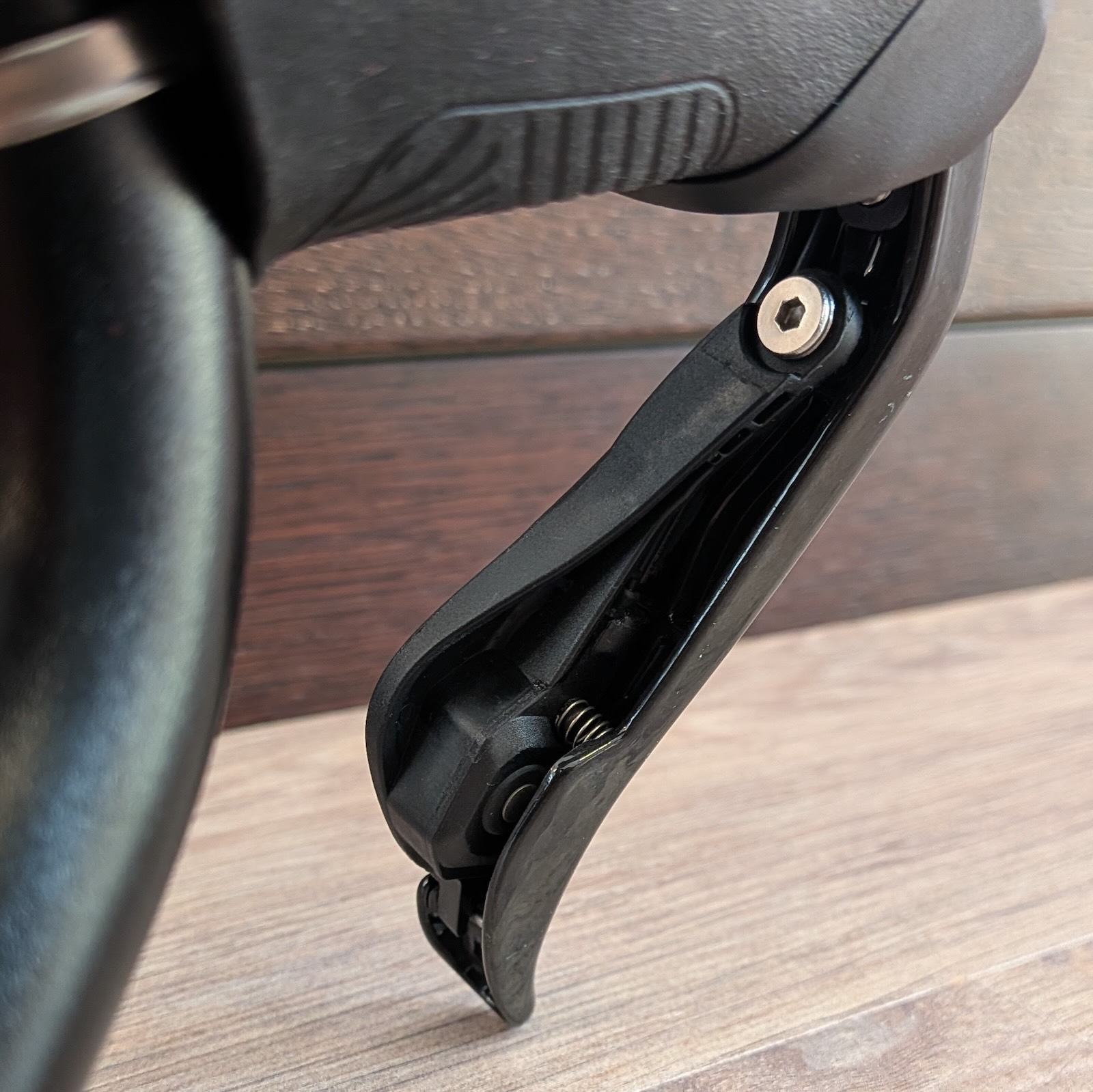
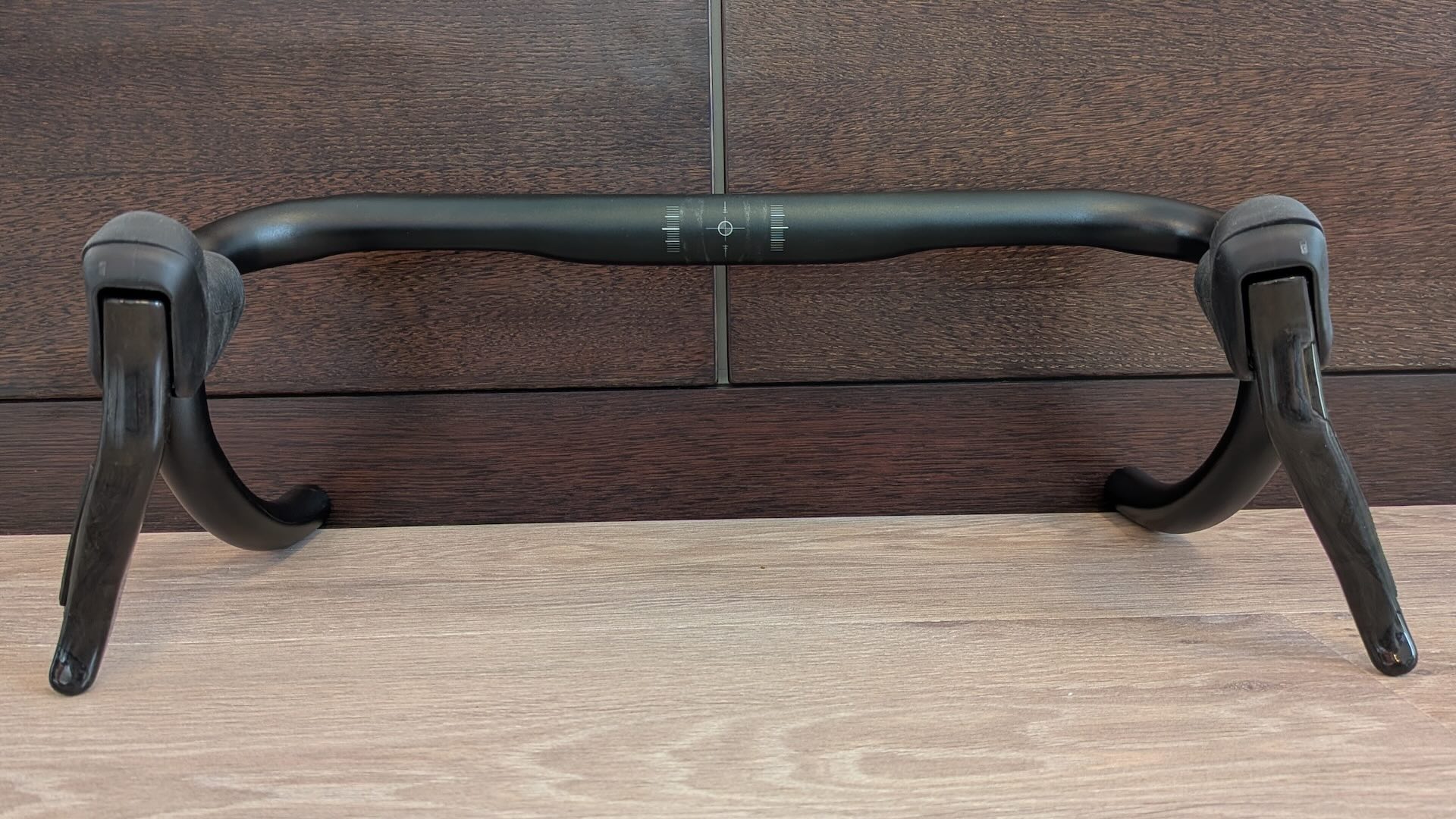
The left lever has only one button, as with two chainrings you can only shift between them. I really like how the buttons rotate slightly, and after a short movement they activate a micro-switch on the other side of the lever blade. The hood material feels good, although the fit is not perfectly precise. Clamp bolt is not very easy to access — I can already tell installation won’t be the easiest.
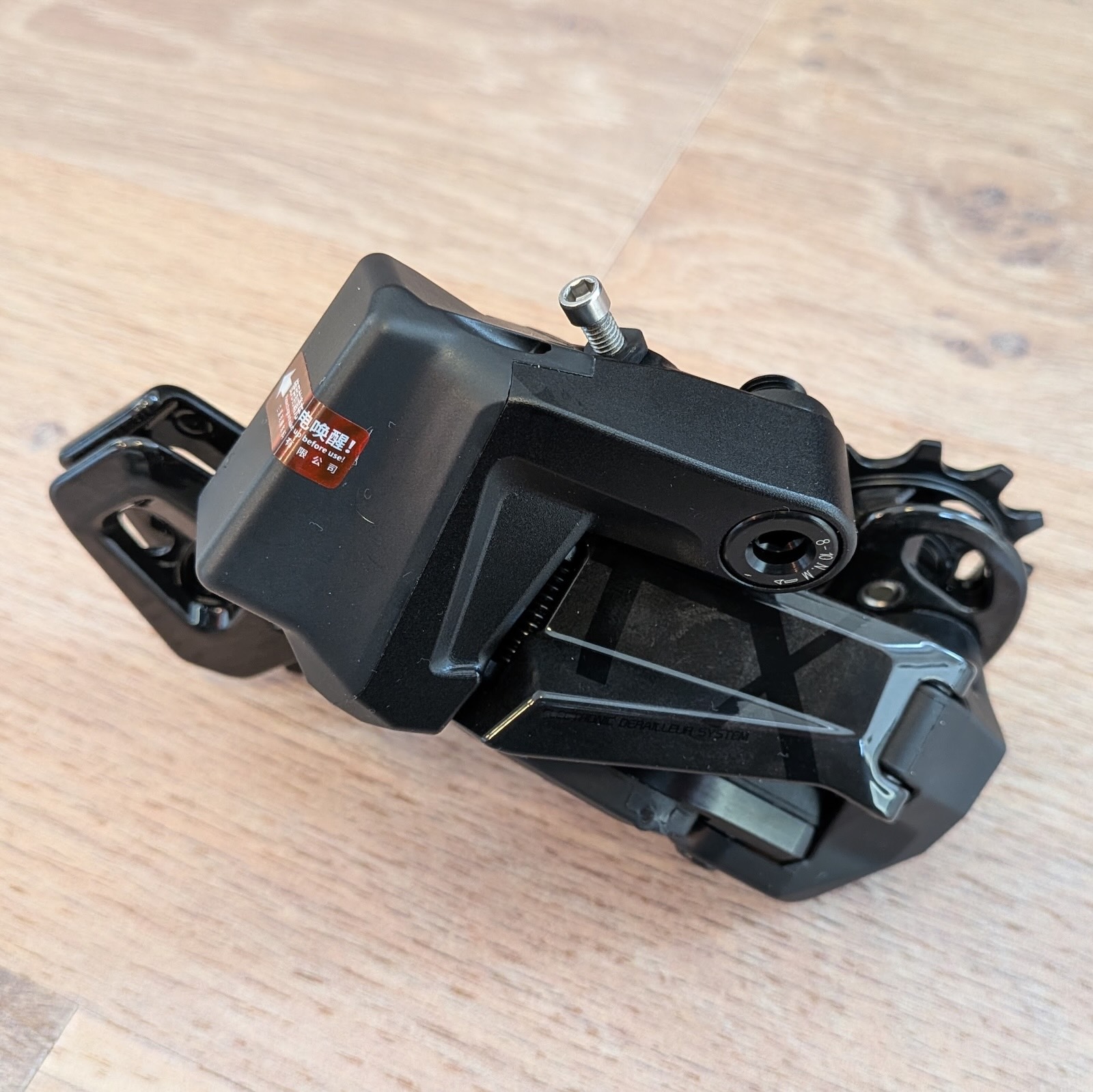
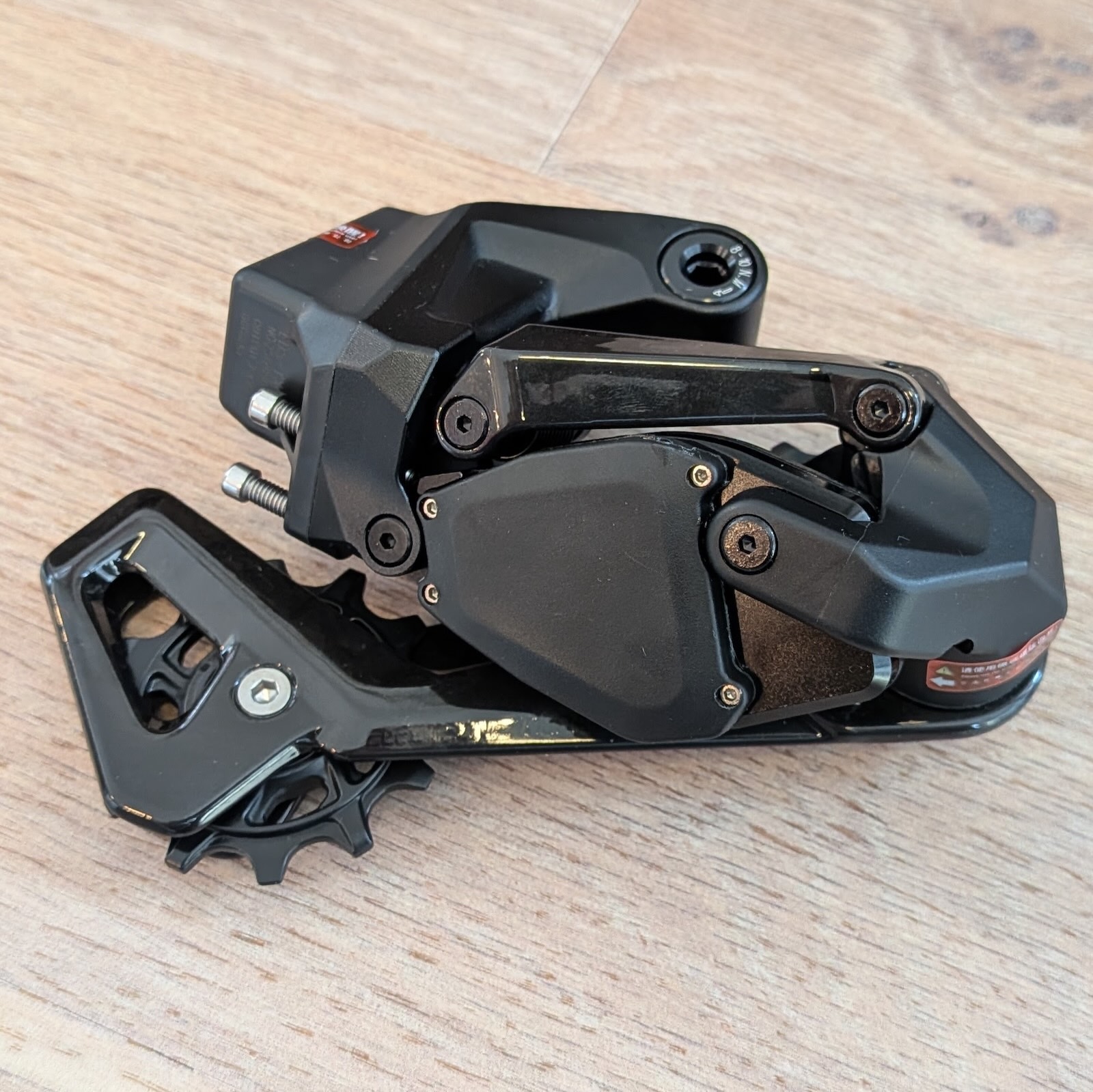
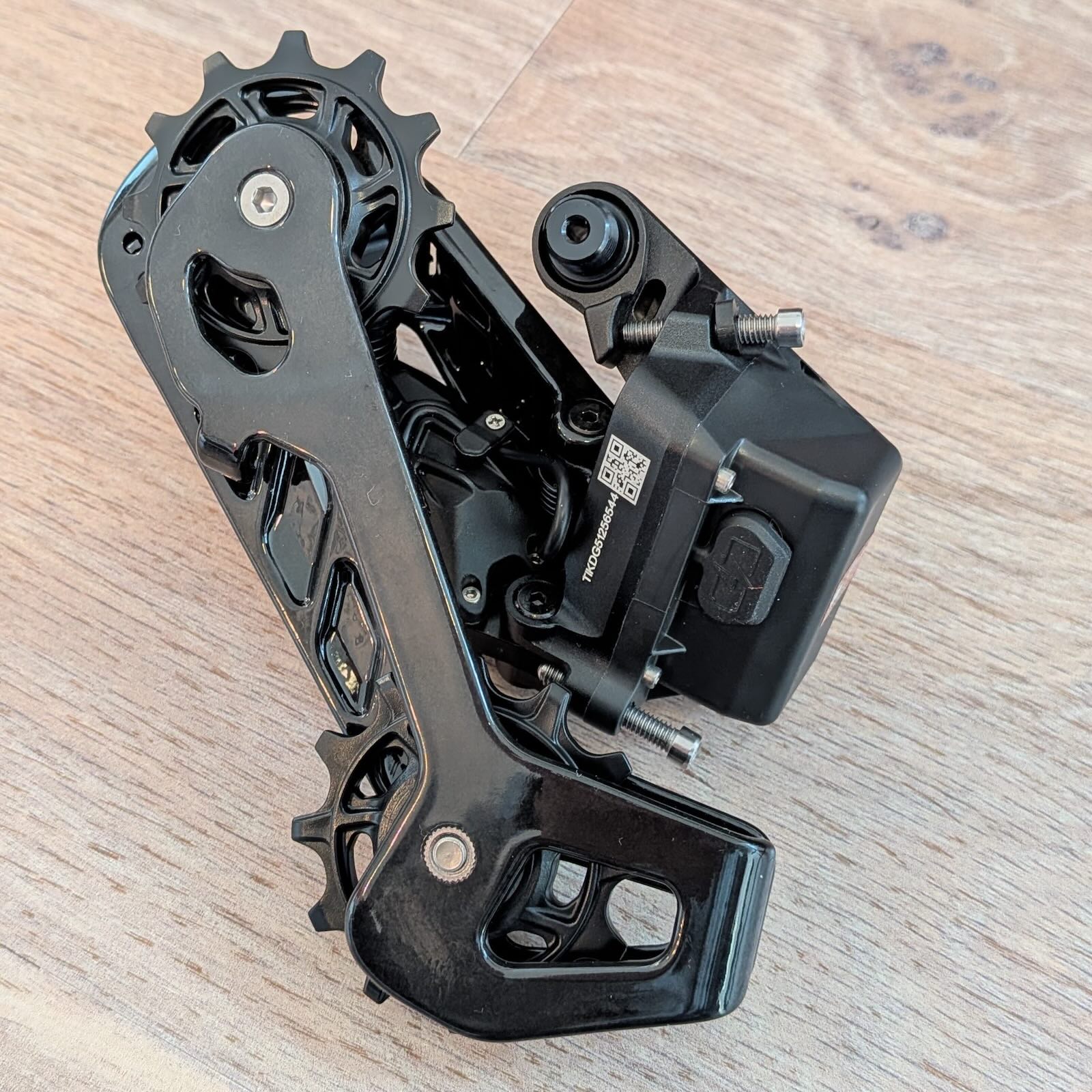
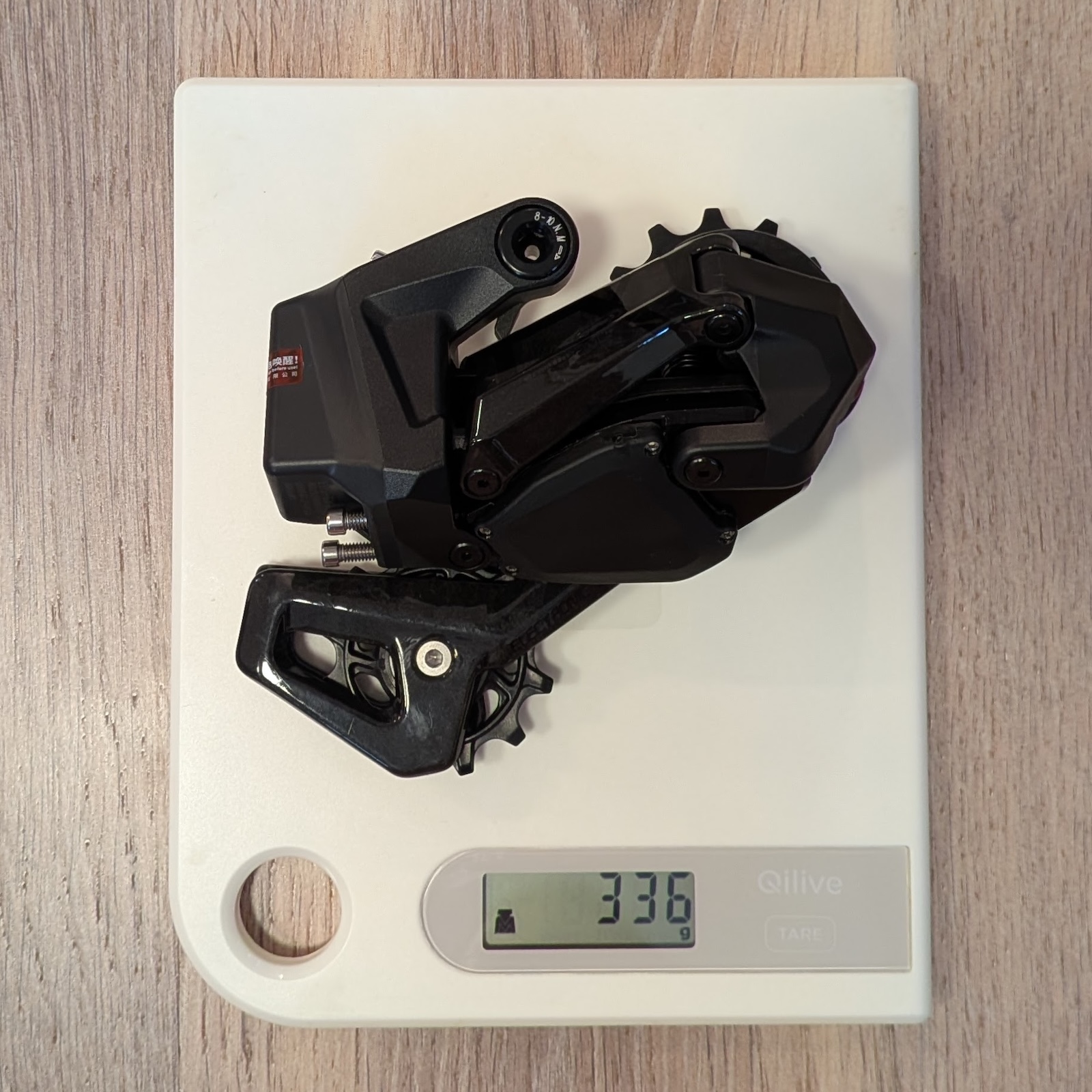
The rear derailleur is a robust piece. Outer plate and cage are made of carbon, and the pulleys spin smoothly. The construction feels stiff, with no noticeable cage play — which is a positive, as this is becoming less common nowadays.
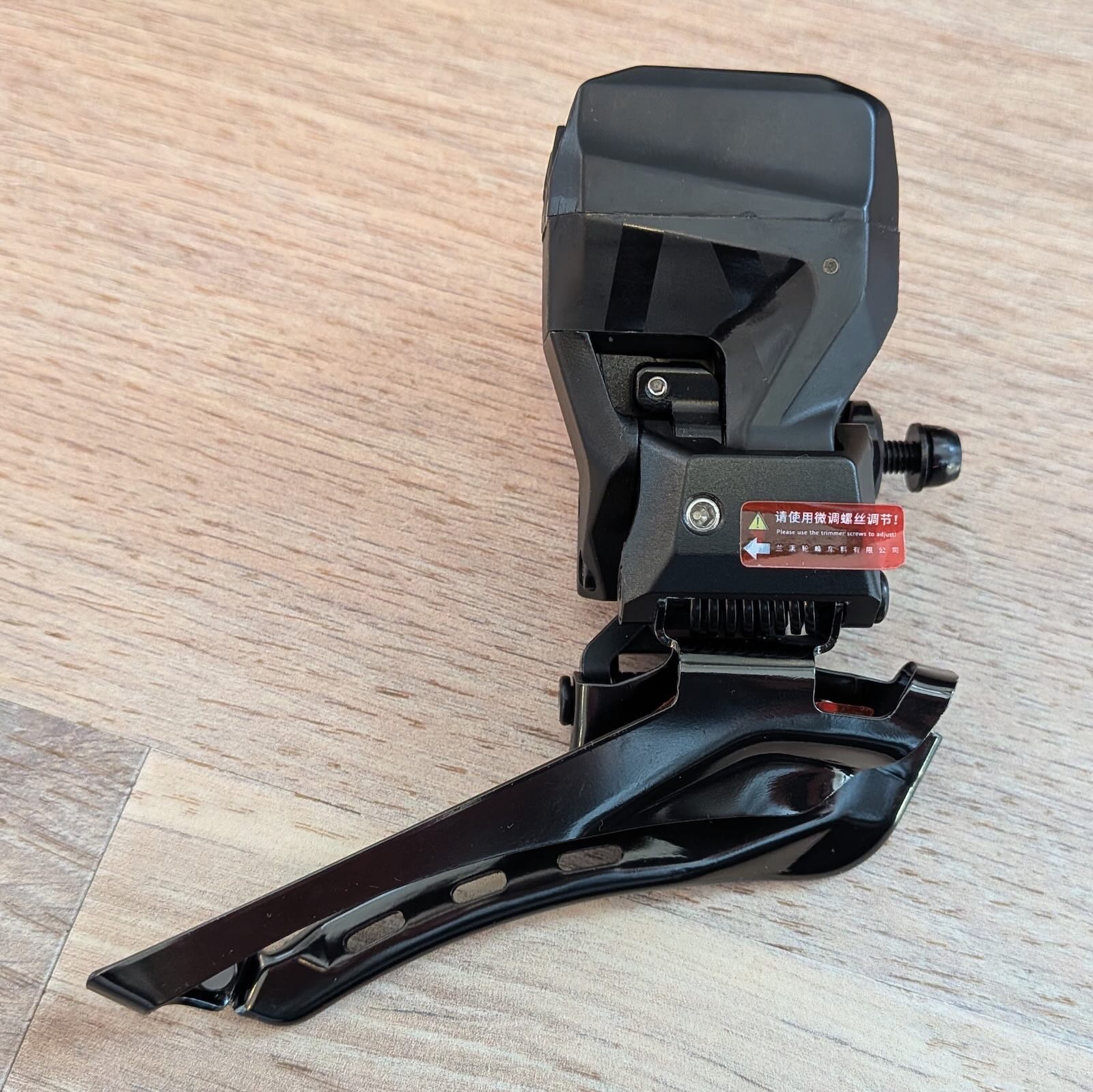
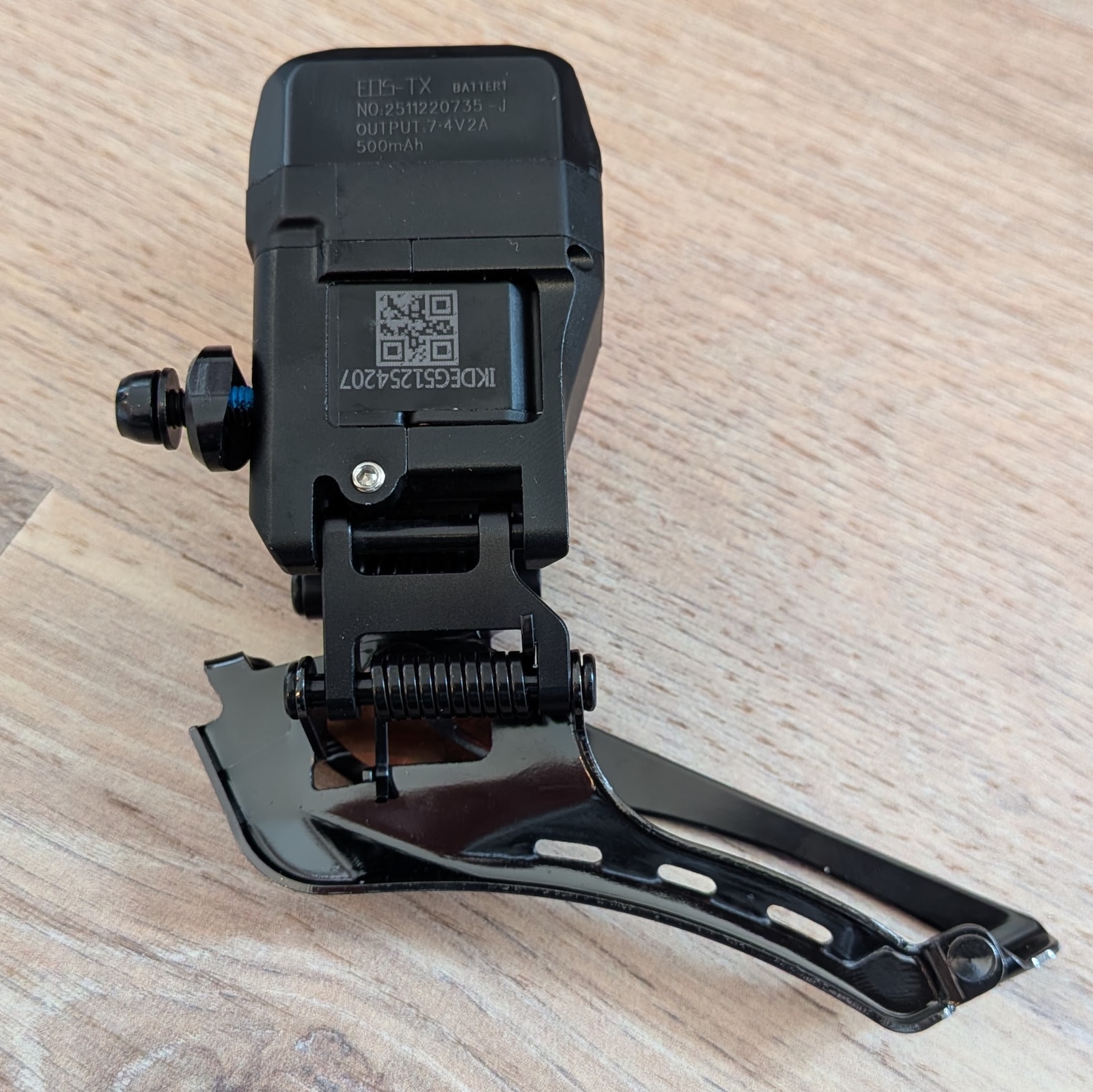
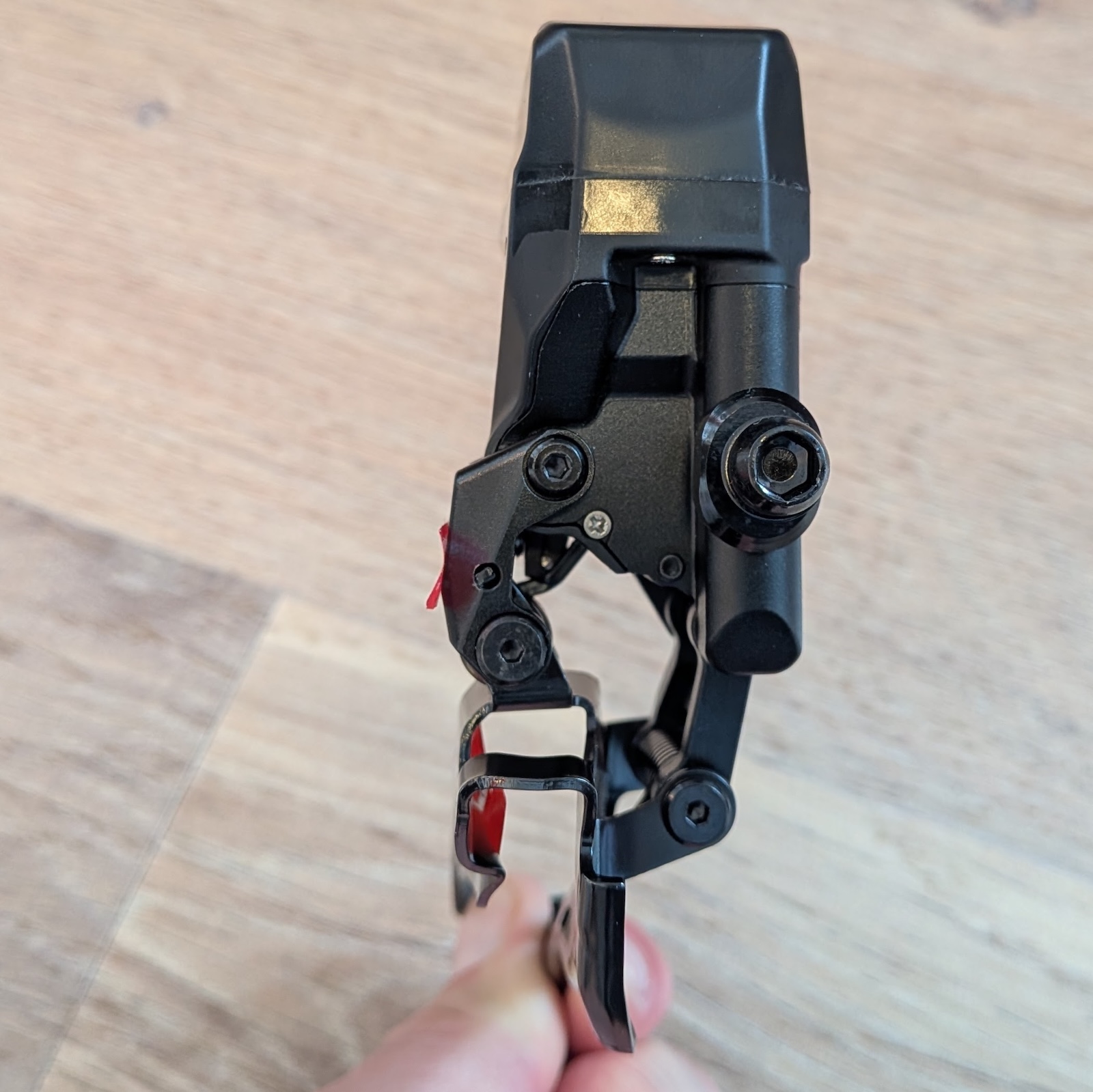
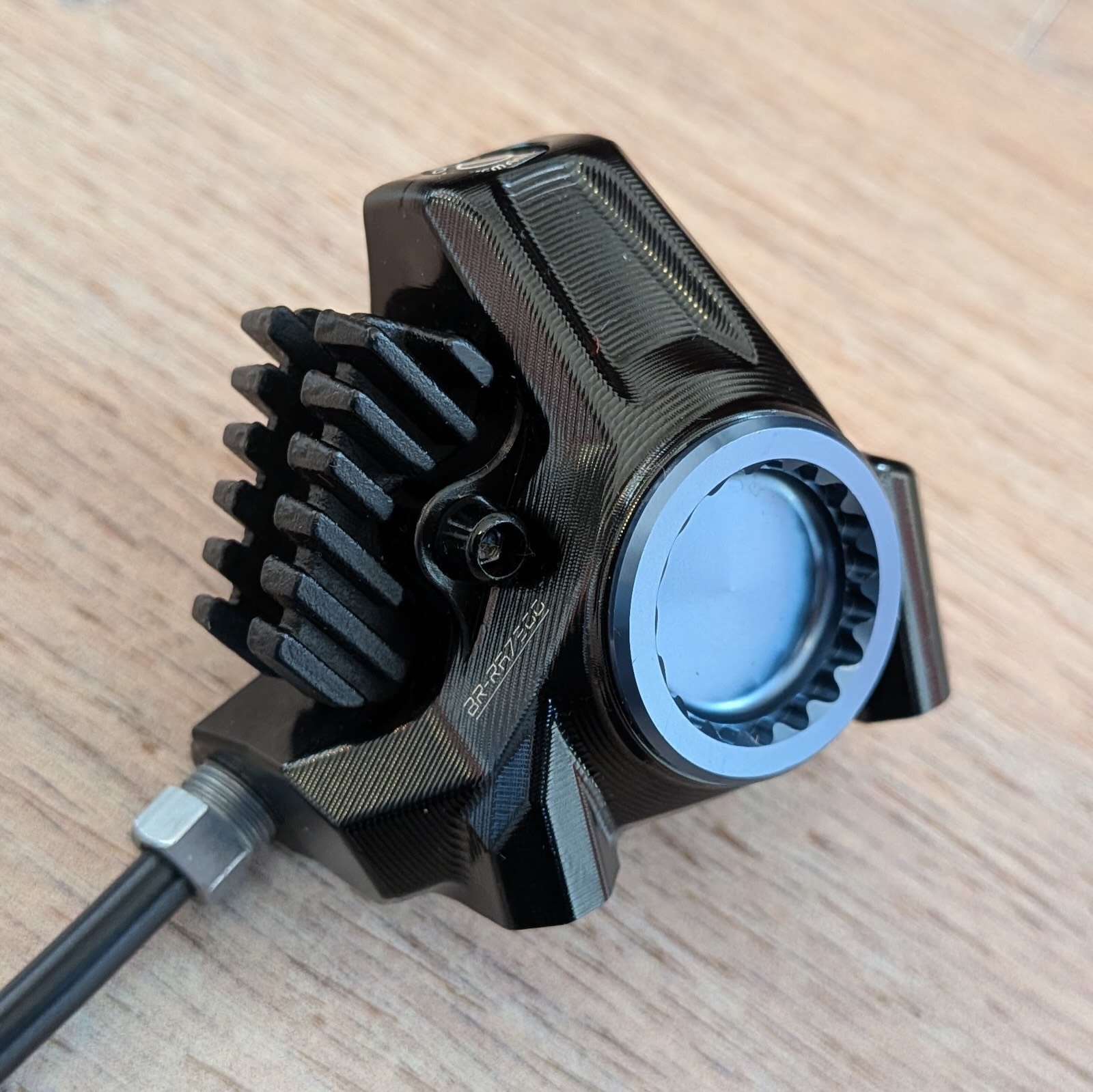
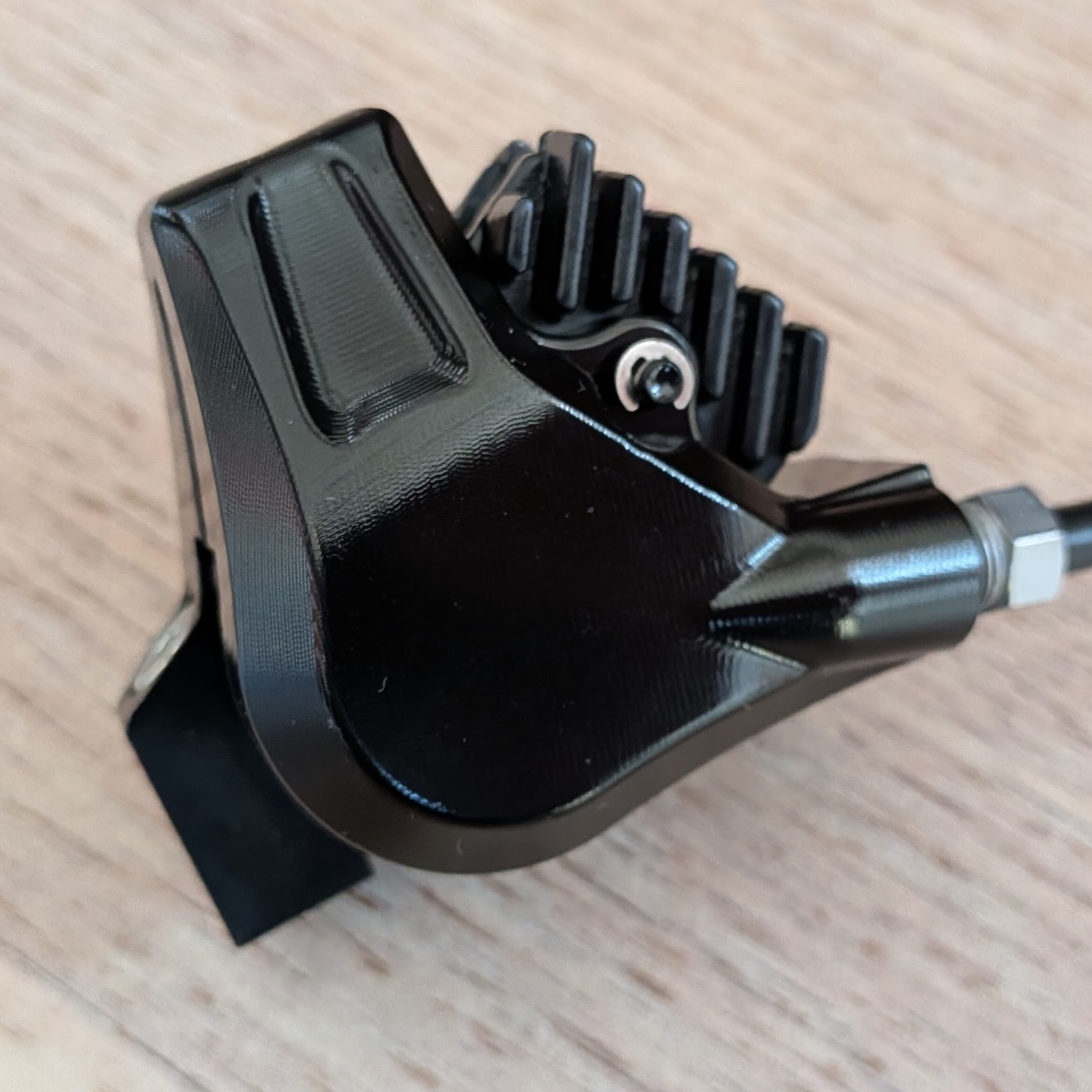
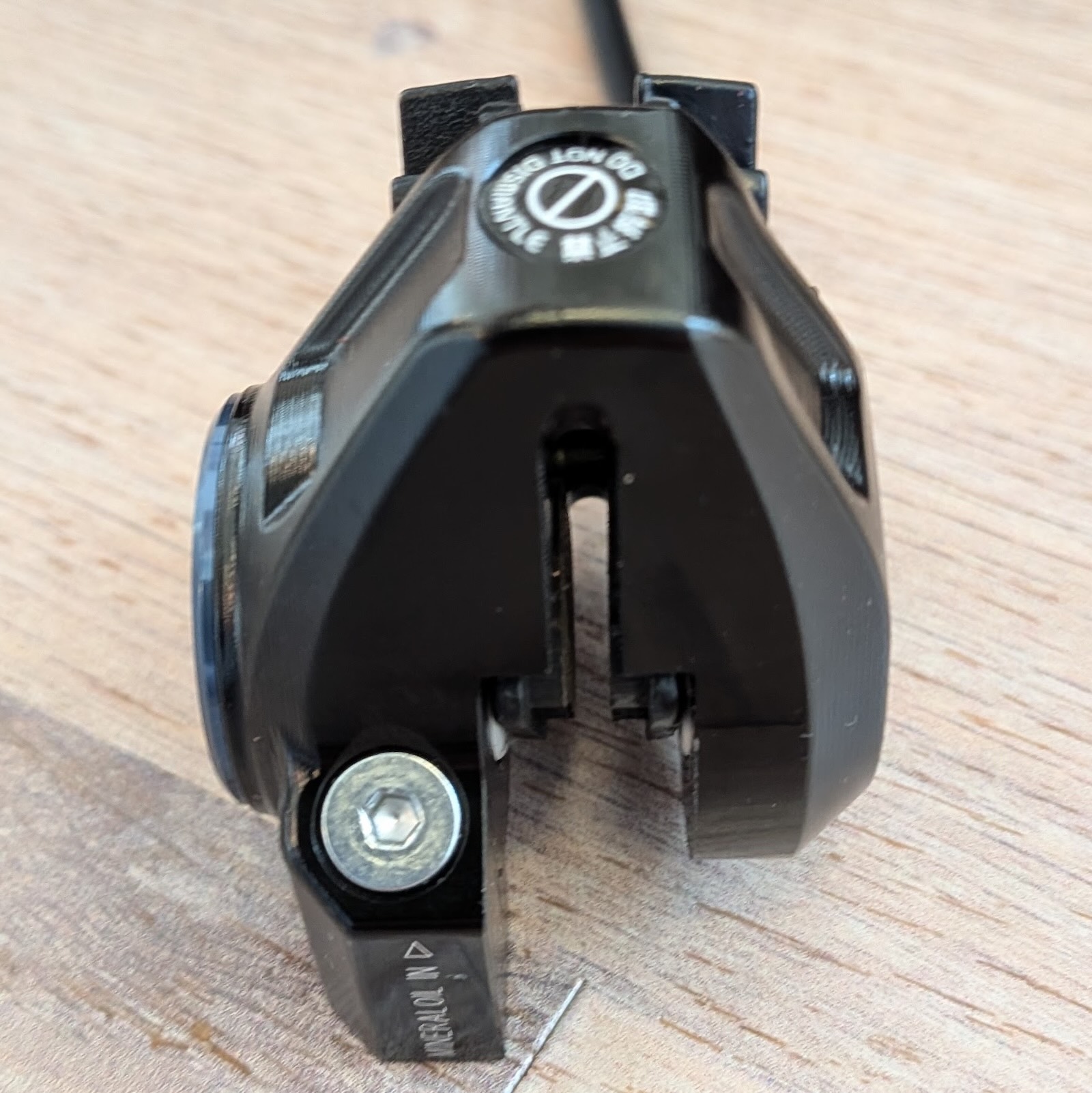
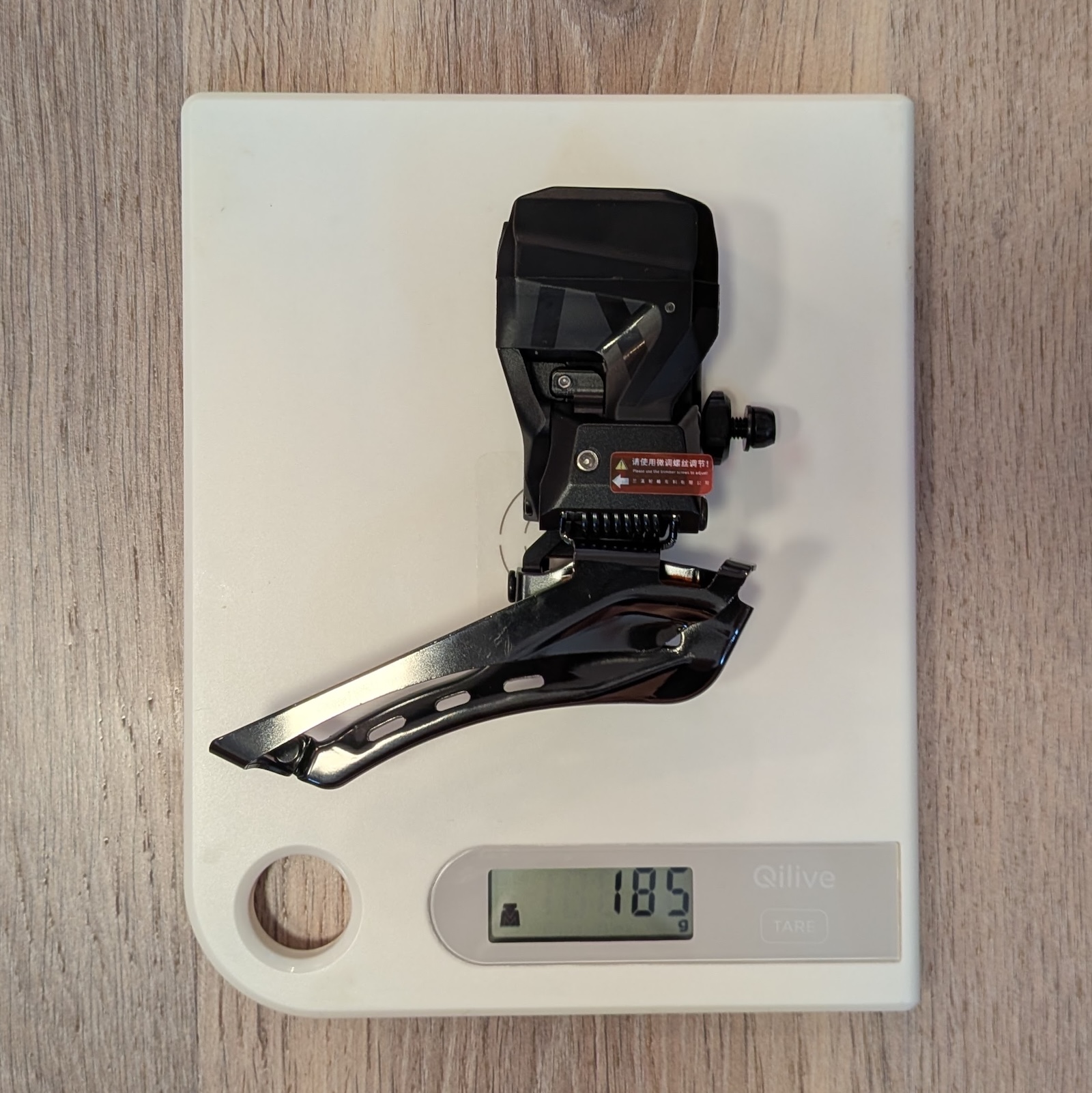
The front derailleur is less exciting. There is no carbon here, just a plastic housing for the battery and electronics. The cage plates are black, but there is no inner plastic insert, unlike on Shimano units. The charging ports are covered with small rubber caps — these don’t feel particularly robust, so they might require some care.
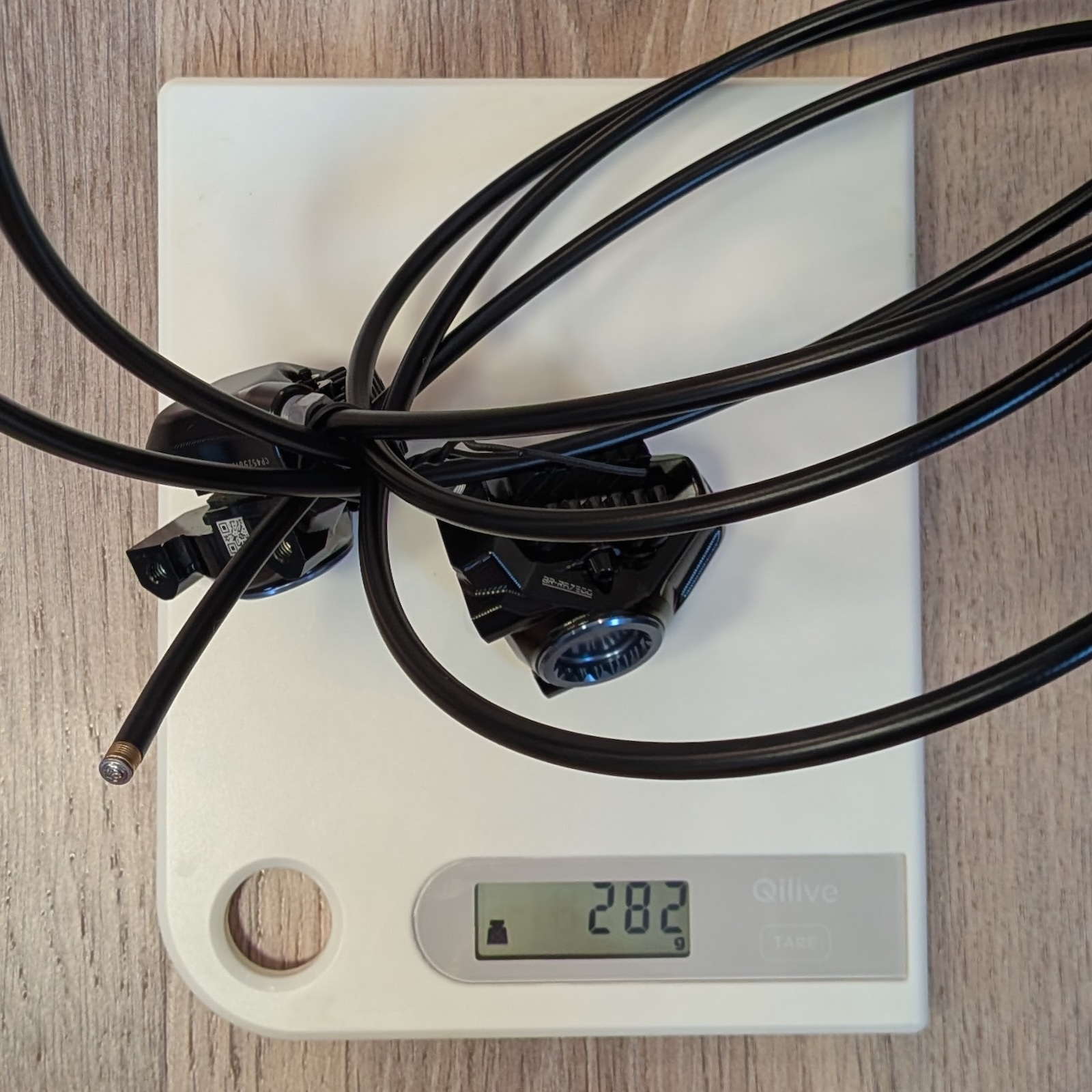
There’s not much to say about the brakes at this stage. The most noticeable feature is the use of finned brake pads. Package also includes a range of adapters and mounting hardware.
How does the EDS TX compare in terms of weight?
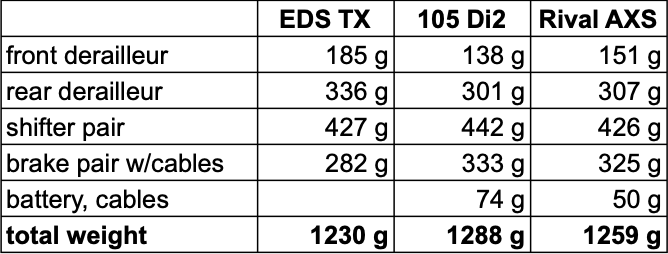
I compared the EDS TX with Shimano 105 Di2 and SRAM Rival AXS. I weighed the components and tried to find reliable data for the other two systems. Based on my measurements, the EDS TX is the lightest, but all three groupsets are very close to each other.
Verdict
I see the WheelTop EDS system as a real alternative in electronic shifting. At the moment, these components are not competing at the high end. However, it was a rational decision to target the 105/Rival level and build trust with a more competitive price. If these parts perform well in the long term, there is clearly room to move up.
I think it’s only a matter of time before a Chinese system can compete with Dura-Ace and SRAM Red. Until then, the EDS TX groupset will be under long-term testing throughout the season. I won’t spoil the surprise — but this won’t be just a simple drivetrain test, so it’s worth keeping an eye on the site.
You can find more information about Wheeltop electric shifters by clicking here.
WheelTop EDS TX review – A Competitive Chinese Road Groupset?

