Home Blog Page 343

Ingyenes országúti kritérium verseny utánpótlásnak és amatőröknek a Gemenc Kupán most szombaton

A 45. Alisca Bau Gemenc Nagydíj keretein belül tehetségkutató, utánpótlás és amatőr kritériumversenyt szervezünk július 27-én szombaton. A verseny útvonala megegyezik a profi mezőny esti villanyfényes útvonalával azaz Szekszárdon belül a  Béla király tér – Bezerédj utca – Széchenyi utca – Garay tér – Béla király tér (korcsoportonként változó a körök száma) nyomvonalon, teljesen lezárt pályán. A nevezés minden futamra ingyenes, nevezni a helyszínen lehet!

 45. Gemenc GP Tehetségkutató, Utánpótlás és Amatőr Kritériumverseny Szekszárd

  • Verseny típusa: Országos nyílt kritérium verseny, igazolt licenccel rendelkező és amatőr U11(2009-2010), U13 (2007-2008), U15 (2005-2006) U17 (2003-2004), U19 (2001-2002), Elit nő (2000 és előtte születettek) versenyzők és amatőr (1979 után születettek), Senior 1(1975-1979)- Senior 2(1970-1974)- Senior 3 (1969-ben és előtte születettek) kerékpárosok részére.
  • Valamint Kritérium verseny tehetségkutató verseny, kerékpár megkötés nélkül: U7 (2013-ban és utána születettek), U9 (2012-2014) U11 (2009-2011) gyerekek számára
  • Verseny helye, útvonala: Szekszárd Béla tér -Bezerédj utca Széchenyi utca- Sétáló utca körben
  • Ideje: 2019. 07. 27. szombat 17.00
  • Nevezési díj: A nevezés ingyenes (regisztráció szükséges!)
  • Versenyközpont: 2019. 07. 27. 16:30 – 17.30 között lesz nyitva (címe: 7100 Szekszárd Béla tér.
  • A technikai értekezlet 17.00 – 17.15 között zajlik a csapatvezetők és a versenybíróság tagjainak részvételével.
  • Díjazás: Egyéni érem díjazás 1-3. Díjkiosztó az Amatőr férfi, U19, verseny befutója után 19.30-tól.

Futamok és körszámok:

  • • Start: 17:30- tól folyamatosan
  • • Tehetségkutató, U7 – 1 kör
  • • U9 – 2 kör
  • • U11 – 4 kör
  • • U13, WU15 – 6 kör
  • • U15, WU1 – 10 kör
  • • U17, WU19, Nők – 15 kör
  • • Senior 1,2,3 – 10 kör
  • • Amatőr férfi, U19 – 15 kör

Általános szabályzatok:

1. A verseny az MKSZ és az UCI szabályai alapján kerül megrendezésre, ideértve az áttételek meghatározását (az igazolt versenyzőknél). Áttételek átkötése, lezárása nem engedélyezett. A szabálytalan áttétellel rendelkezőket a versenybíróság rajthoz állni nem engedi, vagy versenyből kizárja Áttételek: U13, WU13 (10-12 év) 5,85 m, (52×19) U15, WU 15 (13-14 év) 6,14 m (52×18) U17 és WU17(15-16 év) 6,94 m (52×16) U19, WU19 (17-18 év) 7,93 m (52×14) A versenybíróság az áttételeket a szakaszok előtt és után is ellenőrizheti, a vétkes versenyzőket kizárja. Versenyzők kötelesek az egyesületi mezben indulni, válogatott mez viselése nem engedélyezett.

2. Kerék-, és gépcsere a verseny során csak az kijelölt depóban. Minden egyéb segítségadás tilos. Az esetleges bukás és géphiba miatt a mezőnyből kiállni kényszerülő versenyző két körön belül visszaállhat, de a következő hajrában nem vehet részt!

3. Versenyen minden versenyző saját felelősségére indul, a közlekedési szabályok betartása mellett. Követniük kell a rendőrség vagy a biztosítást végző szervek utasításait, lehetőség szerint az úttest bal oldalát szabadon hagyva kell haladniuk, hogy a versenyt kísérő gépjárművek elhaladását ne akadályozzák. Esetleges balesetért, vagy kárért a rendező semmilyen felelősséget nem vállal és azért kártérítésre nem kötelezhető. A versenyzők a rendező által kibocsátott rajtszámot kötelesek viselni, a kiadott rajtszámot behajtani, levágni, megcsonkítani TILOS! A leadott számok után a befizetett kauciót (500,- Ft/ fő) visszakapják.

4. A versenyzőknek a bukósisak viselése kötelező! Esőkabát vagy más hasonló ruhadarab viselése abban az esetben lehetséges, ha átlátszó anyagból készült, hogy biztosítsa a rajtszámok tiszta láthatóságát.

5. A versenybíróság és a Szervező fenntartja a jogot a szabályok megváltoztatására speciális körülmények hatására. A szabályok esetleges megváltoztatásáról minden résztvevő tájékoztatást kap. A versenypálya közelében lévő kórházak, mentőállomások listája: Mentők: 104 Kórházak: Balassa János Kórház 7100 Szekszárd, Béri Balogh Ádám u 5/7. +36/74-501-500 (porta

A rendező a változtatás jogát fenn tartja magának!

Igazolt és amatőr korcsoportok külön értékeléssel.

További információk: Schneider Gábor – +36 70 313 5845

Quintana győzelem a hegyek között

Nairo Quintana

A Tour de France 18. szakaszán óriási hegyek között egy egész napos szökés végén elsőként ért célba Nairo Quintana. Hátul mindössze az utolsó hegy végén támadták Alaphilippe-et, egyedül Bernal tudott rajta időt hozni és előrébb lépni az összetettben.

Az egyik legkeményebb szakasz várt ma a Tour de France mezőnyére, az Embrun-Valloire 208 km-es szakaszon egy első kategóriás és két 2000 méter fölötti, kiemelt kategóriás hegyet kellett megmászniuk a versenyzőknek. Megvolt a lehetősége az összetett menőknek, hogy különbséget tudjanak kialakítani a egymással szemben és akár elvegyék Julian Alaphilippe-től a sárga trikót.

A szakasz elején ismét egy nagy méretű szökés alakult ki, a 34 fős bolyban olyan nevek szerepeltek, mint Nairo Quintana vagy Romain Bardet. A hatalmas hegyek hamar megrostálták a szökevény csoportot, csak az igazán erősek tudtak ott maradni. Az utolsó hegyre a Quintana, Bardet, Lutsenko trió jelentette az élbolyt, melyből Quintana lépett el és végül elsőként ért fel a hegyre, az előnyét pedig a lejtőn is meg tudta tartani, ezzel megnyerve a szakaszt. Bardet nehezen, de meg tudott szabadul Lutsenko-tól, így ő szerezte meg a 2. helyet, Lutsenko-nak pedig maradt a harmadik hely.

Eközben hátul nem volt óriási tempó, mindenki a segítőit próbálta használni, így egy viszonylag nagy csoport érkezett az utolsó hegy lábához. Felfelé az Ineos emberei dolgoztak, de mindent elárul a tempóról, hogy az egész nap szökésben lévő Quintana távolodni tudott tőlük. Végül a hegy utolsó kilométerein Bernal indított és tudott elszakadni a többiektől, pár perccel később Thomas próbálkozott, de Pinot vezetésével fel tudtak érni rá, kivéve Alaphilippe-et, komoly gondjai voltak a sárga trikósnak. A lejtőn Pinot-val az élen üldözték Bernalt, de nem sok sikerrel, még Julian Alaphilippe is pár kilométer után fel tudott zárkózni rájuk. Bernal végül 32 másodperccel hamarabb ért célba, mint a többi összetett menő és ezzel már a második helyről várhatja a folytatást.

Pénteken, szombaton szintén nehéz hegyek várnak a mezőnyre, ráadásul hegyibefutókkal, így biztos kiélezett csatát láthatunk majd.

A 18. szakasz eredménye:

1 Nairo Quintana (Col) Movistar Team 5:34:15
2 Romain Bardet (Fra) AG2R La Mondiale 0:01:35
3 Alexey Lutsenko (Kaz) Astana Pro Team 0:02:28
4 Lennard Kämna (Ger) Team Sunweb 0:02:58
5 Damiano Caruso (Ita) Bahrain-Merida 0:03:00
6 Tiesj Benoot (Bel) Lotto Soudal 0:04:46
7 Michael Woods (Can) EF Education First
8 Egan Bernal (Col) Team Ineos
9 Serge Pauwels (Bel) CCC Team
10 Steven Kruijswijk (Ned) Team Jumbo-Visma 0:05:18

Az összetett állása a 18. szakasz után:

1 Julian Alaphilippe (Fra) Deceuninck-QuickStep 75:18:49
2 Egan Bernal (Col) Team Ineos 0:01:30
3 Geraint Thomas (GBr) Team Ineos 0:01:35
4 Steven Kruijswijk (Ned) Team Jumbo-Visma 0:01:47
5 Thibaut Pinot (Fra) Groupama-FDJ 0:01:50
6 Emanuel Buchmann (Ger) Bora-Hansgrohe 0:02:14
7 Nairo Quintana (Col) Movistar Team 0:03:54
8 Mikel Landa (Spa) Movistar Team 0:04:54
9 Rigoberto Uran (Col) EF Education First 0:05:33
10 Alejandro Valverde (Spa) Movistar Team 0:05:58

Rudy Project Strym teszt: Az ár/érték bajnok

A Rudy Project egyik 2019-es újdonságát, a Strym sisakot kézbe véve az ember elgondolkozik azon, hogy hova fejlődtek mostanában a fejvédők az olasz gyártó kínálatában, olyan technológiák sorát találjuk benne, ami eddig csak a csúcsmodellekre volt jellemző, mindamellett a külseje is meggyőző, a mai trendeknek megfelelő, divatos formavilágot követi és ehhez mind baráti ár tartozik.

Tavaly nyáron jelentette be a Rudy Project az új középkategóriás országúti sisakját, a Strym-et, ami elsőként szakított a gyártóra jellemző eddigi formavilággal és egy modernebb, divatosabb külsővel rendelkező hullámot indított el a Rudy Projectnél. Új stílus, új dizájn, új grafika, természetesen ezek, amiket elsőként észreveszünk, de amikor jobban belenéz az ember a belsejébe akkor éri meglepetés.

Mivel fejvédőről beszélünk, így a Strym tervezésekor is elsődleges szempont volt a védelem, ezért dupla inMold-technológiával készül, melynél a poliuretán habréteg és a kemény polikarbonát héj nem csak felül, de hátul, a tarkónknál is találkozik, ezáltal még több védelmet nyújtva viselője számára.

A kényelem egyik kulcsa, hogy a sisak megfelelően szellőzzön, a Strym-re 16 szellőzőnyílást és légcsatornákat terveztek a Rudy Project mérnökei, amiken keresztül végigáramlik a fejünkön a levegő és végül a testhőnktől felmelegedve elhagyja a sisakot, így biztosítva optimális hűtést a fejünknek. A homlokon található két vízszintes alakú szellőzőnyílást itt mindenképpen kiemelném, mert érezhető mennyiségű levegő áramlik rajtuk keresztül be fejünk egyik leginkább izzadós pontjára.

A Strym, akárcsak a Spectrum és a Protera, megkapta az Airframe rendszert, ahol nem közvetlenül a sisakra rögzülnek a szivacsok, hanem a fejméretállító rendszer egy hálós műanyaglapjára. Így míg a szivacs egyik fele a fejünkkel érintkezik és veszi fel az izzadságot, a másik fele folyamatosan szárad, tehát sokkal nehezebben telik meg a szivacsozás izzadsággal.

Apropó a szivacsok, bogárhálós szivacsok járnak gyárilag a sisakhoz, viszont a minőségükről mindenképpen szót kell ejteni, a Strym szivacsaival hasonlóval a csúcs sisakokban szoktam találkozni, érintésre puhák és biztosan tartós darabok, de ha tönkremennének akkor vehetünk hozzájuk újat, mert a magyarországi forgalmazónál van, nem kell eldobnunk a szivacsok elhasználódása miatt a kedvenc fejvédőnket.

A Rudy Project fejvédők kényelemben általában az élen járnak, ez a Strym-nél sincs másképp, a rögzítőrendszer magasságállítása és az RSR10 tarkórögzítő együtt 3 dimenziós állítási lehetőséget biztosít, így gyakorlatilag a legtöbb fejformára rászabható a sisak, például nekem max fél perc állítgatásba telt, hogy tökéletesen a fejemre illeszkedjen a Strym. A pántokat is egyszerűen lehet állítgatni és amiért nálam extra pont jár az a csat és a mellette található gumibujtató, ami felesleges pántot fogja össze. Az állító rendszerrel kapcsolatban még fontos kiemelni, hogy a nők a copfjukat át tudják húzni a magasságállító műanyagjai között, ezáltal ők is kényelmesen, mindenféle trükközés nélkül tudják viselni a Strym-et. Nagyon átgondolt tervezés az egész fejvédő.

Mint már említettem, nagyon könnyű volt a fejemre szabni a Strym-et, szinte mintha rám öntötték volna. Kerékpározás közben gyakorlatilag észre sem vettem, hogy a fejemen van, semmi nyomáspont, semmi dörzsölés, nem zavartak a pántok, hihetetlen, de tényleg nem tudok rá semmi negatívat mondani. Ki merem jelenteni, hogy a Spectrum mellett ez a legkényelmesebb fejvédő, ami eddig a fejemen volt. Persze ez szubjektív, mert minden fej más és más, de a többségnek biztos kényelmes lesz a Strym.

A szellőzése elég jó, a forró nyári napokon sem volt vele problémám, egyszer sem akart meggyulladni benne a fejem, pedig nem csak országúton használtam, ahol folyamatosan van sebesség és menetszél, hanem kivittem terepre is. Egyébként a gyártó sem kifejezetten országútinak ajánlja, hanem mindennapi fejvédőnek is az országúti kategória mellett, tehát bőven beleférnek a lassabb tempójú túrák is a felhasználási területbe. Az Airframe rendszer működik, bár azt nem ígérhetem, hogy a szivacsokból soha nem fog lefolyni az izzadság, de mindenképpen kevesebb, mint egy hagyományos szivacsozású sisakban.

A Strym-et mindenkinek ajánlom, aki egy igazán jó országúti/mindenes sisakot szeretne venni elérhető áron, nagyon kevés az ilyen jó ár-érték arányú fejvédő a piacon, mindenképpen érdemes legalább megnézni. Ráadásul megjelenésben sem utolsó, sőt kifejezetten modern, divatos és 8-féle színkombinációban érhető el, így mindenki megtalálhatja a neki leginkább tetszőt.

További információkért kattints ide.

A Rudy Project fejvédőket keresd a Rudy Project Magyarország weboldalán, vagy személyesen a bemutatótermükben.

WTB Vigilante and Trail Boss MTB tire review: An all-encompassing choice!

We have reported back in May that the legend has returned: the WTB tires are again available in shops nationwide. Following the relaunch, we got hold of two MTB tires from the American brand’s extensive range, the WTB Vigilante and Trail Boss. The first is a classic trail model, while the latter answers the requests of the new emerging enduro riders. Let’s see how they perform side by side!

WTB Vigilante and Trail Boss


Before setting out on the trails, we should explain WTB’s well-visible logos on the sidewalls. Based on this information the buyer to make a more informed choice, hopefully ending up with exactly the type of rubber that is best suited to his or her riding style and trail conditions.

Tubeless

By default most WTB tires can be set up as tubeless, using what the manufacturer calls Tubeless Compatible System. Hence we have the TCS™ logo on both these tires.

Casing

Then comes the choice of different sidewall constructions. WTB offers Tough (TCS TOUGH CASING) and Light (TCS LIGHT CASING) variants, and the latter is available with the new SLASH GUARD technology. It’s a thin nylon insert to prevent slashes and pinch cuts, weights next to nothing, nevertheless it manages to increase durability by quite a margin. For most type of riding the SLASH GUARD offers sufficient protection. I’d say that the “Tough” casing is for special riding environments, hardcore enduro, where the rider has no or little control over the chosen lines. Those tires are likely to be bombproof at the price of adding some weight to the wheel. But as Boris “the Blade” Yurinov said in the film Snatch: “Weight is sign of reliability!”

Compounds

If you see the “TriTec” logo on the tire sidewall, you have a WTB tire featuring 3 different rubber compound. These are of varying hardness, used for different part of the tread. Within the TriTec realm, you have a choice of “High Grip” and “Fast Rolling” variants. The former is tuned for better cornering, the latter for low rolling resistance. WTB managed to employ these compounds for the knobs as well as the base tread, which decreases the chance of the torn or damaged knobs. I found the Fast Rolling version to be the better alternative for most local riding. Even with the harder compound, the side knobs are very soft, providing adequate traction in most conditions. If you ride a lot on dry rocks and other hard surfaces, you have no choice, since the “High Grip” causes very fast wear. The latter is a nice option to have, but mostly for wet trails littered with rocks and roots.

WTB Vigilante 29×2.3, TCS, Fast Rolling, Light

Hopefully the reader can now interpret the above information! There is the size, the tubeless technology, the compound and the casing type for the tire in this review. The WTB Vigilante is a truly all-rounder model, relatively light and rolls well. Mounting the tire on the rim was a breeze, it fit perfectly, and I could set it up tubeless with just a floor pump. That’s an attribute few “Tubeless Compatible” tires possess!

The Vigilante’s tread pattern features distantly placed large knobs. This certainly helps mud to clear, but it’s not a mud tire per se, since the knobs are not as tall and scarce enough. Hence rolling resistance remains at an acceptable level. On a 30mm internal width rim it measured exactly as specified (2.3”), making it both sure-footed and comfortable. The weight is average for this size at 880gr. As mentioned earlier, I received the “light” casing version, which gave me no trouble during the test period. I felt the casing to be stiff enough to avoid squirm. When cornering at high speed with extreme low tire pressure I felt a bit of wobble, but in average use and more sensible pressure the Vigilante “Light” was sufficiently stable.

The taller side knobs kept traction in corners. When there was some slipping, it was predictable and easy to correct. Although the “Fast Rolling” compound was mainly designed to provide low rolling resistance, it was soft enough to allow for good traction. Muddy roots and rocks were handled quite well, and the tire was still fast on dry hardpack without any wondering due to knob flex. Naturally the Vigilante is no match for the dense and shallow tread of the fastest tires on the market, on the other hand it offer much wider scope of usage covering many different trail types and conditions. I found this compound to be one of the best compromise between rolling and traction where I tend to ride. The Vigilante could be mounted both front and back.

WTB Trail Boss 29×2.4 TCS, Light, Fast Rolling, Slash Guard

Once again the technology can be nippily deciphered based on what we learned at start of this write-up. When I was asked which tire I’d like to try from the WTB lineup, this was first I mentioned. The reason being that I was having a lot of difficulty finding the right rubber for my Alpine and bike park adventures. There you’ll certainly need a tough casing, and the Slash Guard sidewall protection technology also intrigued me. When I got the test samples and held them in my hand, I immediately understood the concept behind the Trail Boss. The sidewalls are burly and it has the weight (1260gr) to match the seemingly indestructible construction. So even before mounting I had little doubt that the sidewalls would be stiff enough to run extreme low pressures!

The tread features more closely spaced knobs than on the Vigilante, so it’s fast rolling despite the weight and the overbuilt construction. Traction is excellent in a variety of conditions, in fact the Trail Boss is one of the most stable and predictably tires I ever used. In some cases I felt it to be too stable for my liking. Why? Well, I needed to play around with handling in corners, since it’s so difficult to make it skid. It simply refuses to diverge from the line, so you have to do some “magic”. Maybe a more skilled rider knows how to make such a sure-footed get a tire “misbehave”! So on one hand I was very grateful to the Trail Boss for providing such stability and solving the challenging trail situation for me, on the other hand I was a little frustrated that I’m not skilled enough to “boss” it around.

When riding in Sölden, Austria we got some wet weather, and I’m happy to report that the Trail Boss is very apt in these kinds of conditions. The compound is again spot on for traction and rolling resistance, the knobs – despite their density – tend to clear the mud quite well. Maybe in wetter, stickier conditions I would change it for a proper mud tire, but for light surface muck it’s perfectly suitable.

The sidewalls are truly beefy, thus tire pressure can be easily lowered to insane values. I was running the Trail Boss at 1.2-1.4Bar pressure for four days in the Alps, enjoying fantastic traction with great comfort without much wondering or squirm. Although I weigh 90kg, I had no problems with sidewall cuts either at these pressures, even when I was riding fast on the trails littered with rocks and roots. While they were on my bike I had no flats, and mounting them tubeless was the easiest of tasks. I mounted the tire on the rear, but it could be used for both wheels.

Based on my experience with these tires, I can honestly say that WTB is at the top of their game in 2019. They offer a wide variety of treads using several excellent rubber compounds and casings, allowing the rider to use the most suitable for the trail conditions and personal preference. I have nothing but praise for these two tires!

For more information and pricing please visit the Hungarian WTB distributor’s website.

Veszélyes versenyzés: Tony Martint és Luke Rowet kizártak a Touron! – VIDEÓ

A Tour de France 17. szakasza után az ex-világbajnok Tony Martint és a Team Ineos bringását, Luke Rowet kizárták a versenyből!

A kerékpársportban ritka az olyan büntetés, amikor kizárnak valakit a versenyből, de az idei Tour de France-on most előfordult. A 17. szakasz végéhez közeledve Tony Martin (Jumbo-Visma) szorította le az útról Luke Rowet (Team Ineos), aki ennek következtében majdnem elesett. Az esetnek volt előzménye, a konfliktust Rowe kezdte, így a szakasz után a zsűri úgy döntött, hogy mindkét versenyzőt kizárja az idei Tour de France-ból és 1000-1000 svájci frankos büntetést kapnak. Állítólag a két versenyző már rendezte a nézeteltérésüket a szakasz közben, de ez nem mentette meg őket a büntetés alól.
A eset további érdekessége, hogy mindketten egy összetettben esélyest segítenének, Thomas és Bernal így elvesztette Rowet, míg Kruijswijk Martint a segítői közül.

2019-es Merida bringák akciója!

Az ember azt hinné, hogy még nyár közepe van, pedig most jött el az év vége – egy hónap sem kell, és már 2020-at írunk. Pontosabban a szállítóleveleken ezt a dátumot tüntetik fel a bringák nevei előtt. Ahogy az új modellek érkeznek, a raktárban kell nekik a hely, emiatt a készleten lévő 2019-es bringákat mostantól akciós áron veheted meg, egész komoly árelőnnyel! Ha eddig kibírtad új bringa nélkül, akkor nem kell tovább várnod, érdemes átböngészni a kedvezményes bringáinkat, jó eséllyel találni köztük megfelelőt.
Megbízható minőség, élettartam garancia a fő érvek, de a bringák magukért beszélnek (a teljesség igénye nélkül):
 3000_slvorn_MY2019.jpg
2019 Merida Big.Nine 3000
529.000 Ft helyett 439.000 Ft
Terméklap
20-D_olvgrn_G_MY2019.jpg
2019 Merida Crossway 20-D
184.900 Ft helyett 164.900 Ft
Terméklap
300_ptrylo_MY2019.jpg
2019 Merida Cyclo Cross 300
339.000 Ft helyett 279.000 Ft
Terméklap
7_100_blublu_MY2019.jpg
2019 Merida Juliet 7.100
229.000 Ft helyett 194.900 Ft
Terméklap
CX_7000_blutel_MY2019
2019 Merida Mission CX 7000
899.000 Ft helyett 719.000 Ft
Terméklap
9.500-blk-grn
2019 Merida One-Twenty 9.500
549.000 Ft helyett 459.000 Ft
Terméklap
4000_TeamBahrain_MY2019.jpg
2019 Merida Reacto Disc 4000 Bahrain Team Replika
689.000 Ft helyett 569.000 Ft
Terméklap
200_redblk_MY2019.jpg
2019 Merida Scultura 200
309.000 Ft helyett 259.000 Ft
Terméklap
300_grnorn_MY2019.jpg
2019 Merida Silex 300
419.000 Ft helyett 349.000 Ft
Terméklap
300_slvgrn_MY2019.jpg
2019 Merida Speeder 300
329.000 Ft helyett 289.000 Ft
Terméklap
500_gryblu_MY2019.jpg
2019 Merida eBig.Nine 500
939.000 Ft helyett 799.000 Ft
Terméklap
600-anth-ylo
2019 Merida eOne-Sixty 600
1.390.000 Ft helyett 1.190.000 Ft
Terméklap

Tour de France: Szökevény siker a 17. szakaszon

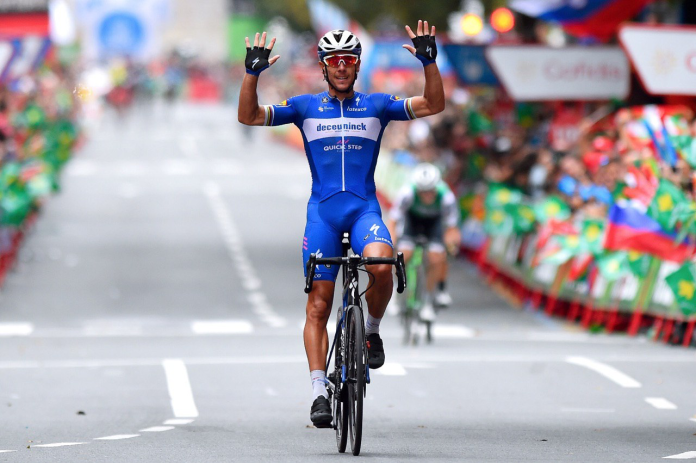
A Tour de France 17. szakasza Matteo Trentin győzelmét hozta, az Európa-bajnok a szökevénycsoportból ment tovább és egyedül ért a célba.

A 2019-es Tour de France-on a 17. szakasz volt az utolsó lehetősége arra, hogy egy nagyobb szökevény csoport hazaérjen. A 200 km-es dombos szakaszon a cél előtt egy harmadik kategóriás hegyet kellett megmásznia a mezőnynek, ami a klasszikus sprintereknek nem feküdt, így az ő csapataiknak állt nem érdekében fárasztani magukat, míg az összetett menők pihenésre tudták használni ezt a napot a következő három hegyi szakasz előtt, így ők szintén nem akartak sietni a szökevények után.

Ennek megfelelően egy nagy létszámú, pontosan 34 fős, szökevénycsoport alakult ki a szakasz elején, melynek az előnye gyorsan megnőtt a mezőnnyel szemben. Ebből a csoportból 30km-rel a cél előtt 10 fő -Matteo Trentin, Vegard Stake Laengen, Ben King, Pierre Luc Périchon, Greg Van Avermaet, Gorka Izagirre, Tom Scully, Kasper Asgreen, Alexis Gougeard és Daniel Oss – tudott továbbmenni, ahonnan az Európa-bajnok Matteo Trentin robbantott a harmadik kategóriás hegy lábánál. Az olasz versenyzőnek közel 30 másodperc előnye volt a hegytetőhöz érve, melyet utána a lejtőn már megtartott és így végül Matteo Trentin nyerte a szakaszt. Másodikként Kasper Asgreen ért a célba, a maradék szökevény csoportból pedig Van Avermaet volt a leggyorsabb, így ő a harmadik helyet szerezte meg. A mezőnyben gyakorlatilag semmi nem történt, mindenki pihenésre használta ezt a napot a csütörtöki hegyi szakasz előtt.

A 17. szakasz eredménye

1 Matteo Trentin (Ita) Mitchelton-Scott 4:21:36
2 Kasper Asgreen (Den) Deceuninck-QuickStep 0:00:37
3 Greg Van Avermaet (Bel) CCC Team 0:00:41
4 Bauke Mollema (Ned) Trek-Segafredo
5 Dylan Teuns (Bel) Bahrain-Merida
6 Gorka Izagirre Insausti (Spa) Astana Pro Team
7 Daniel Oss (Ita) Bora-Hansgrohe 0:00:44
8 Pierre Luc Perichon (Fra) Cofidis Solutions Credits 0:00:50
9 Toms Skujins (Lat) Trek-Segafredo
10 Jesus Herrada (Spa) Cofidis Solutions Credits 0:00:55

Az összetett állása a 17. szakasz után

1 Julian Alaphilippe (Fra) Deceuninck-QuickStep 69:39:16
2 Geraint Thomas (GBr) Team Ineos 0:01:35
3 Steven Kruijswijk (Ned) Team Jumbo-Visma 0:01:47
4 Thibaut Pinot (Fra) Groupama-FDJ 0:01:50
5 Egan Bernal (Col) Team Ineos 0:02:02
6 Emanuel Buchmann (Ger) Bora-Hansgrohe 0:02:14
7 Mikel Landa (Spa) Movistar Team 0:04:54
8 Alejandro Valverde (Spa) Movistar Team 0:05:00
9 Rigoberto Uran (Col) EF Education First 0:05:33
10 Richie Porte (Aus) Trek-Segafredo 0:06:30

Specialized Stumpjumper FSR Comp 29 review: Life with a Stumpy

In the past 6 months I have collected plenty of distance and experience aboard my Specialized Stumpjumper FSR Comp 29. In the first installment of my review I looked at the bike from a technological perspective, now it’s time to tell you what living with the Stumpy is like, how it performs, and what changes I have made to the original setup along the way. A good part of a year is enough for a bike to develop and crystalize, realizing its optimal form for the rider.

When I purchased this bike I was already the proud owner of a 2017 Specialized Enduro Comp Alu. As I got home with the new Stumpy, I immediately put the two bikes side by side to see how they compare. With a measuring caliper in hand I came to realized that the two bikes are close relatives, they share almost exactly the same tube profiles and dimensions. It’s fair to say that the 2018 Stumpjumper FSR Comp is the previous year’s model on steroids, inheriting quite a lot of technology from the Specialized Enduro model line. Taking into account that my intention was to get a new bike which is a lighter and more nimble than my existing Enduro, the close resemblance was not the best news.

I truly enjoyed the Enduro Comp, but it proved to be too much of a bike for the trails I generally ride. It’s an awesome bike for parks and on the slopes of the Alps, but unfortunately I rarely have a chance to visit such fantastic destinations. In my day to day riding a bike with less travel, lighter build and more agility would certainly be an advantage.

Laying the caliper and tape measure aside, I put Stumpy on the scale and saw 15.5kg on the display. It was quite a shock. Sure it’s a size XL, the frame is made of aluminum, so I shouldn’t expect much less, but the figure is still staggering. I immediately started disassembling the bike to see where the bulk was hidden. The first culprit was the Roval wheelset, which – equipped with a pair of 29×2.6” rubber – was a real ballast. The tires themselves were around 950g each, the wheels added another 2.2kg, so that’s over 4kg from the 15 and a half. Then I put the NX cogset on the scales and realized that a considerable portion of the earth crust was used to make this entry level model. 616g must be a record for this component in the history of bike manufacturing! Substituting another wheelset with a lighter cassette which I had on hand cut a considerable amount of from the Stumpy’s porky weight. In the end I managed to get the bike just over 14kg, which is much more pleasing than the original figure. Since I already owned the other wheelset, the upgrade didn’t involve spending more money on the Stumpy project.

The suspension elements – the FOX 34 fork and the FOX Float DPS rear shock – moved smoothly following the usual bead-in period. Nevertheless I felt the fork lacked adequate support on steep downhill trails, and the mid-stroke was more linear. When I increased the amount pressure, the sensitivity of the fork suffered. In such cases there is a clear-cut solution is placing some volume spacer tokens inside the air chamber. These plastic discs effectively reduce the air volume, making the fork more progressive through its travel.

Shifting duty on this “Expert” model is entrusted to the SRAM NX Eagle 1×12 speed system, which I found to provide adequately wide gear range with evenly distributed steps. The speed and the precision under pedaling load is surprisingly good especially at its price and position in the American component maker’s hierarchy. Until the recent launch of the SX Eagle this was the rock bottom group set for 12 speed, but I challenge anyone to find a fault in its operation. The only downside seems to be the hefty rear cassette, though performance-wise it’s also top-notch. The biggest bonus for me was that the Eagle does not throw the chain off when pedaling backwards like the Japanese competitor’s systems.

The frame geometry could be labelled as middle-of-the-road. It doesn’t go as far in the “low and slack” realm as the most recently introduced bikes on the market, but it certainly isn’t old-school either. As I have alluded to in my previous article, the new Stumpy frame adds geometry adjustment to its technical arsenal. As the whole process can be performed in a few minutes without taking out the rear shock or even depressurizing it. So in the first few weeks of ownership I often took the opportunity to make adjustments to frame geometry based on the expected riding conditions. The effect is quite apparent, and I know that a lot of Stumpy owner do actually use feature. With the steeper angles the bike feels more efficient under pedaling, while the slacker angles are perfect for fun riding.

The XL frame size has some drawbacks as I have experienced. The longish 140mm head tube paired with the stock 30mm rise handlebar results in an excessively tall front end. In the steeper geometry setting this wasn’t such a great problem, but in the slacker mode the weight distribution moves lower and towards the back making the high cockpit feel even taller. Fist I tried to compensate for this by moving the saddle forward and tilting it downward, but the rail is simply not long enough to solve the problem. Since I found the slacker setting preferable for my style of riding, I had to find another solution. This involved swapping the riser bar for a flat one with zero rise. This really made the difference I was looking for, so the saddle went back to its original place, and balance was restored both on steep uphills and descends. Since this modification, I have rarely took the trouble to switch the geometry settings of the frame as the lower and slacker is so much more enjoyable.

The wide Specialized Butcher and Purgatory tires do a decent job, they provide adequate traction in a variety of riding conditions. As the wheels come with tubeless tape installed, only the supplied valves have to be inserted and liquid sealant added to convert to a tubeless setup. The tires hold pressure quite well, at least better that previous generation of Specialized rubber.

The SRAM Guide brakes with the stock organic pads are easy to modulate, the power is there too if the lever pulled hard enough. The downside – apart from the lack of “bite” – is rapid pad wear. When it was time, I simply swapped the pads for the sintered variety and now braking feels perfect. It provides enough power for riding in the Alps even under constant braking, and the lever throw doesn’t tend to wonder. This is a nice surprise, since the SRAM Guide brakes are notorious for having bite point shifts during long descents. The dropper post still works perfectly after a lot of hard use, which is also quite a remarkable feat in my experience.

Out on the trails

The first few rides were on the stock equipment, thus I can report on what the Stumpjumper FSR Comp is like out of the box. This strategy also provides a handy comparison for each of the upgrades I made on this bike. The Stumpy is definitely comfortable on fire roads both up and down, but there shouldn’t be any doubt about its ability to cope with these kinds of trails. Steep technical climbing is not my forte, this is where I tend to suffer, and it’s unlikely the bike’s fault. Just to make sure, I asked an active racer friend to take the Stumpy out on a ride. He assured me of what I already knew: the bike is a climbing beast! He managed to improve most his Strava times on tough climbs even though the Stumpjumper FSR is considerably heavier than his own rig. I can add that the Stumpy maintains its line on these slow grinds, keeps its nose down, and makes tight maneuvering quite simple. The Purgatory tire at the back tends to bite into the ground, provides great traction even when the surface is loose. The Butcher in front rolls well despite the tall knobs, the considerable width and weight. I felt it to be fairly fast, and it corners in an exemplary fashion. While not being a mud tire per se, it’s not bad in mucky conditions either. Both tires are perfectly fine in terms of performance, they are among the better rubber I have ever tried, and the only reason for their substitution was the excess weight.

The FSR suspension has a tendency to slightly bob under pedaling load. I’m familiar with this, since I’ve been riding this system for nearly 15 years. This is something I can live with, hence my choice to stay with the FSR platform. Most of the time I leave compression dampening fully open, I sometimes close it partially on fire road climbs to lessen bob. I can’t remember ever using the lockout function. On one hand locking out the travel puts more wear into the shock’s internals, on the other hand the ride feel becomes somewhat choppy when the suspension is completely stiff. In either fully or partially open settings the bike climbs well, maintains good traction and feels much lighter than what the weigh would suggest. Specialized have a great job with the suspension platform, and this Stumpy is the best FSR ever!

After all the effort that has gone into climbing comes the justified reward of the descent. For me this is the high point of every ride, and it seem that I share this take on mountain biking with the developers of the Stumpy. I’ve never gone quicker on my favorite trails, not even with the Enduro which has somewhat longer suspension travel. The advantage is clearly in the agile handling. I can change lines and corner quicker with the new bike. It’s much more playful despite the large wheel size. The rider doesn’t have to put too much effort into maneuvering the Stumpy, just point it in the desired direction, let go of the brakes and enjoy the experience. Of course you have to hold tight and pay attention, otherwise the speed may get the better of your controlling skills.

In tight corners you have to do some maneuvering in order to stay on track. In these situations the 29er wheels are clearly at a disadvantage over the 27.5” size. On the other hand, the long-drawn fast corners typically found in bike parks are tailor-made for the Stumpy. It‘s exceptionally stable and measured, thanks in part to the mighty wheelbase (1232mm), as well as to the larger wheels. Although the rear shock is quite sensitive and quick to react, I feel that the travel is much too linear, causing frequent bottoming out on jumps, rocky sections and Alpine terrain in general. Its capabilities are quickly overwhelmed in such situations. Part of problem stems from the short travel, the other factor is the technical limitations of the single chamber, mid-range Fox unit. The shock could be tuned in order to improve its performance, the other possibility would be to upgrade the stock model for a more elaborate offering. If the shock performance was improved, the owner would enjoy a bike with a more extended capabilities.

Supported by two air volume tokens the Fox 34 offers fork very good performance despite its entry-level status in the American suspension brand’s range. Our last trip to Sölden strengthened my faith in this fork where it performed admirably on a quite challenging 6-8km long downhill run. It soaked up all the hits in the rock garden, literary forcing the front tire to the ground. There was no longer any trouble with the linear travel, it’s plenty rigid in all trail conditions under my weight. For my skills and tempo, it offers everything I can possibly ask for.

When it comes to rigidity, the frame is also way above average. I never felt any twisting or instability in sudden turns or after a missed landing. The engineers didn’t try to skimp on material, it’s no doubt a beefy structure. All screws and bolts are as tight as on the first day, nothing came loose during the any of the challenging rides. The quality of manufacturing is praiseworthy, just as we come to expect from Specialized. Thanks to the dune-like surface of the chain stays and the SRAM Eagle derailleur there is virtually no rattle, the bike completely quiet even on the roughest trails.

Upgrades

I’ve already spoken about the wheel and tire swap. The replacements came in the form of a set of Newmen Evolution SL A30, and the new tires were the WTB Vigilante 2.3” at the back and the new German brand, WolfPack’s Cross at the front. The latter is actually a test sample for me to review, it features a light casing with a general use tread, and seems to be on par with the best tires on the market.

Along with the wheel swap, I couldn’t resist replacing the otherwise excellent SRAM NX rear cassette for a more elaborate Sunrace 12-speed model. Its construction mimics the large manufacturers’ top-end offerings, there are two anodized aluminum cog carriers as opposed to the plain steel single cogs on the NX. Thanks to the hardened machined steel cogs the shift performance is very close to the stock cassette, there is a little more noise when shifting under load, but I can live with this. I’ve been running Sunrace cassettes for the past few years and found them to provide great shifting and durability paired with considerably lower weight as well as excellent value.

The stock wheelset with the cassette didn’t end up in the closet. I mounted another pair of tires on them which I also received for testing – the Maxxis Assegai DH and a WTB TrailBoss with reinforced sidewalls – for use in bike parks. I also changed the rather basic stock grips for a silicon-based premium Specialized model. I’ve been using these for quite some time as they provide great comfort and much better shock absorption, which I appreciate the most on the challenging rides in the bike parks and Alpine terrain.

My main realization while testing the Stumpjumper FSR Comp 29 is that the bike industry has truly made a lot of progress in the past few years, way more than at any time during my two decades in the sport. Shifting, breaking, suspension technology have evolved greatly, and now even the lower-end models offer fantastic performance and solid reliability. Suspension travel and wheel size grew in tandem, making the bikes faster and safer.

I’ve owned many Specialized Stumpjumper FSR bikes, and comparing this bike to one I rode way back is staggering. The Stumpy has always been designed to be an all-rounder mountain bike, but the term has evolved with the technical improvements. Today’s all-rounder is a very versatile bike, suitable for many different types of trails from cross country to ones once considered extreme. This aluminum frame Stumpjumper FSR variant wasn’t designed to be featherweight. On the other hand, durability and tackling challenging trails must have received top priority from the design team. Frame geometry is spot on for this type of riding, thus the American legend has once more succeeded in providing a well-rounded package. It’s a fun bike for all kinds of MTB adventures!

For more information, please visit the manufacturer’s website.


Ki nyeri a sárga trikót? – Az évtized legizgalmasabb Tour de France-át látjuk éppen

A címben feltett kérdés sokakat foglalkoztat a múlt hétvége után, olyan Tour de France-t láthatunk idén, amire régen nem volt már példa. Úgy kezdődött meg a verseny utolsó hete, hogy még fél tucat versenyző esélyes a győzelemre és szinte lehetetlen megtippelni, hogy ki lesz a végső nyertes. Mi sem szeretnénk jóslásokba bocsátkozni, de elemezzük a jelenlegi helyzetet.

18. szakasz – Július 25.

A 2019-es Tour de France útvonalválasztása sokban hozzájárult ahhoz, hogy két és fél hét után sem lehet megmondani, hogy Párizsban ki fogja viselni a sárga trikót. Változatos, izgalmas szakaszok váltották egymást, amik nem feltétlenül kedveztek az összetett menők közti különbségek kialakulásában. Az időfutamok hossza csökkent, és így az idei rövid időfutam nem volt elég ahhoz, hogy valaki komolyabb előnyre tudjon szert tenni. A hegyeken óriási csatákat láthattunk, de senki nem lógott ki annyira a mezőnyből, hogy biztosan neki lehessen adni előre az összetett első helyet. Julian Alaphilippe szólt bele a nagyok játékába, a francia, akire senki nem számított, előnyt szerzett az összetettben, ami egyelőre nem akar elfogyni, sőt bizonyos szakaszokon még növelni is tudta.

19. szakasz – Július 26.

Ki nyeri a Tour-t?

A jelenlegi első hat közül bárki odaérhet, Emanuel Buchmann (Bora-Hansgrohe), Egan Bernal (Team Ineos), Thibaut Pinot (Groupama-FDJ), Steven Kruijswijk (Team Jumbo-Visma), Geraint Thomas (Team Ineos) és még Julian Alaphilippe (Deceuninck-QuickStep) is megszerezheti a végső győzelmet. Az első és a hatodik között mindösszesen 2 perc 14 másodperc különbség van, és ha kivesszük Alaphilippe-et a játékból akkor 39 másodpercen belül van az öt versenyző.

1 Julian Alaphilippe (Fra) Deceuninck-QuickStep 64:57:30
2 Geraint Thomas (GBr) Team Ineos 0:01:35
3 Steven Kruijswijk (Ned) Team Jumbo-Visma 0:01:47
4 Thibaut Pinot (Fra) Groupama-FDJ 0:01:50
5 Egan Bernal (Col) Team Ineos 0:02:02
6 Emanuel Buchmann (Ger) Bora-Hansgrohe 0:02:14

A következő 5 szakaszból, 3 kemény lesz, csak szerdán és vasárnap van lehetőségük pihenni az összetett menőknek. Csütörtökön, pénteken és szombaton nagy hegyeket kell megmásznia a mezőnynek, ahol valószínűleg ki fognak alakulni a különbségek, még az is előfordulhat, hogy csak szombaton dől el az idei Tour de France (az utolsó szakaszon már nem támadják egymást a sárga trikóért).

20. szakasz – Július 27.

Nézzük, hogy kinek mennyi esélye van!

Julian Alaphilippe: Eddig óriási meglepetés az egynaposokon jól szereplő francia, mindenki azt várta, hogy hamar el fogja veszíteni a sárga trikót, erre válaszként megnyerte a Tour időfutamát és az első komolyabb hegyi szakaszon sem vesztett időt a többiekkel szemben (Pinot kivéve), sőt még növelte az előnyét. A 15. szakaszon viszont már sebezhető volt és csak kemény küzdelem árán tudta minimalizálni a veszteségeit, ami látszólag sokat kivett belőle, de az előnye (1:35 Thomas-szal szemben) még jól menedzselhető. Bár a nem túl energiatakarékos stílusa mindenképpen ellene szól és a csapatvezetője is azt állítja, hogy semmi esélye az összetett győzelemre, ki tudja…

Geraint Thomas: A Tour de France címvédőjeként érkezett a versenyre, és idén is sokan fogadtak volna a győzelmére. Az idei Tour-on nem hibázott, az időfutamon is ő volt a leggyorsabb az összetett menők közül, a hegyeken voltak kisebb gondjai, nem tudta átvenni Pinot támadásait, de egyenletes teljesítményt nyújtott, egyszer sem rogyott meg, a saját tempójában végig jól haladt. Mellette szól, hogy valószínűleg a következő 3 hegyi szakaszon sem fog megrogyni, hanem a saját tempójában hozza majd a hegyeket, míg másoknak lehetnek gondjai. A csapata, a Team Ineos, szintén erős, bár túl sokat nem láttunk belőlük még a hegyeken, de ott van még Bernal is az esélyesek között, akivel ketten legyőzhetik a többieket.

Steven Kruijswijk: A Jumbo-Visma-nak idén erős csapata van a Tour-on, bár nem Kruijswijk-re épült fel a csapat, hanem inkább a sprintekre, a holland ennek ellenére napról napra érkezik az elejével és eddig egyszer sem volt neki rossz napja. Jelenleg a dobogó harmadik fokán áll 1:47-re Alaphilippe mögött és 12 másodpercre Thomas-tól, benne van a pakliban, hogy egyszer megelőzi a britet és Alaphilippe kiesik az összetettből, és ő kerül az élre.

Thibaut Pinot: Eddig a Groupama-FDJ bringása tűnik a legerősebbnek a hegyeken és ehhez még egy nagyon jó hegyi segítője is van David Gaudu személyében. Ha az oldalszeles szakaszon éberebb akkor ő állna a második helyen az összetettben pár másodperccel Alaphilippe mögött. A kérdés az, hogy az utolsó héten is tudja-e azt a formát nyújtani, mint amit a második héten tudott, lesz-e formahanyatlása vagy végzetes megrogyása, betegsége, mint a tavalyi Giro-n. Mindenesetre jó eséllyel vág neki az utolsó szakaszoknak.

Egan Bernal: A kolumbiai jól bírta a hegyeket és rendre megverte csapattársát, Thomas-t, egyedül az időfutamon szedett össze nagyobb hátrányt, amit hegyi szakaszról hegyi szakaszra folyamatosan csökkentett, jelenleg 2 perc 2 másodperc a hátránya Alaphilippe-pel szemben, és 27 másodpercre van Thomas-tól. Ha továbbra is így fog haladni a  hegyeken akkor ő is odaérhet a dobogó tetejére.

Emanuel Buchmann: A nagy meglepetés. A német versenyző még soha nem szerepelt ilyen jól nagy körversenyen, de szakaszról szakaszra folyamatosan bizonyítja, hogy bizony számolni kell vele. A kérdés az, hogy három héten keresztül bírni fogja-e. Nagyon sokan meglepődnének, ha ő nyerné az idei Tour-t, de jelenleg megvan rá az esélye.


Szerintetek ki lesz a végső győztes? Várjuk kommentben a válaszokat.

Tour de France: Caleb Ewan győzelem a regeneráló szakasz végén

A pihenőnap utáni szakaszon a sprintereké volt a főszerep, a mezőnyhajrán Caleb Ewan volt ismét a leggyorsabb, a szakasz vesztese Jakob Fuglsang volt, aki egy bukást követően feladni kényszerült a versenyt.

A Tour de France 16. szakaszán 177 km várt a Francia Körverseny mezőnyére, mely túl sok szintet nem tartalmazott. Várható módon a sprinterek szerették volna maguknak ezt a szakaszt, mert ezután már csak a párizsi befutón lesz esélyük harcba szállni egy szakaszgyőzelemért.

A rajt után egy 5 fős szökés – Lars Bak, Stéphane Rossetto, Paul Ourselin, Lukas Wisnowski, Alexis Gougeard – tudott elmenni, melyet a sprinterek csapatai folyamatosan rövid pórázon tartottak, egy másodpercig sem volt kérdés, hogy mezőnyhajrával fog végződni a mai szakasz. Az utolsó kilométereken fogták meg a szökevényeket, majd már kezdődött is a hajrá, Caleb Ewan egész hátulról indította meg a sprintjét, közben majdnem fennakadt egy QuickStep-es segítő kerekén is, de végül magabiztosan elsőként haladt át a célvonalon. A második Elia Viviani lett, harmadikként pedig Dylan Groenewegen zárta a szakaszt. Az összetettben érdekeltek közül egy bukást követően Jakob Fuglsang feladta a versenyt. Geraint Thomas is elesett a szakasz során, de látszólag nem történt baja, folytatni tudta a versenyt.

A 16. szakasz eredménye:

1 Caleb Ewan (Aus) Lotto Soudal 3:57:08
2 Elia Viviani (Ita) Deceuninck-QuickStep
3 Dylan Groenewegen (Ned) Team Jumbo-Visma
4 Peter Sagan (Svk) Bora-Hansgrohe
5 Niccolò Bonifazio (Ita) Total Direct Energie
6 Michael Matthews (Aus) Team Sunweb
7 Matteo Trentin (Ita) Mitchelton-Scott
8 Jasper Stuyven (Bel) Trek-Segafredo
9 Alexander Kristoff (Nor) UAE Team Emirates
10 Andrea Pasqualon (Ita) Wanty-Gobert

Az összetett állása a 16. szakasz után

1 Julian Alaphilippe (Fra) Deceuninck-QuickStep 64:57:30
2 Geraint Thomas (GBr) Team Ineos 0:01:35
3 Steven Kruijswijk (Ned) Team Jumbo-Visma 0:01:47
4 Thibaut Pinot (Fra) Groupama-FDJ 0:01:50
5 Egan Bernal (Col) Team Ineos 0:02:02
6 Emanuel Buchmann (Ger) Bora-Hansgrohe 0:02:14
7 Mikel Landa (Spa) Movistar Team 0:04:54
8 Alejandro Valverde (Spa) Movistar Team 0:05:00
9 Rigoberto Uran (Col) EF Education First 0:05:33
10 Richie Porte (Aus) Trek-Segafredo 0:06:30