Home Blog Page 429

Ki nyeri az időfutambajnokságot? – Nyilvános az időfutam OB rajtlistája

Mint már írtunk róla, ezen a héten csütörtökön, 2018. június. 28-án rendezik az Időfutam Országos Bajnokságot Debrecenben, ahol az utánpótlástól a felnőtt kategóriákig eldől, hogy ki lesz Magyarország legjobbja. Az elit férfiaknál két nagy név csatája várható, valószínűleg Pelikán János és Peák Barnabás között dől majd el a bajnoki cím.

Két nappal az Országos Bajnokság előtt kihirdették a verseny rajtlistáját, amin rekordszámú nevezővel találkozhatunk, melynek az egyik oka az lehet, hogy a szövetség döntése alapján ettől az évtől fogva csak az lehet válogatott, aki mindkét Országos Bajnokságon elindul.

Az elit férfiaknál hatalmas csata várható a Szlovén Körversenyen kitűnő időfutamot teljesítő Pelikán János és az UCI központban készülő Peák Barnabás között. A nőknél az elmúlt két év győztese, Király Mónika az esélyes, de lehetnek meglepetések, több triatlon versenyző is rajthoz áll ebben a kategóriában. U23-ban nehéz jóslatokba bocsátkozni, bárki odaérhet és 2016 bajnoka D. Kovács Dávid is ismét rajthoz áll.

A rajtlista a csatolt dokumentumban megtekinthető.
IDOFUTAM_OB_20180628_rajtlista

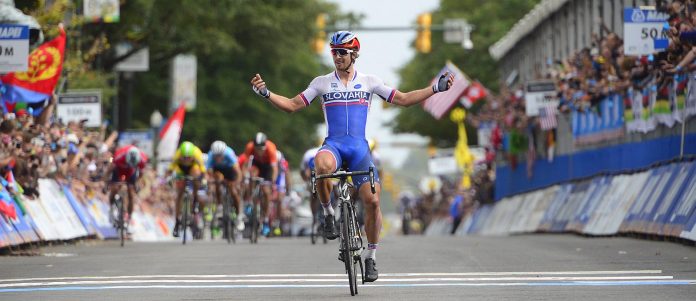
Sagan újra szlovák bajnok – Országos Bajnokságok eredményei

A Sagan testvérek nyerték a szlovák nemzeti bajnokságot, míg Spanyolországban Valverdének ismét csak a második helyet sikerült megszerezni és Belgiumban Gilbertnek is be kellett érnie az ezüsttel.

Idén kicsit szokatlan módon rendezik az országos bajnokságokat, ugyanis törthétvégére esik június utolsó hétvégéje, ezért a Nemzetközi Kerékpáros Szövetség két hétvégét is megjelölt amikor az országok megrendezhetik a nemzeti bajnokságaikat. Jó pár ország döntött úgy, hogy a június 23-24. tartozó hétre szervezik (hazánkban június utolsó hetében lesz) az országos bajnokságokat, köztük jó pár szomszédunk.
Nézzük, hogy kik viselhetik a bajnoki mezeket:

Szlovákia
Férfiak:
Időfutam:
1. Čanecký Marek
Mezőny:
1. Sagan Peter
2. Sagan Juraj
Nők:
Időfutam:
1. JasekovÁ Tatiana
Mezőny:
1. Medvedova Tereza

Csehország
Férfiak:
Időfutam:
1. Černý Josef
2. Bárta Jan
Mezőny:
1. Černý Josef
2. Bárta Jan
Nők:
Időfutam:
1. Korvasova Tereza
Mezőny:
1. Machacova Jarmila

Spanyolország
Férfiak:
Időfutam:
1. Castroviejo Jonathan
Mezőny:
1. Izagirre Gorka
2. Valverde Alejandro
Nők:
Időfutam:
1. Garcia Margarita Victoria
Mezőny:
1. Merino Eider
Belgium
Férfiak:
Időfutam:
1. Campenaerts Victor
Mezőny:
1. Lampaert Yves
2. Gilbert Philippe
Nők:
Időfutam:
1. Duyck Ann-sophie
Mezőny:
1. Dom Annelies

Svédország
Férfiak:
Időfutam:
1. Ludvigsson Tobias
Mezőny:
1. Eriksson Lucas
Nők:
Időfutam:
1. Nordén Lisa
Mezőny:
1. Fahlin Emilia

Norvégia
Férfiak:
Időfutam:
1. Boasson Hagen Edvald
Mezőny:
1. Laengen Vegard Stake
Nők:
Időfutam:
1. Gulliksen Line Marie
Mezőny:
1. Heine Vita

Lengyelország
Férfiak:
Időfutam:
1. Bodnar Maciej
Mezőny:
1. Kwiatkowski Michal
Nők:
Időfutam:
1. Jasinska Małgorzata
Mezőny:
1. Jasinska Małgorzata

Szlovénia
Férfiak:
Időfutam:
1. Tratnik Jan
Mezőny:
1. Mohoric Matej
Nők:
Időfutam:
1. Bujak Eugenia
Mezőny:
1. Batagelj Polona

USA
Férfiak:
Időfutam:
1. Rosskopf Joey
Mezőny:
1. Brown Jonathan
Nők:
Időfutam:
1. Neben Amber
Mezőny:
1. Rivera Coryn

Románia
Férfiak:
Időfutam:
1. Grosu Eduard Michael
Mezőny:
1. Grosu Eduard Michael
Nők:
Időfutam:
1. Covrig Ana
Mezőny:
1. Covrig Ana

Cube AMS 100 C: 68 Race 29 Review – Marathon full suspension top-dog

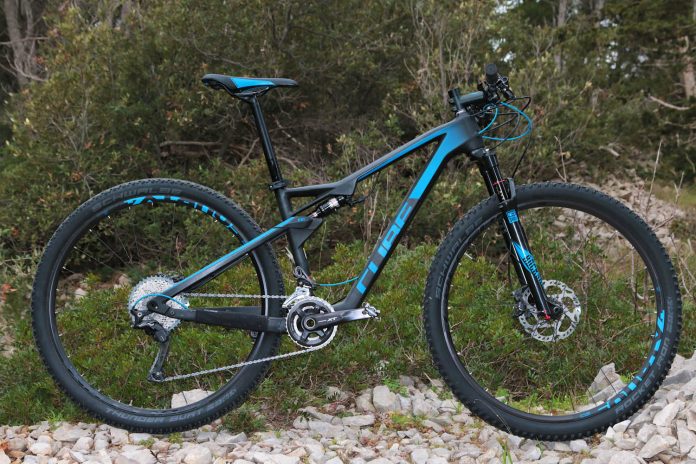
The Cube AMS 100 is a full suspension XC bike that you can confidently take to a race, be it an XCO competition or a marathon. Thanks to its well-designed suspension system, it can climb the steepest of rocky slopes and provide a clear advantage on downhills compared to its hardtail companions.

I quickly put my hands on the AMS in Brac, afraid of someone forestalling me. Performance-oriented MTB bikes are my weakness. I like to ride fast but I prefer not to feel every stone on the terrain, so my heart is set on the bikes which are designed primarily for competition. Up until now I have only ridden the Stereo 120 from the Cube lineup, which has 120mm travel, but it proved to be a little bit sluggish for my liking. All in all, I enjoyed the experience, but it’s clearly a different league from the AMS series. So I was curious what the German manufacturer could put out in the XC bike segment.

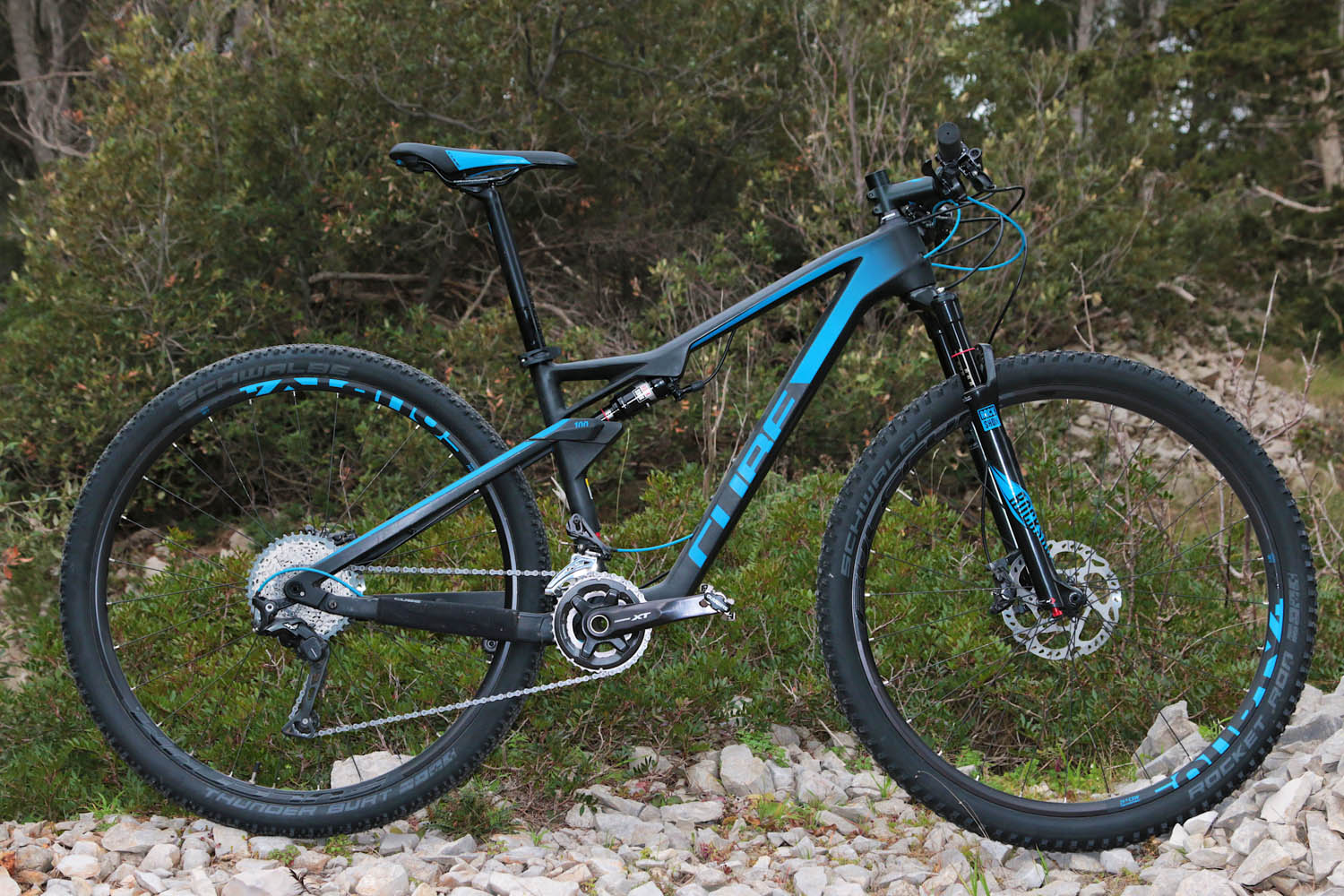
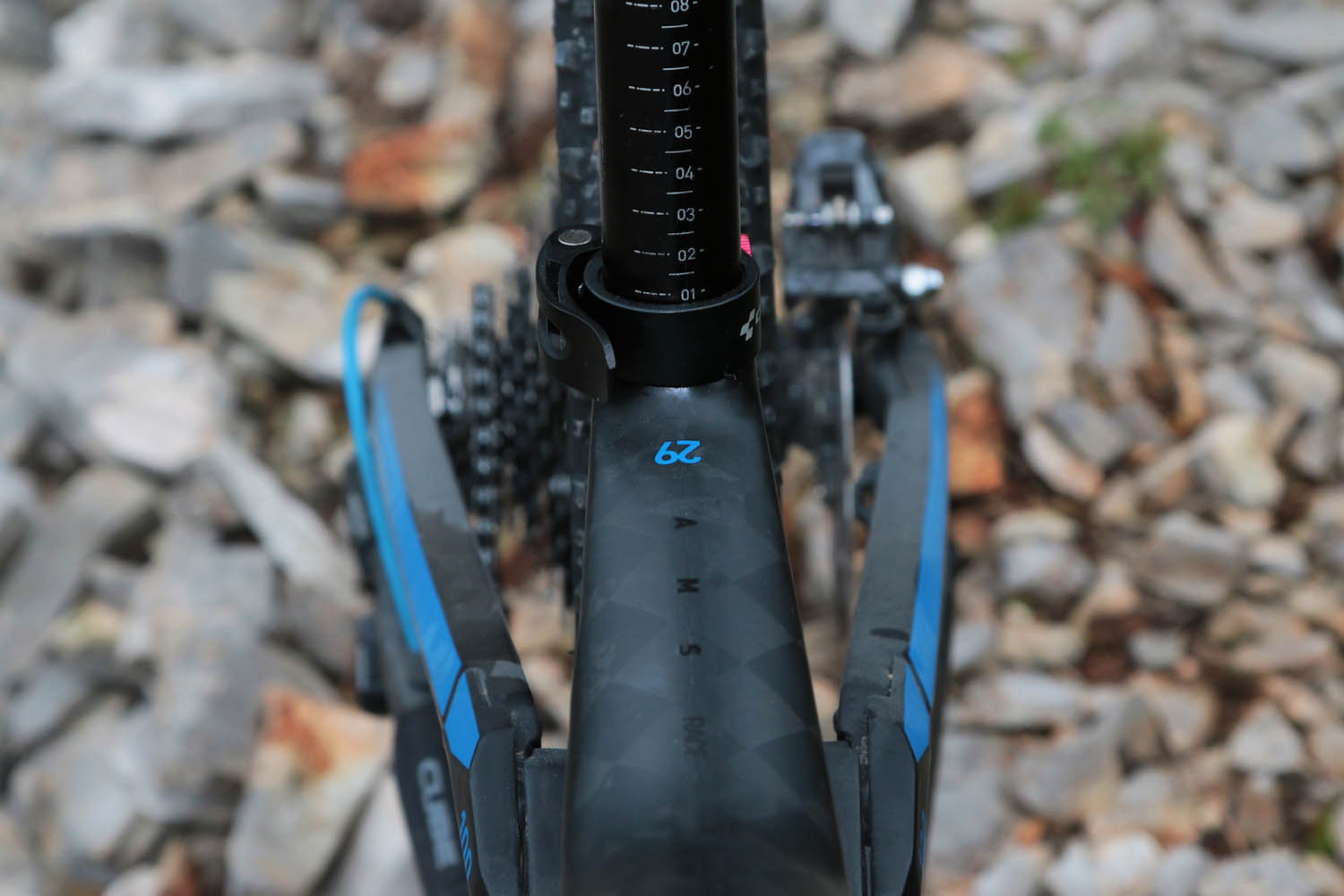
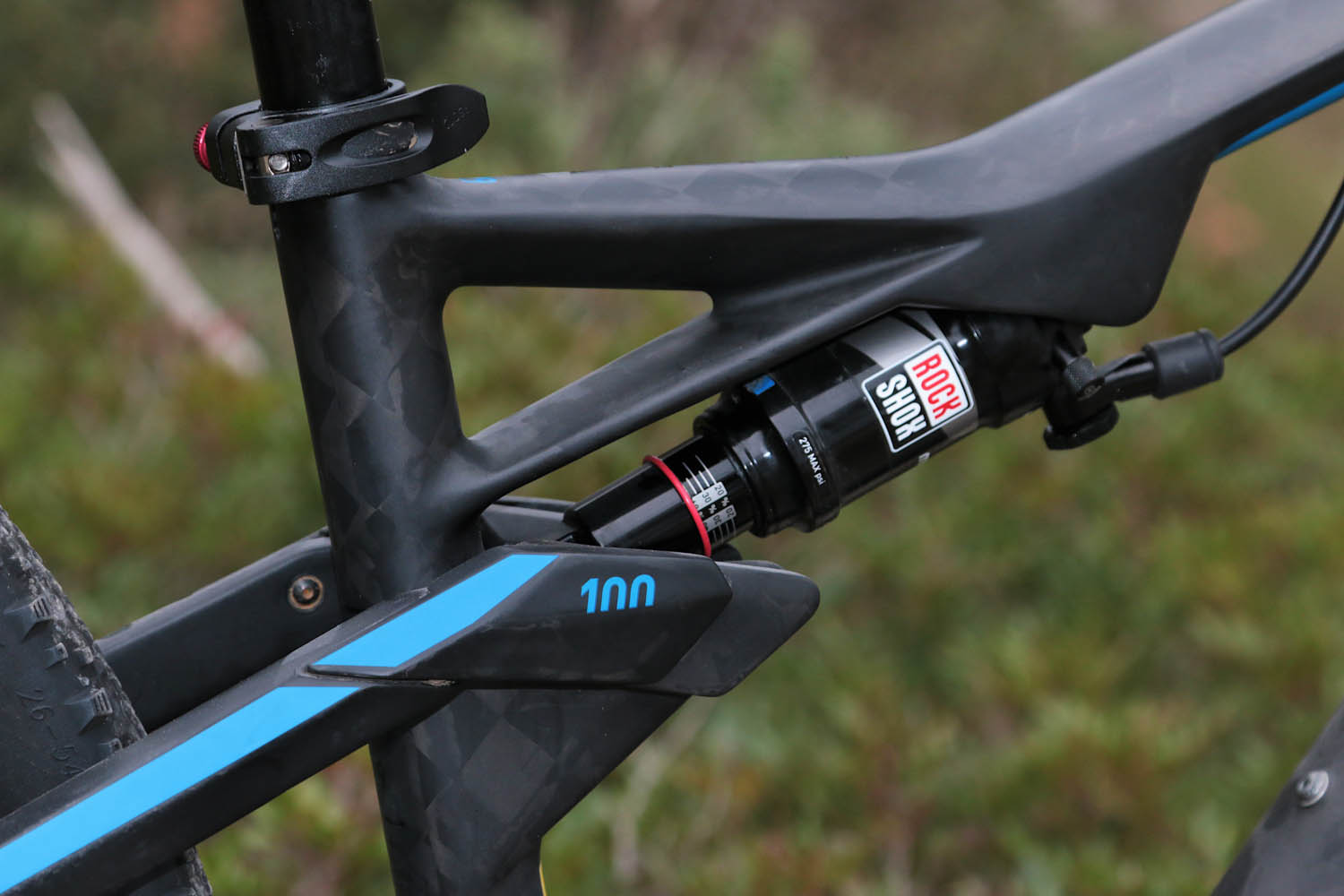
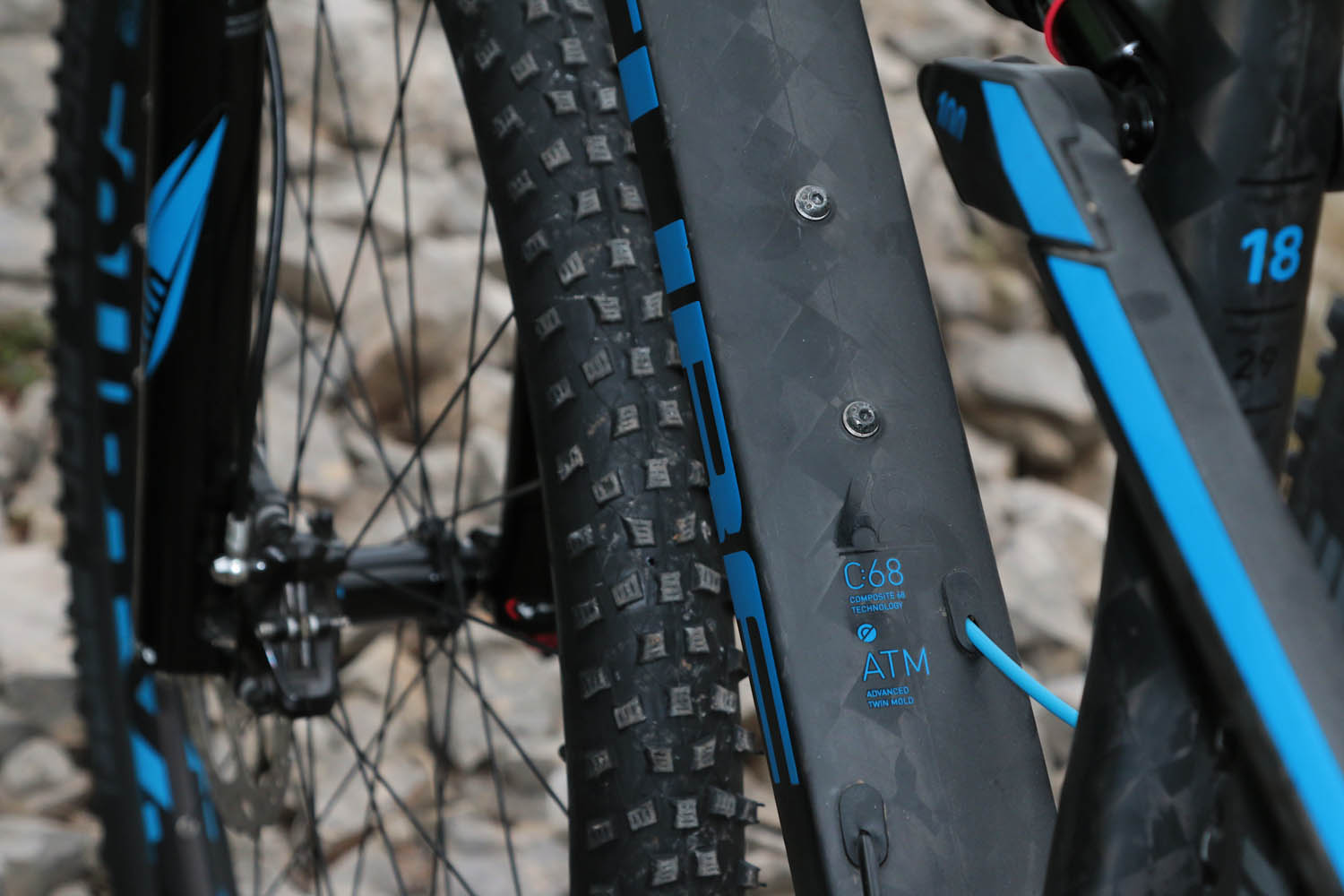
The Cube is not selling a surprise packet. Hence the AMS designation tells almost everything about the bike’s intended use: the „100” indicates the suspension travel, the „C: 68” refers to the frame material, the „29” is the wheel size, and the „Race” is for the level of the components. Those who are familiar with the German manufacturer’s model lineup can more or less know to expect based on the model name itself. The Cube put a lot of technology into the AMS’s carbon frame, so much that it’s actually difficult to enumerate all. So I’ll just highlight the most important ones.

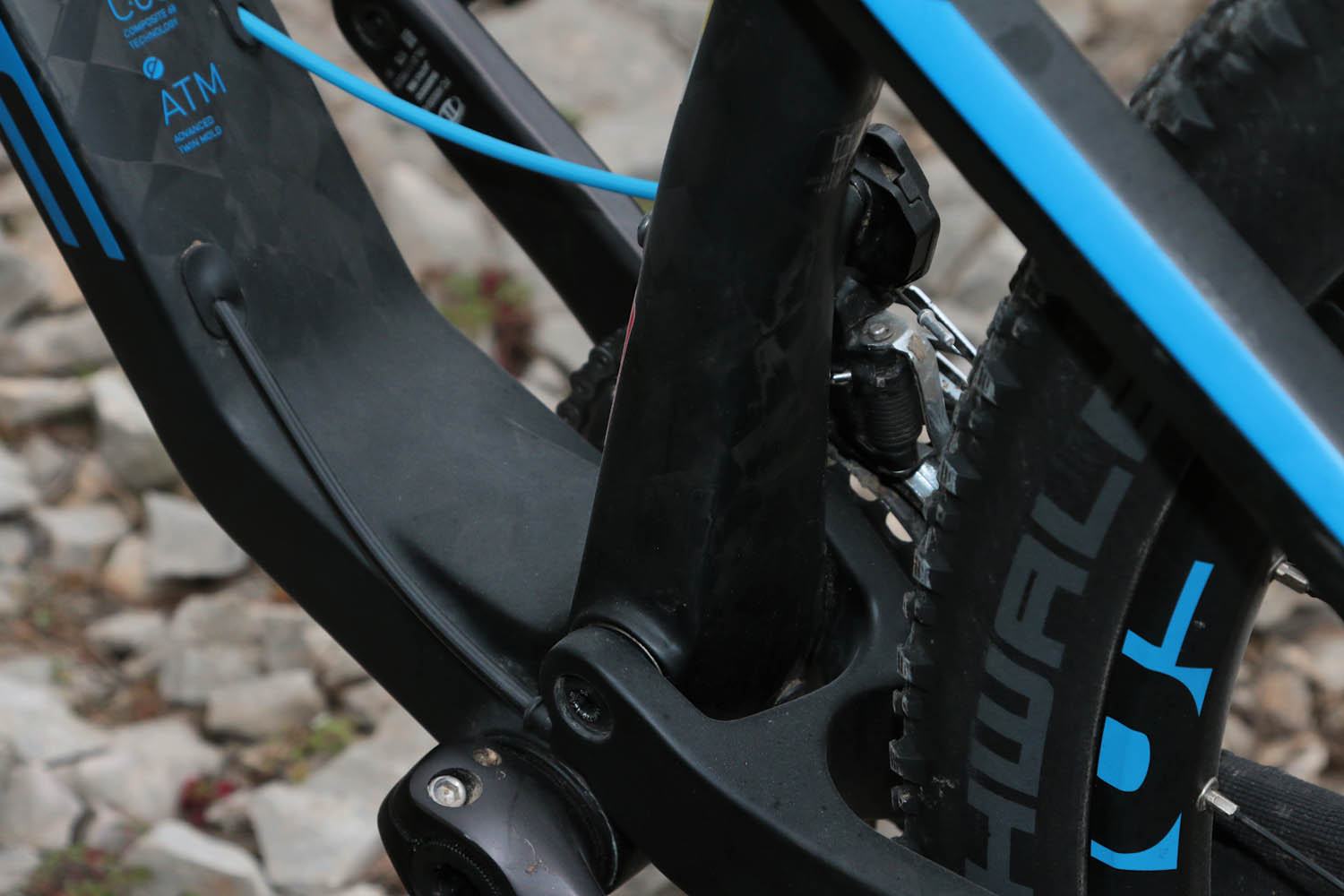
We have been writing a lot about the Twin Mold Monocoqe technology, which is presently one of the most advanced carbon frame manufacturing methods. Thanks to this technique, it’s now possible to build frames that are strong, safe and lightweight at the same time. The „AC: 68” is not just a marketing term, but actually indicates the percentage of carbon fibres in the frame, the rest being the resin. One might be surprised that 68% carbon content is something a manufacturer may want to boast about, but this is well above the industry standard (60% carbon fibre ratio). And why is it better to have more carbon? The answer is simple: less material is needed to produce a frame of same strength, which makes it easier to create lighter frames. But we can also reverse the idea, and say that the Twin Mold Monocoqe technology allows Cube to produce stronger frames for the same weight.

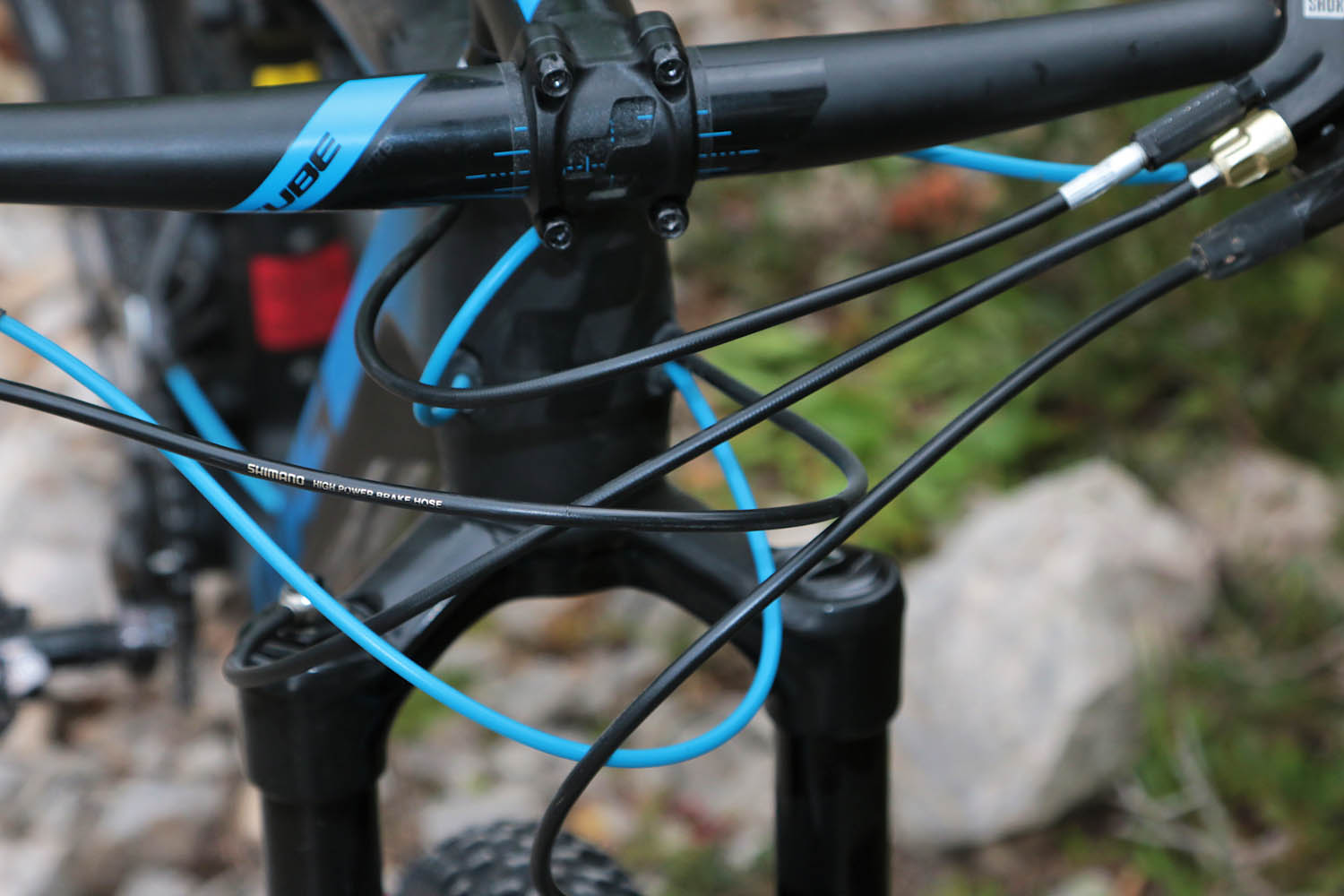
The Cube is now a leader of industry trends, hence all the cables in the AMS series runs inside the frame. This is quite an achievement in engineering, on the other hand it makes the job of mechanics a bit more difficult. The integrated PM disc brakes, the PressFit bottom bracket and the Tapered headset are also indispensable features of the higher end Cube bikes these days. The wheels also employ the latest development – the new BOOST 148 standard – which moves the dropouts 3-3 mm outboard on each side to make a stiffer wheel. In the case of the 29″ wheel size, BOOST results in a 21% improvement in stiffness compared to the older 142mm dropout standard.

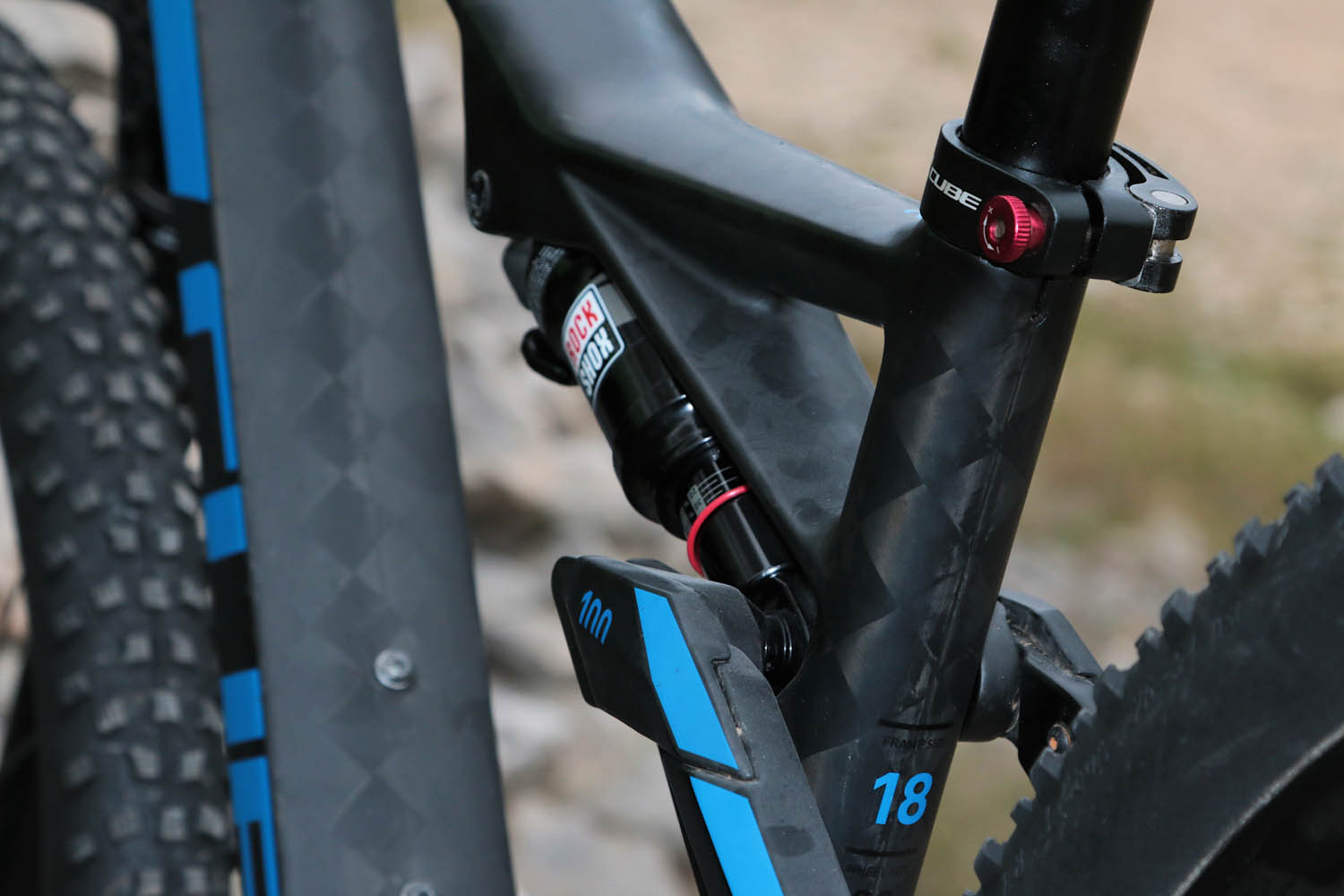
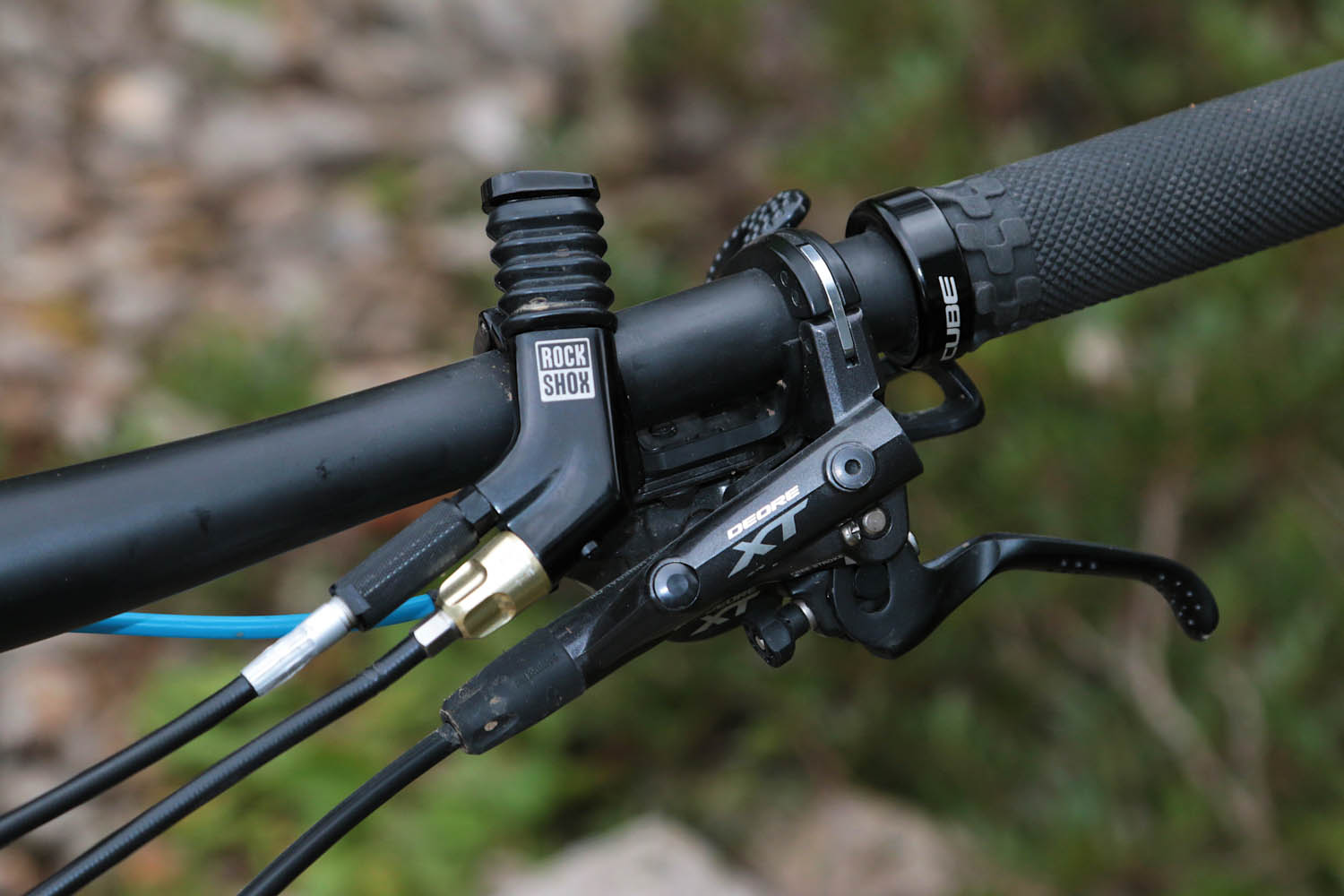
Cube employs the so-called FSP4LINK suspension system in the AMS series, which is actually a improved version of the classic virtual 4-bar linkage system. It is designed to avoid unnecessary bounce while pedalling and also the stiffening effect when braking. In order to achieve better efficiency, the Rock Shox Monarch XX rear shock features a remote compression damping lockout installed on the handlebar.

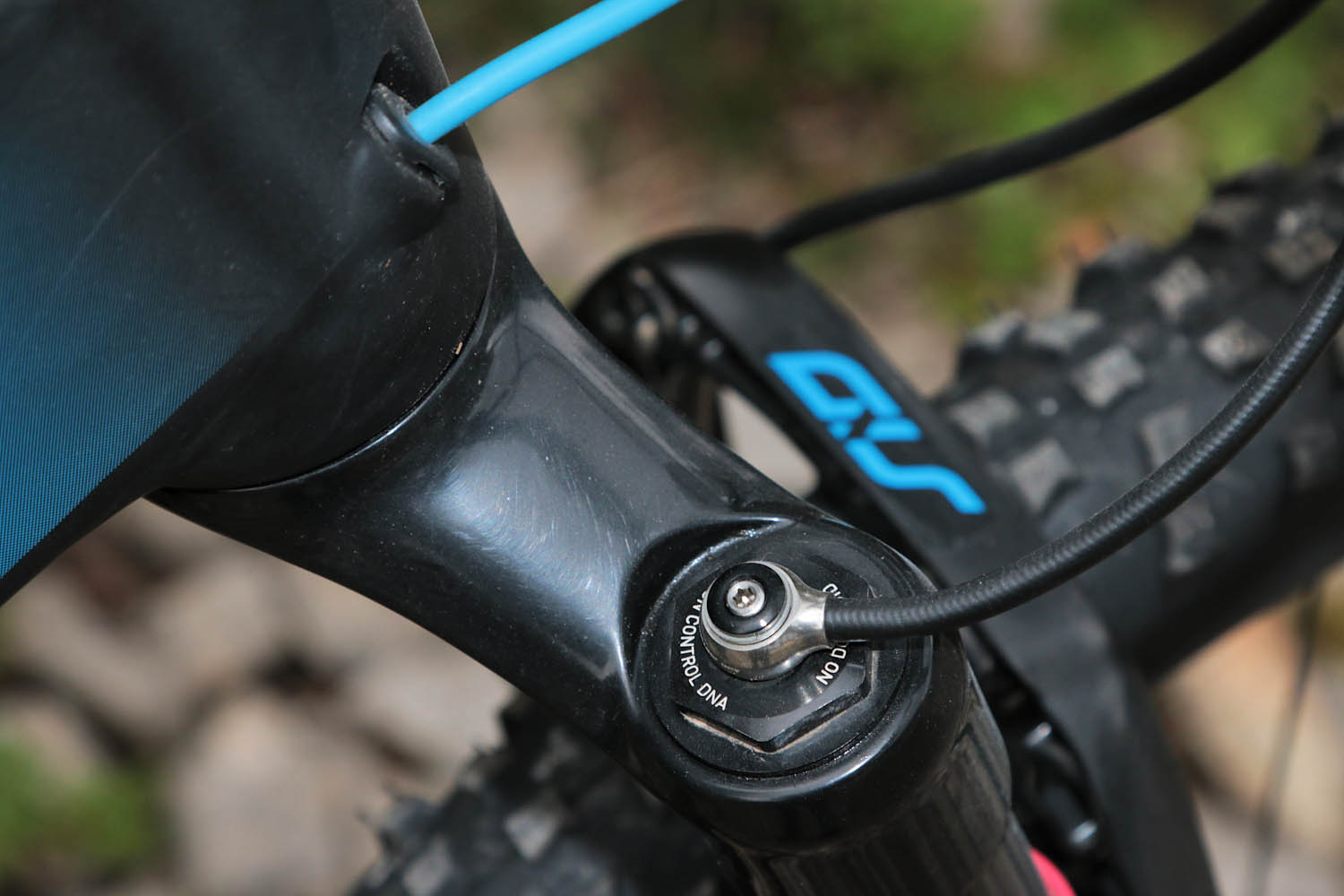
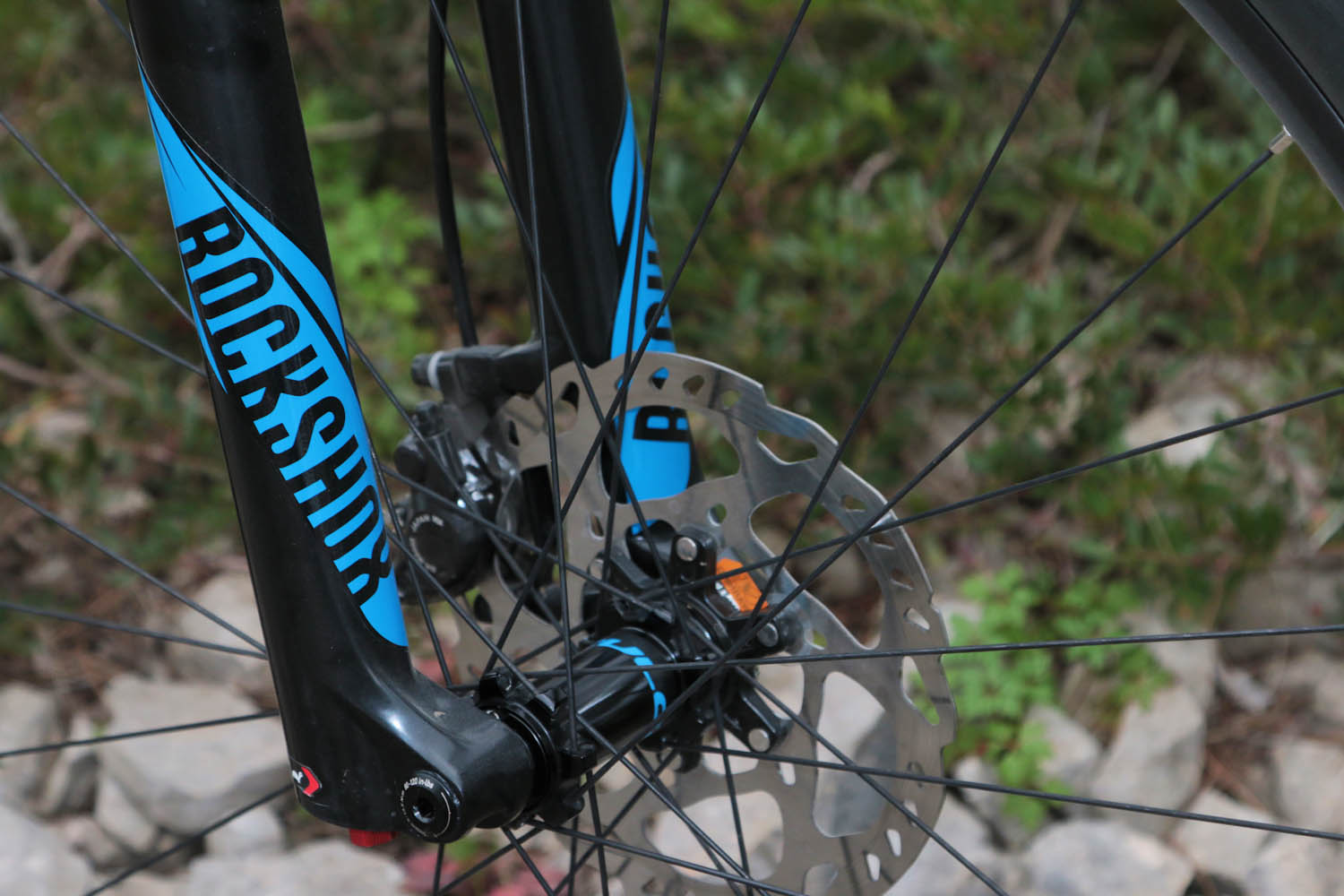
The front fork choice was clearly not dictated by economy: Cube installed the top-of-the line 100mm travel Rock Shox SID XX for this AMS top model with a paired handlebar mounted hydraulic lockout feature. Both front and rear suspension can be locked with the same remote lever, making on trail adjustment a simple affair. The 15 mm Maxle Thru Axle axle secures the wheel for the greatest rigidity.

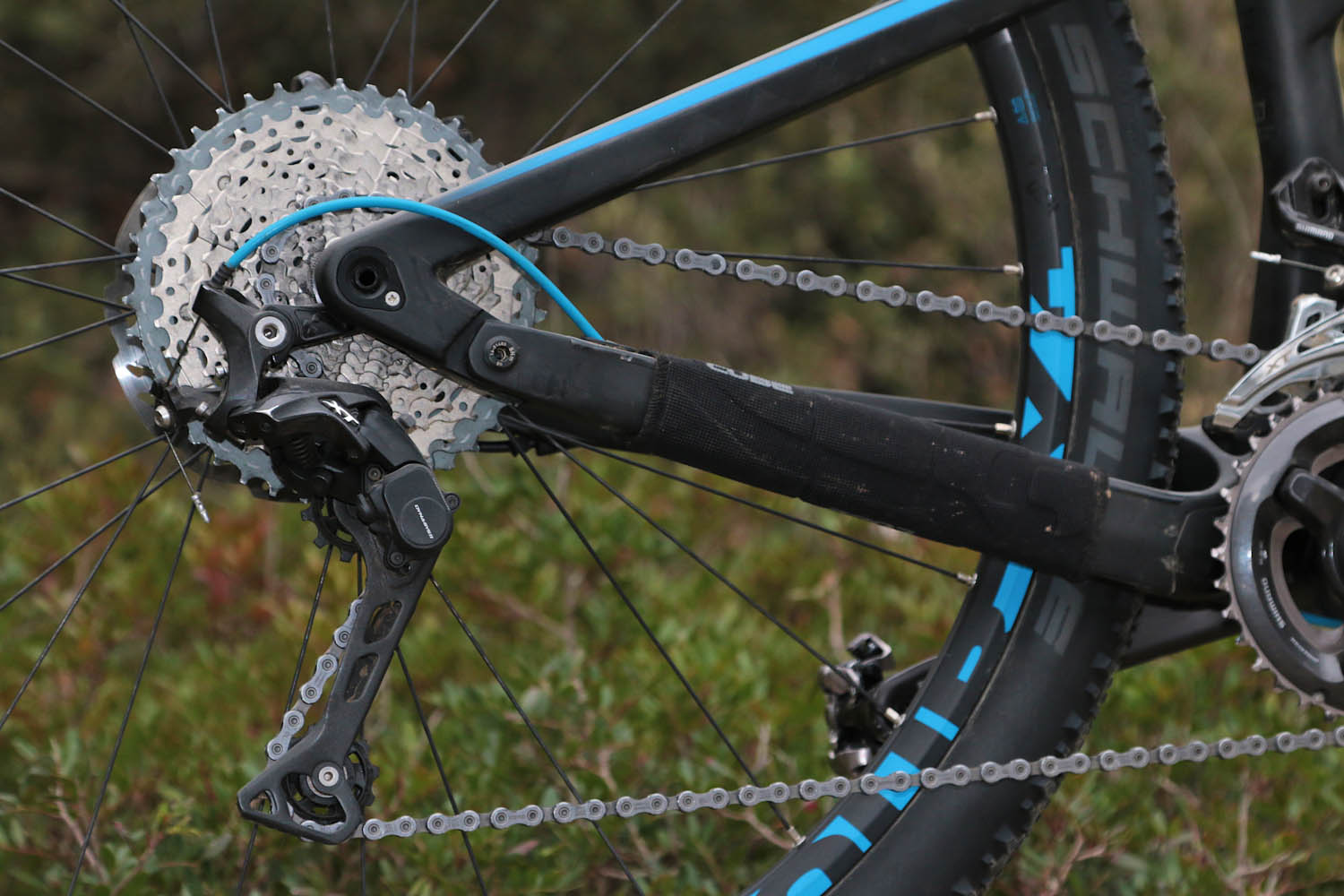
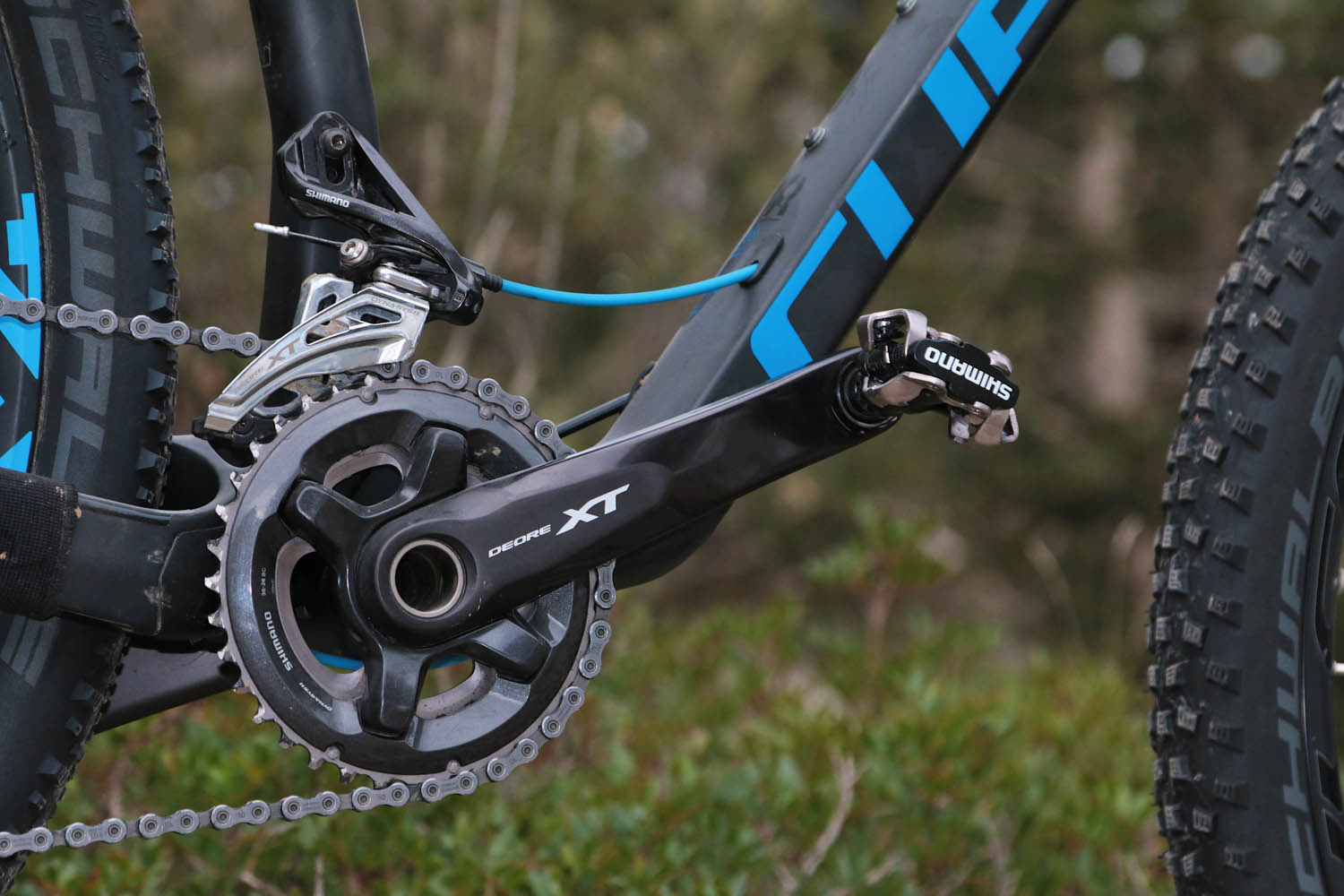
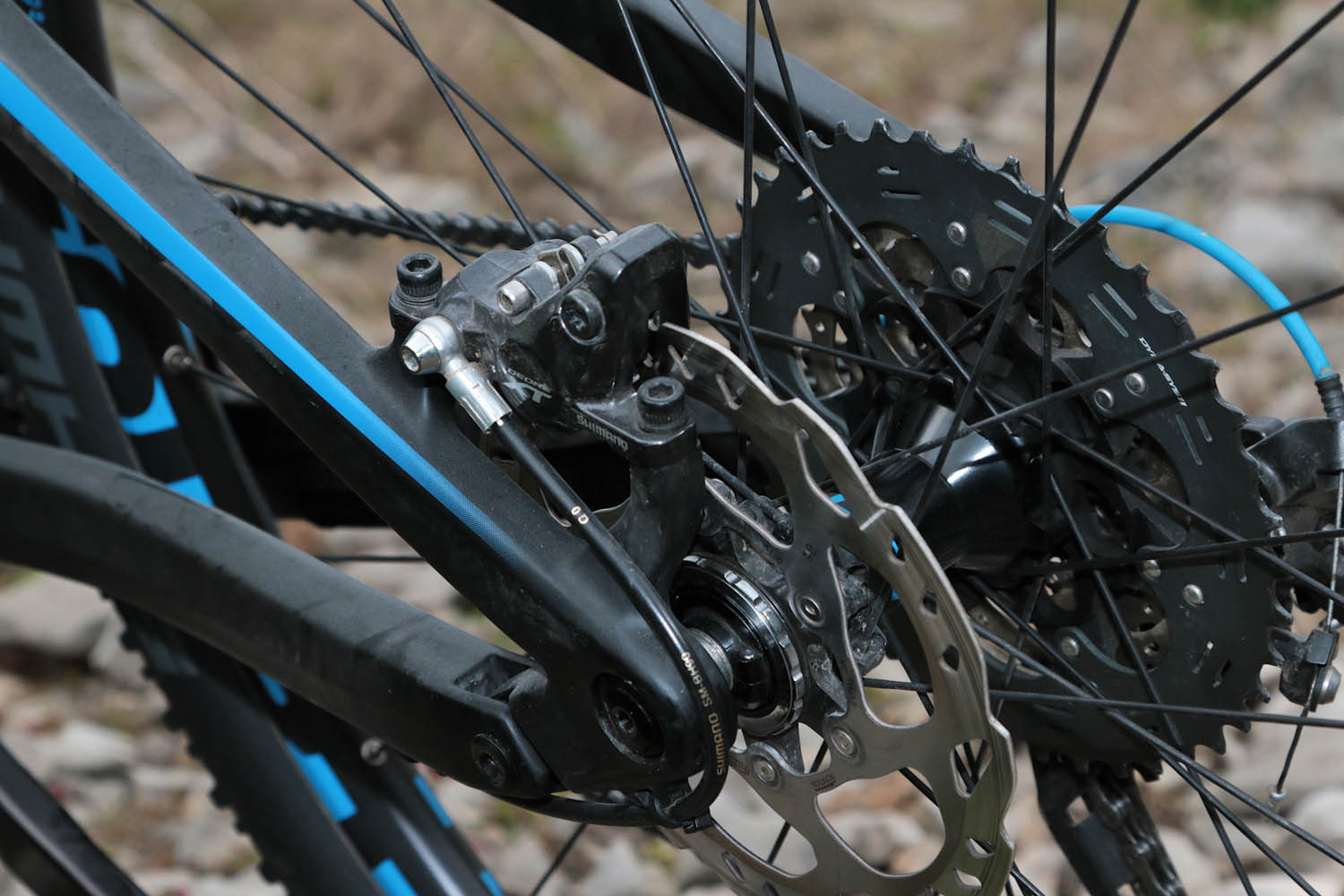
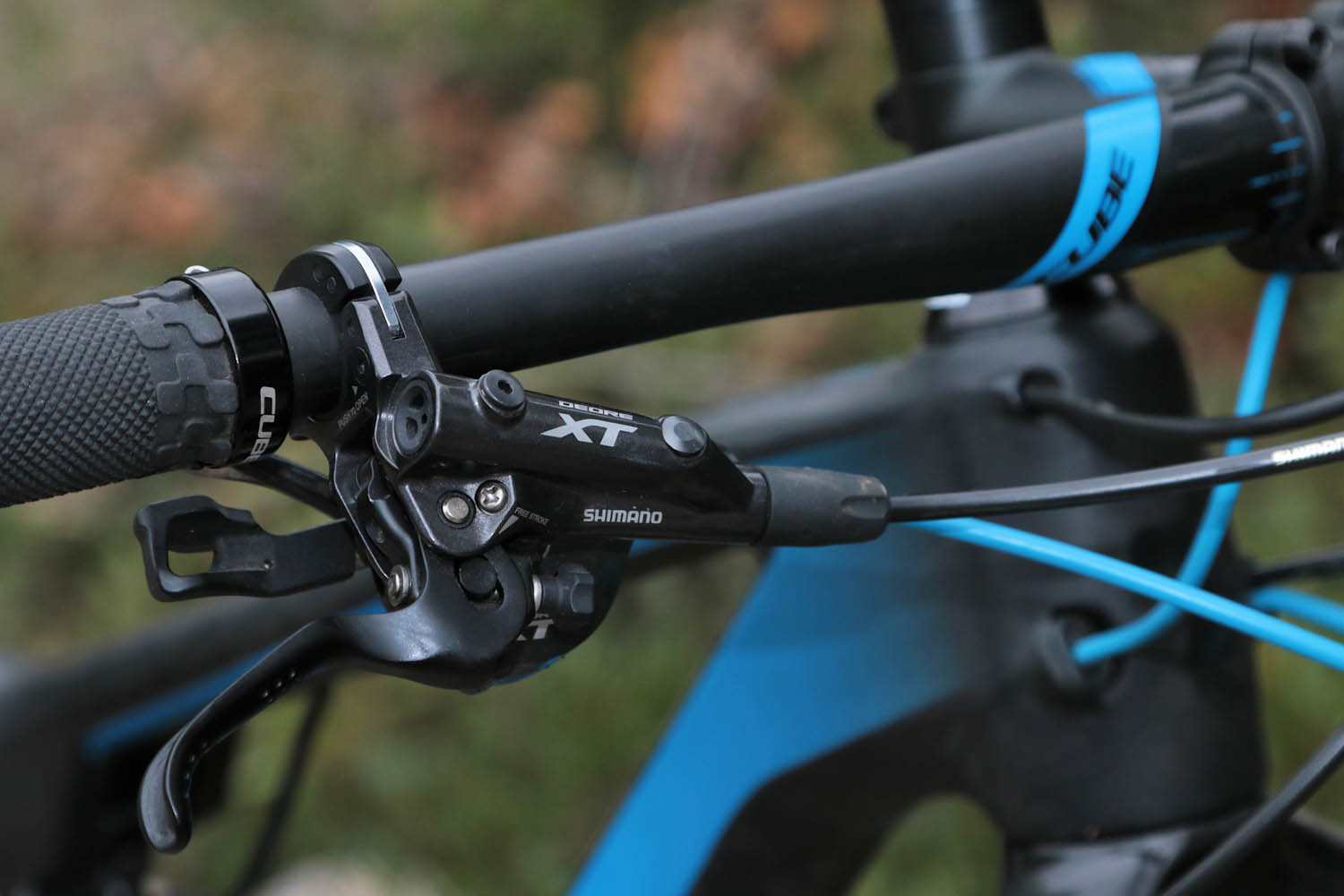
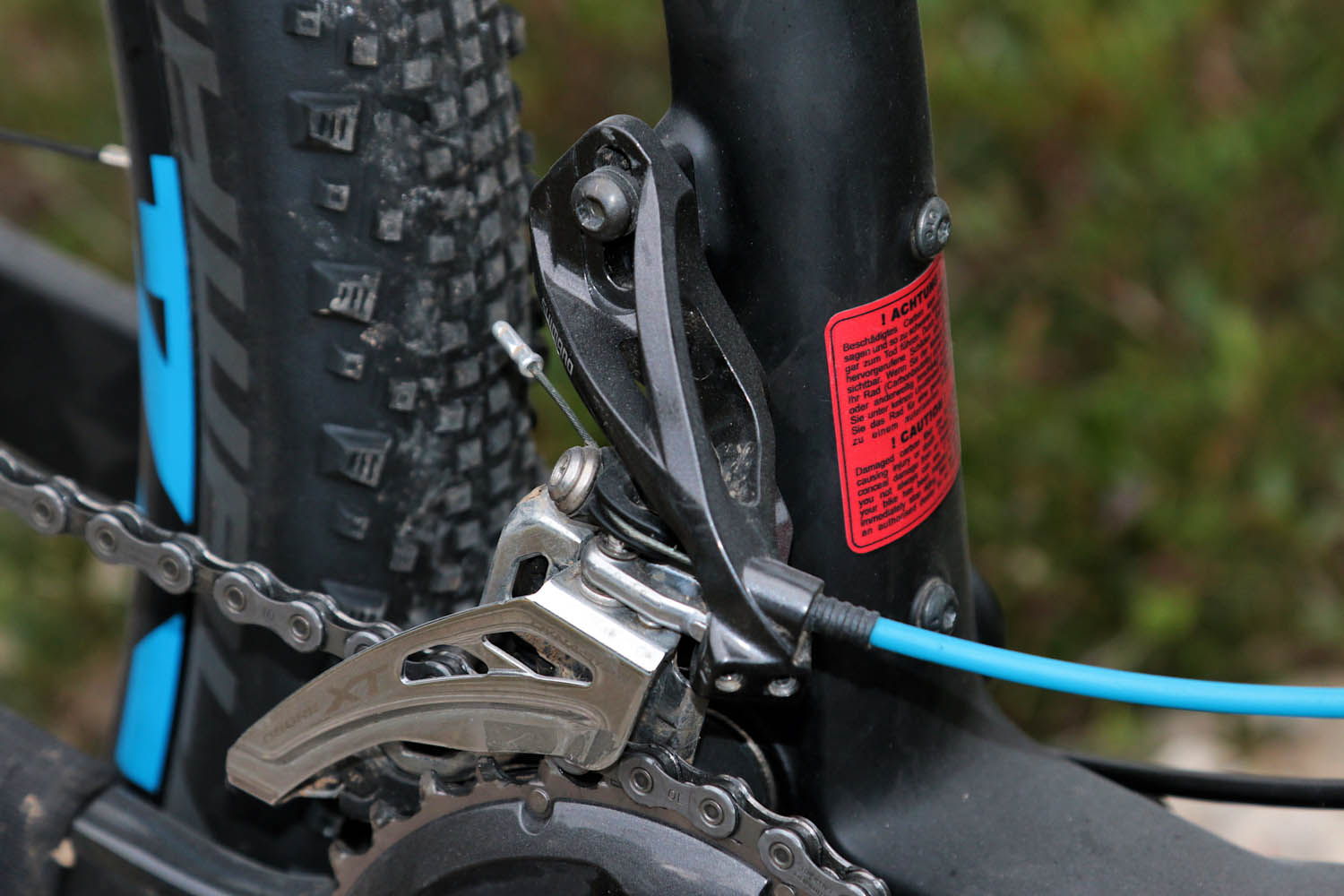
The drive-train, shifting and braking elements all come from the proven Shimano XT component group, which seem to dominate the mid-high end of the new bike market. The crankset is equipped with 2×11 gearing, 36/26T front chain-rings paired to a 11-42T cassette at the back. There are very few places where the rider can not climb up with the Cube AMS, in addition to offering a good tempo on the plains.

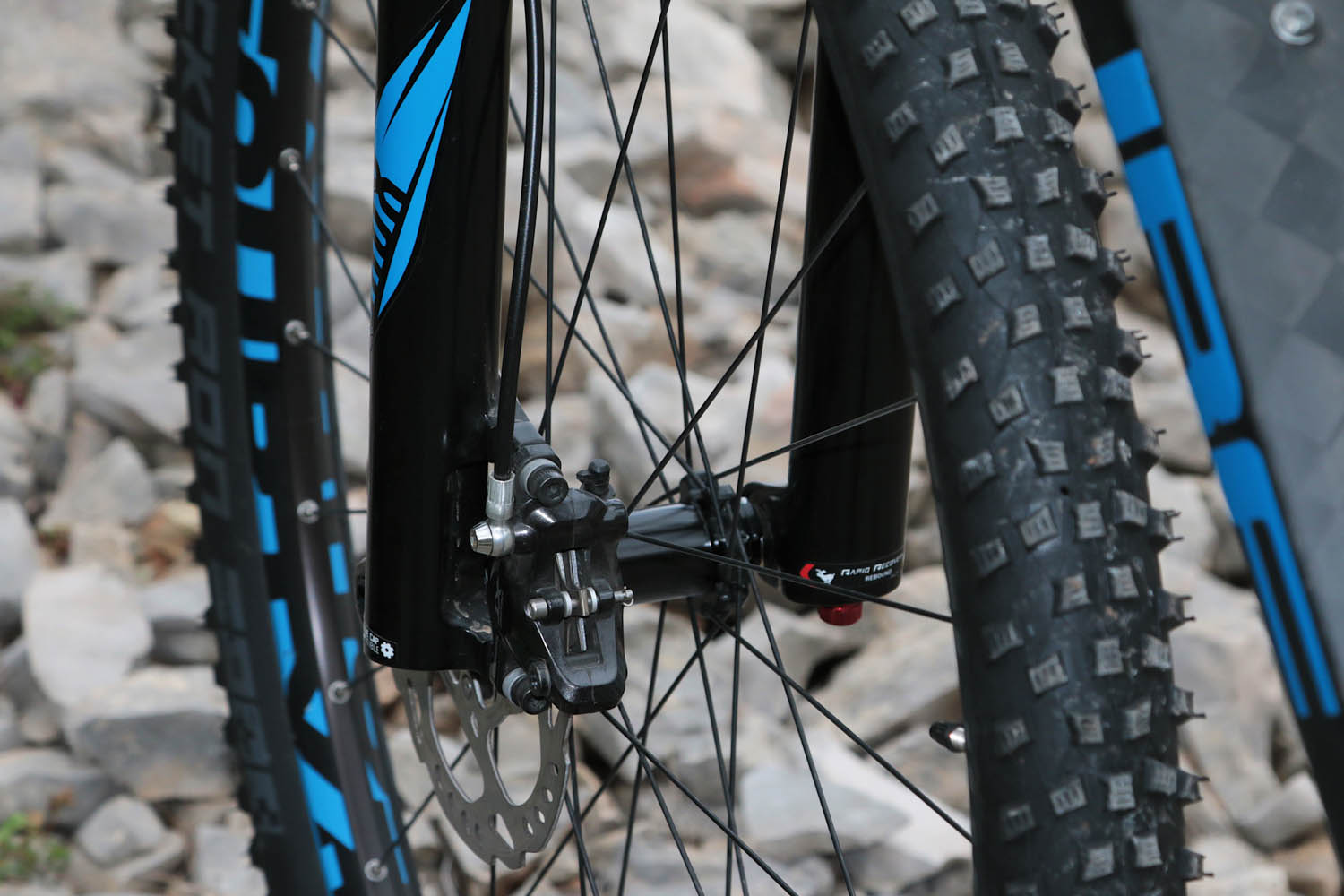
There is a factory wheel set for the AMS, outsourced from a specialist brand. Cube selected the Fulcrum Red 44 wheels with 28 spokes front and back and the new BOOST standard to provide the out-most stiffness. Schwalbe’s Rocket Ron – Thunder Burt duo is responsible for the great traction, both are the 2.25″ wide LiteSkin versions, contributing somewhat to the bike’s agility.

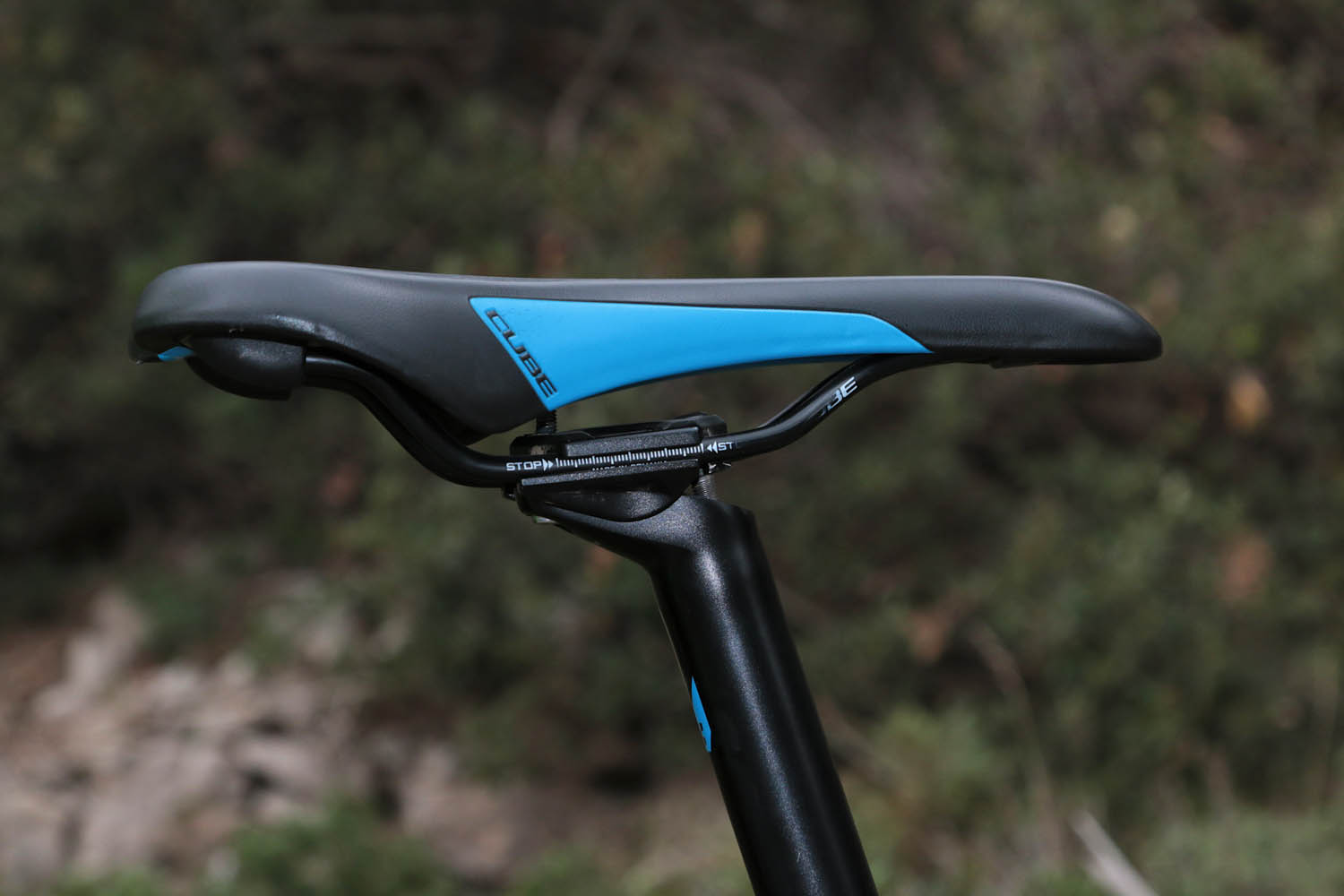
We have used to seeing own brand accessories on Cube bikes, and the AMS does buckle this trend. It’s worth noting that the German brand put a lot of effort into designing its accessories (handlebar, stem, saddle and seat post), there is a serious engineering behind them. They set standards unmatched even by specialist brands, representing the highest level of quality.

The Cube always payed close attention to the appearance of the bikes, therefore the AMS is visually tuned to the last detail. The complete bikes is black and blue, which is somewhat dimmed in the greyish background when the pictures were taken. Unfortunately the images here do not do justice to the true look of AMS: it looks a lot better in real life. I would also like to point out that Cube AMS is very difficult to photograph due to the black matte finish. Not everyone appreciates such a design, but personally I like the „technically-inspired” appearance typical of this German brand.

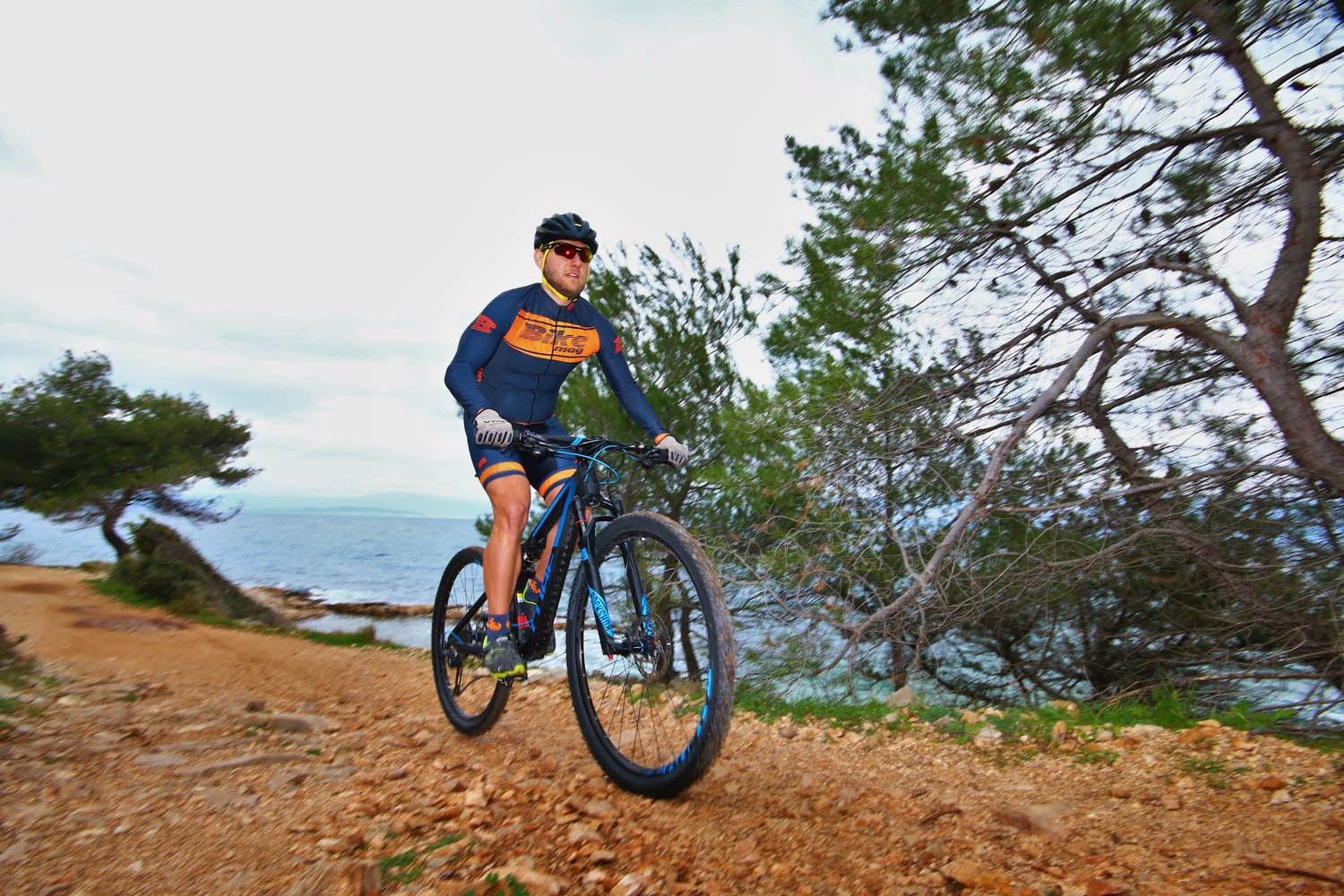
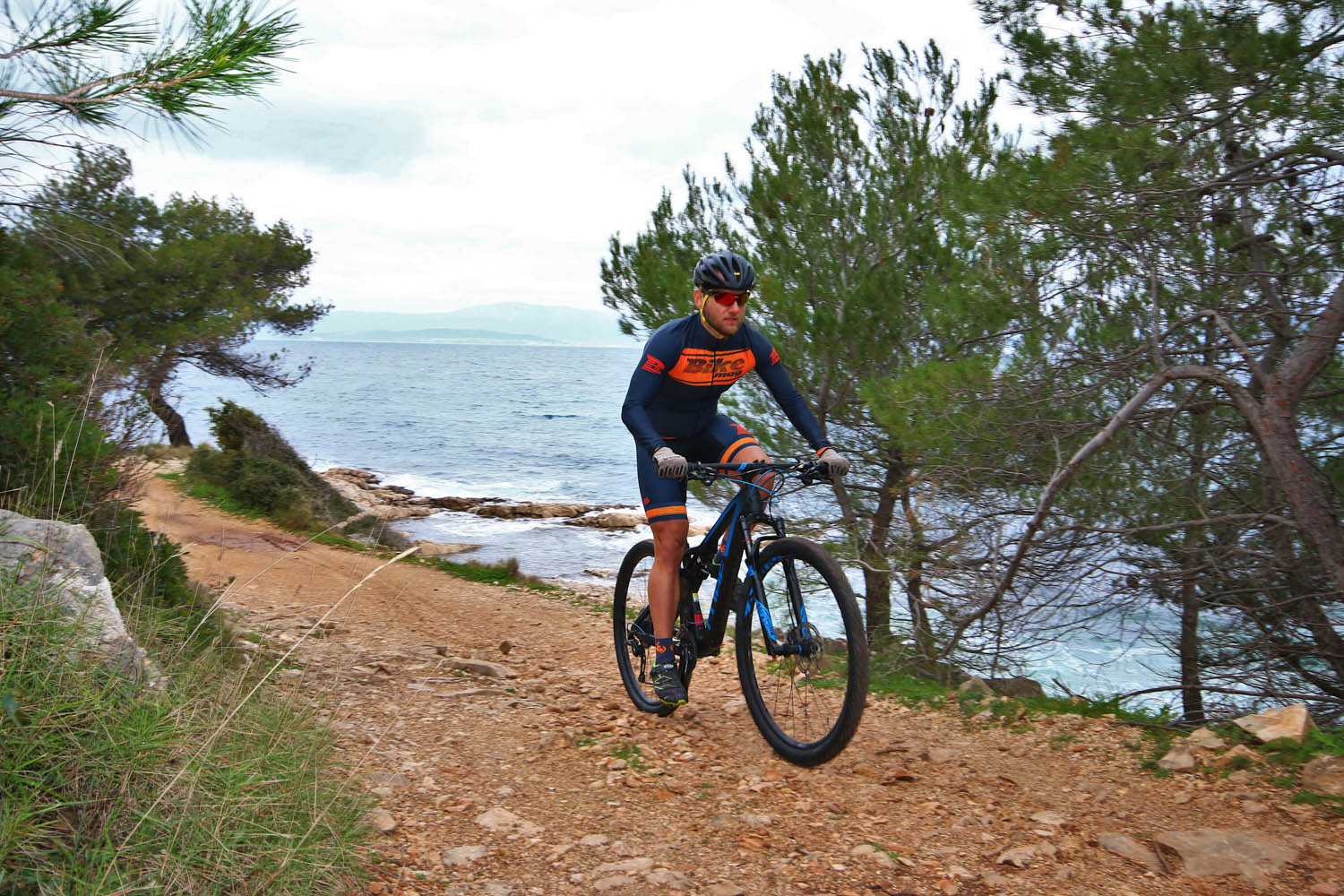
During the ride, it took no more than a minute to realise that this is a really good bicycle. It is beyond description how beautifully the AMS rode on the rocky Croatian trails, where the other bikes turned out to be a scattering experience. The feeling that I truly need a mountain bike of this quality quickly caught up with me. Uphill the AMS was faster than any of the mid-level hardtails on test, even though there were no obstacles to conquer where the rear suspension could assist the rider. The difference in climbing prowess from one bike to to the other was easy to demonstrate, as our base camp was on the top of a steep hill. Every single test bike had to climb the „wall” several times, and AMS came out on the top of the rank. With closed suspension settings it was a beast to ride uphill, even when I had climb the hill the 10th time for the best photo. It did not make me tired, and I enjoyed every minute of the excellent power transfer and acceleration.

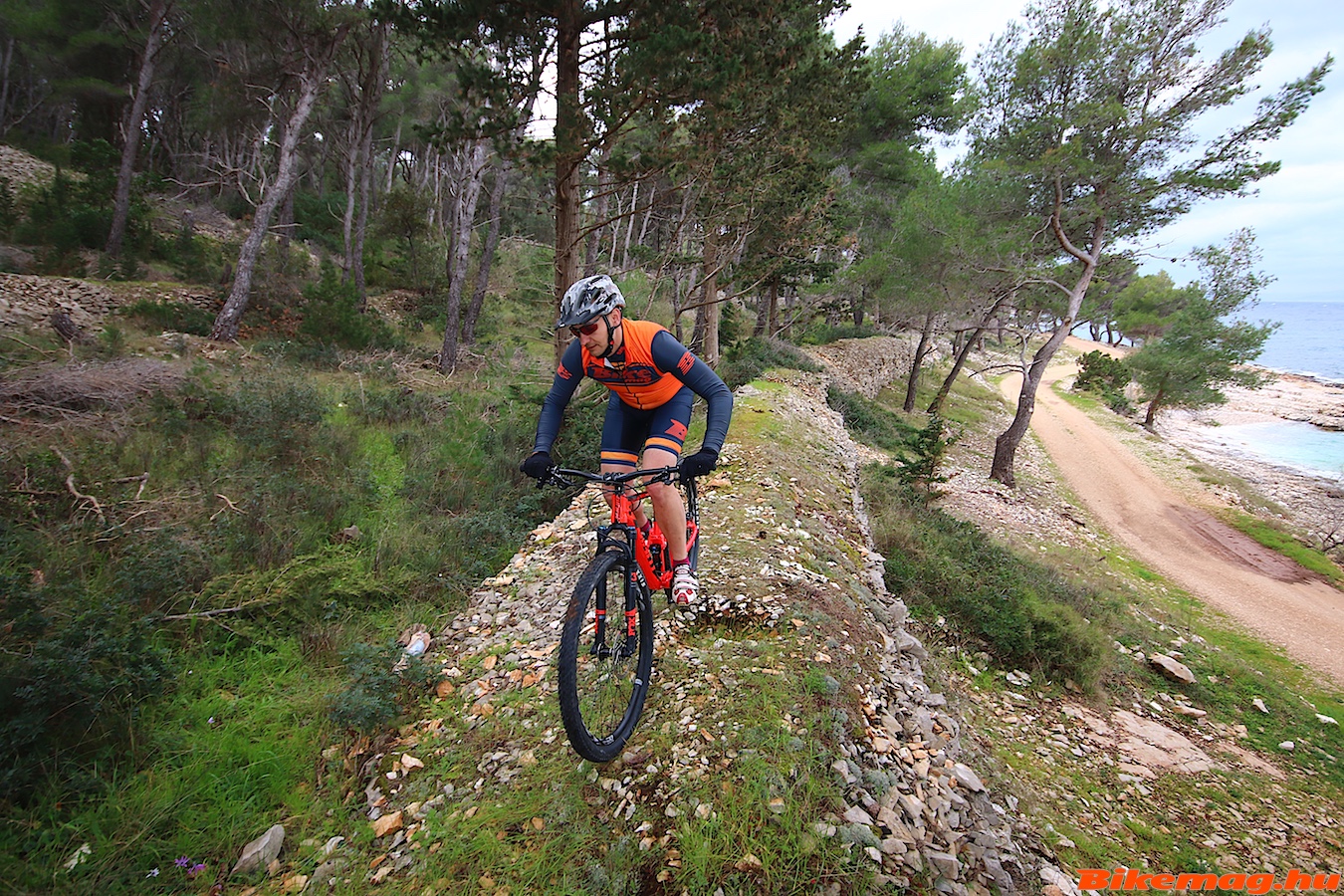
Compared to a hardtail bike, the 100mm rear suspension travel is a great blessing on the downhills. The wheels remain on the ground for the best possible traction, even on a uneven trail surface littered with obstacles. Fortunately the suspension movement of the AMS remains XC-ish, so you still can feel the back of the bike, unlike on a fat tire or an overly plush long travel bike. It makes me aware what I have ridden over. With a rigid hardtail, the rough terrain is a bone-jarring experience, transmitting too much vibration from the trail. The rear suspension made me go faster, as the back end did not tend to bounce off the ground. The suspension of the AMS is active, even when the brakes are applied, making it easier to direct the bike toward the best lines. The Cube AMS is exactly the type of XC „fully” bike I tend to enjoy: it’s agile and fast, but makes great strides to smooth out the ride.

I would full-heatedly recommend Cube AMS not only to professional riders, but to everyone who can afford such a bicycle. It is also an excellent choice for hobby MTB marathon competitions (I would primarily use it for this type of riding) or perhaps for performance-oriented bike touring. Finally it’s also ideal for those who like to go fast and demand a well-tuned full suspension setup.

Recommended retail price: 1 299 990 HUF
(This particular bicycle in the review can be purchased at any Cube dealer at a 30% discount for 899 990 HUF.)
Weight (measured): 11.94 kg
More information can be found on the manufacturer’s website.

Giant Anthem 2 29er review – A whisker from total perfection

Do you know why this bike called Anthem? Because it’s designed for the podium! The anthem is the English term for the hymn played for those who stand on the podium. The story began when Giant discontinued the highly proven NRS XC competition full suspension model in 2006, and built a completely new machine based on Maestro’s virtual suspension design, released just the previous season.

The two Giant XC-oriented bike series could not have been more different: the NRS was designed in the era when riders were still sceptical of full suspension MTB bikes, fearing unwanted shock movement. Hence manufacturers did everything in their power to make the bike rigid while pedalling – both seated and standing. On the downhills the bike still showed its strenght, it more than made up for its additional weigh (2 lbs) by offering 95mm of rear suspension. But since the performance of the design was limited for the sake of pedalling efficiency, the 95mm felt more like 70.

As a stark contrast to the NRS, the original Anthem offered a completely active suspension system. By 2006, rear shock technology made great strides with platform dampening, in addition, an increasing number of MTB riders used full suspension setups in the marathons. The fear of rear suspensions being overly bulky and energy-hungry have more or less vanished. The „old” Anthem was a real thrill ride, it had 100mm travel, which in those days felt like 120, somewhat overpowering the 80mm forks of the time. And if you installed a good 100mm fork, the bike turned into a trail beast!

12 years have passed since its introduction, and suspension technology made great strides since. Shock travel and wheel sizes both grew. Still, much to the surprise of everyone, the Anthem 29er disappeared from the lineup in 2016. There remained the race-oriented Anthem and the SX trail model version with longer travel fork and a dropper seat post. This season there was a another twist in the Anthem story: only the trail version is available with 27.5″ wheels and a 130mm fork, and we see the return of the 29er, which is destined to be the competition machine within the model range.

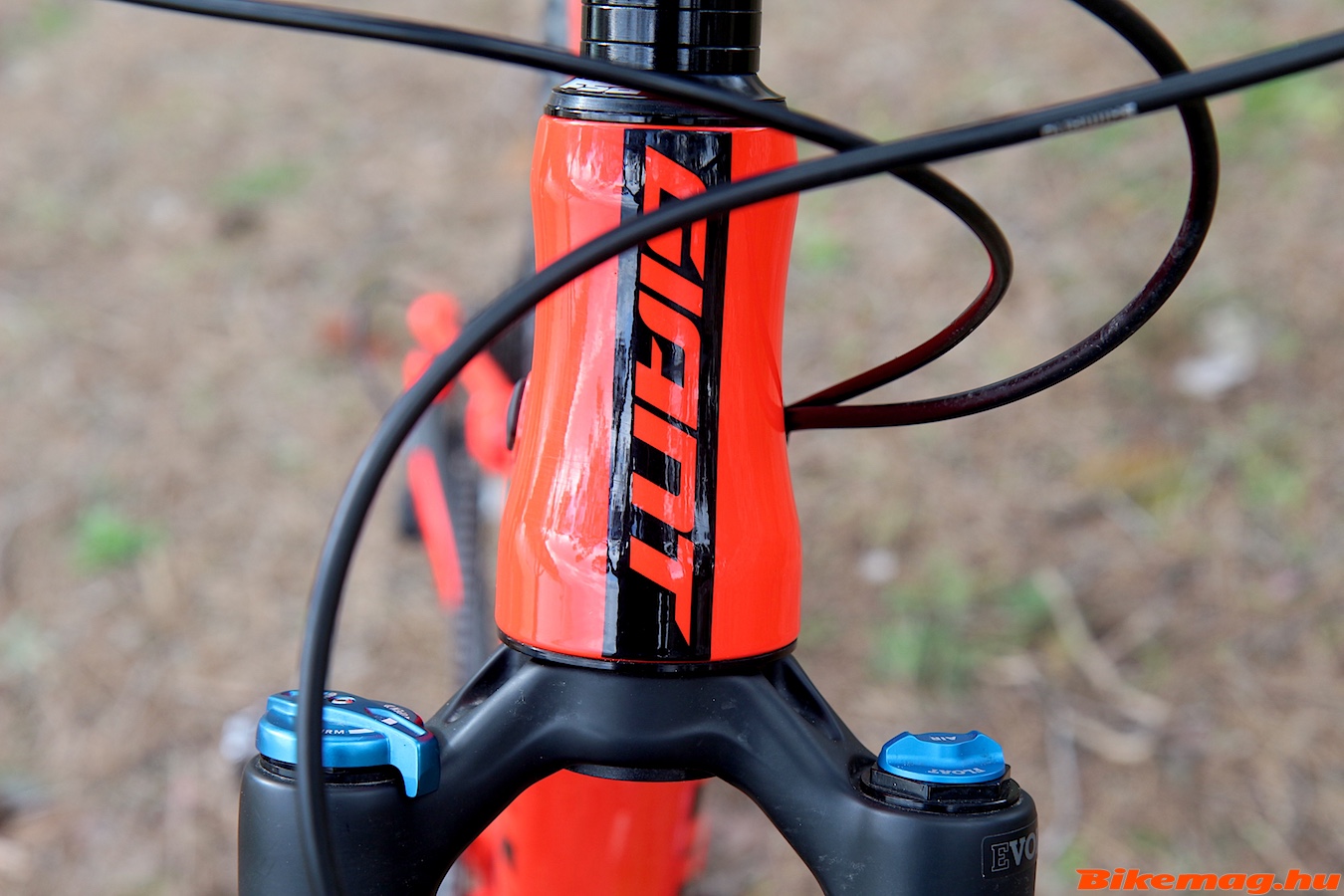
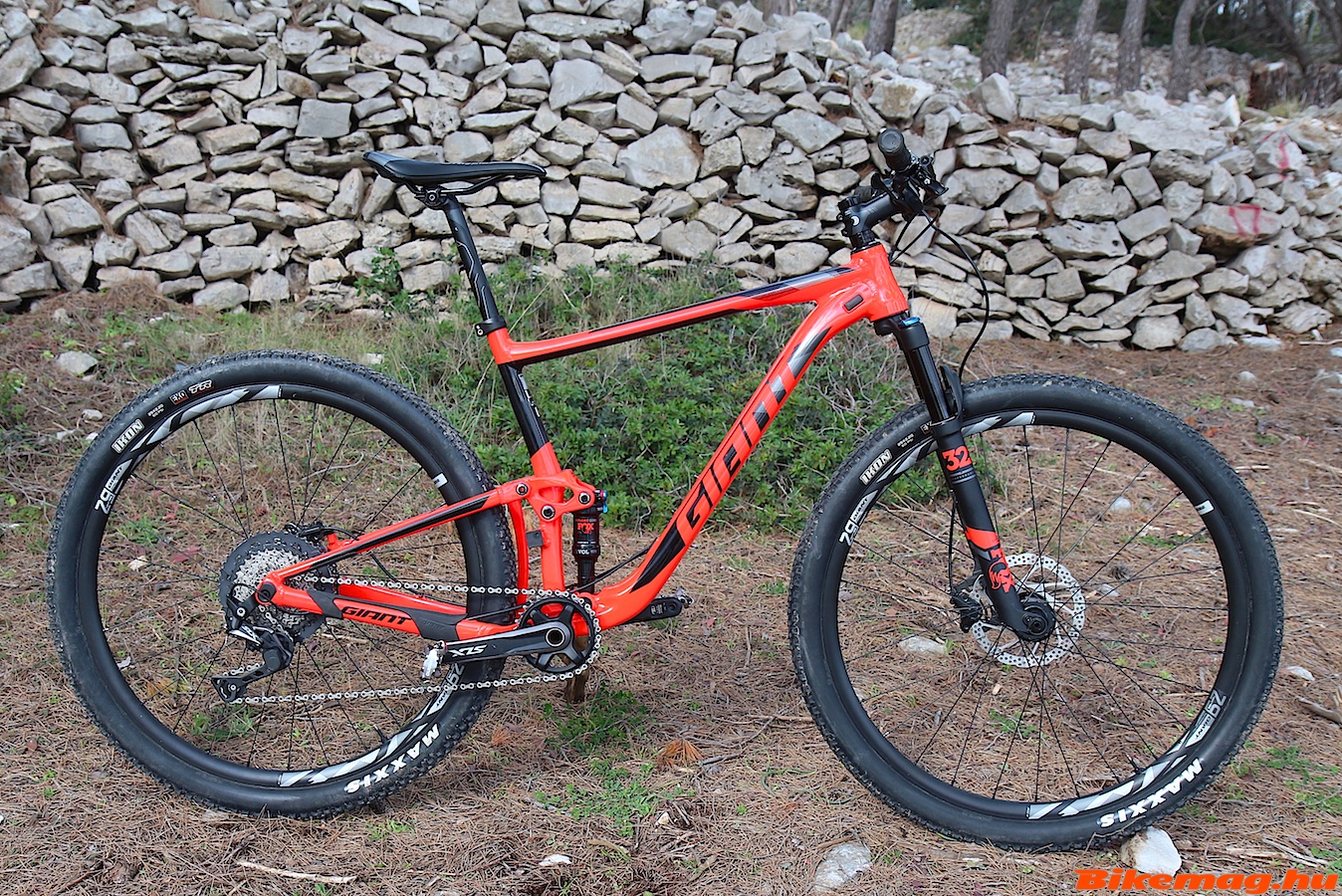
But this new 29er is not what we used to know as Anthem X 29. While its ancestor was a student of classical music at the conservatoire, focusing mainly on strength and precision, the newcomer is a full-blown rock musician! It has no desire to roll on fire roads, the 2018 Anthem 29 is hungry for the technical singletrack. It is attracted to roots and rocks like a magnet! Even with its mere 90 mm rear travel – the shortest suspension ever for an Anthem – the Maestro system makes miracle of it. So let’s briefly look at the Anthem menu: what we get for 800,000 HUF!

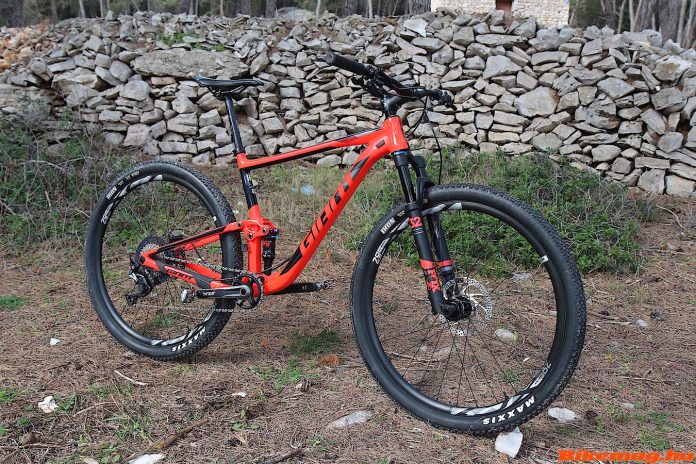
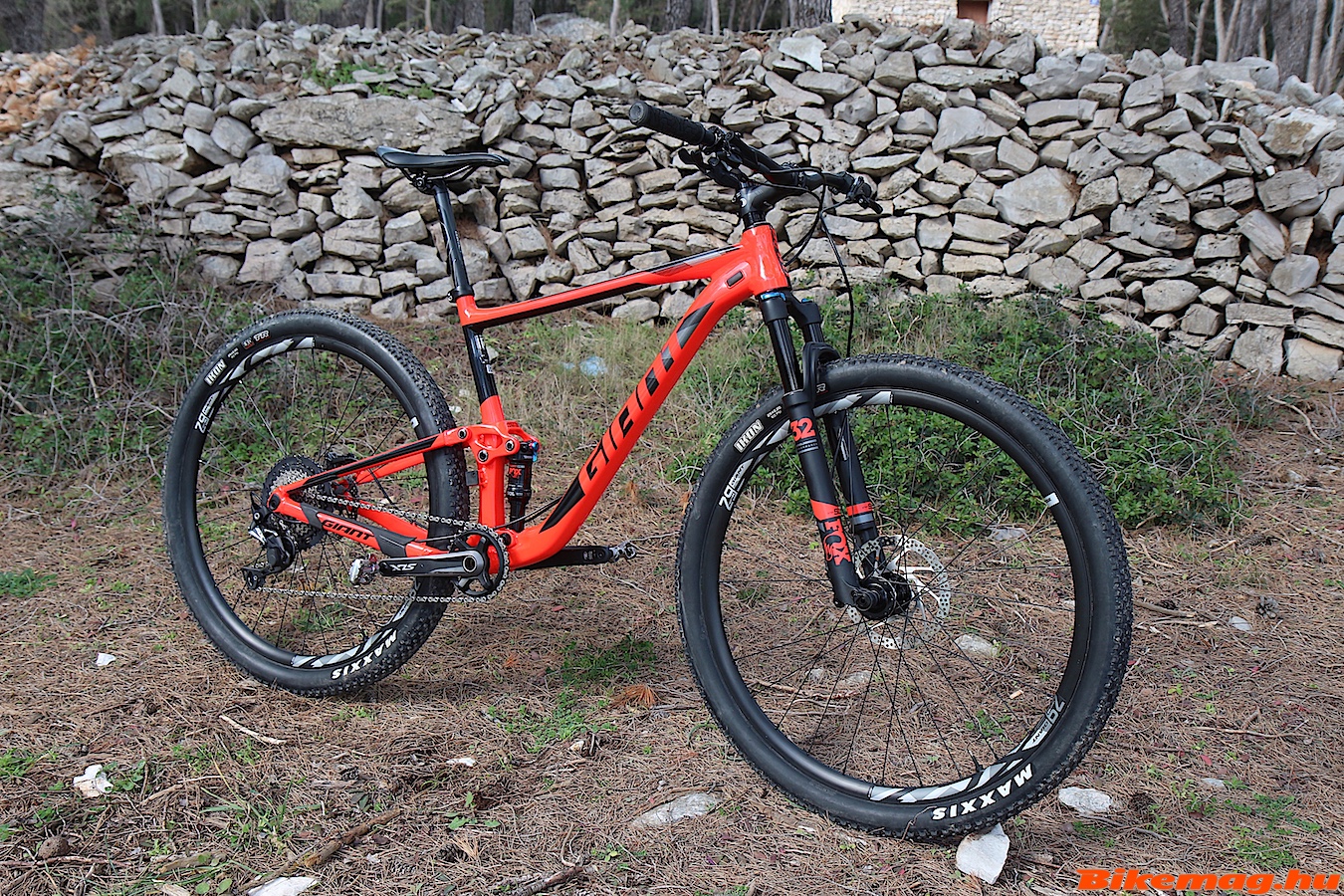
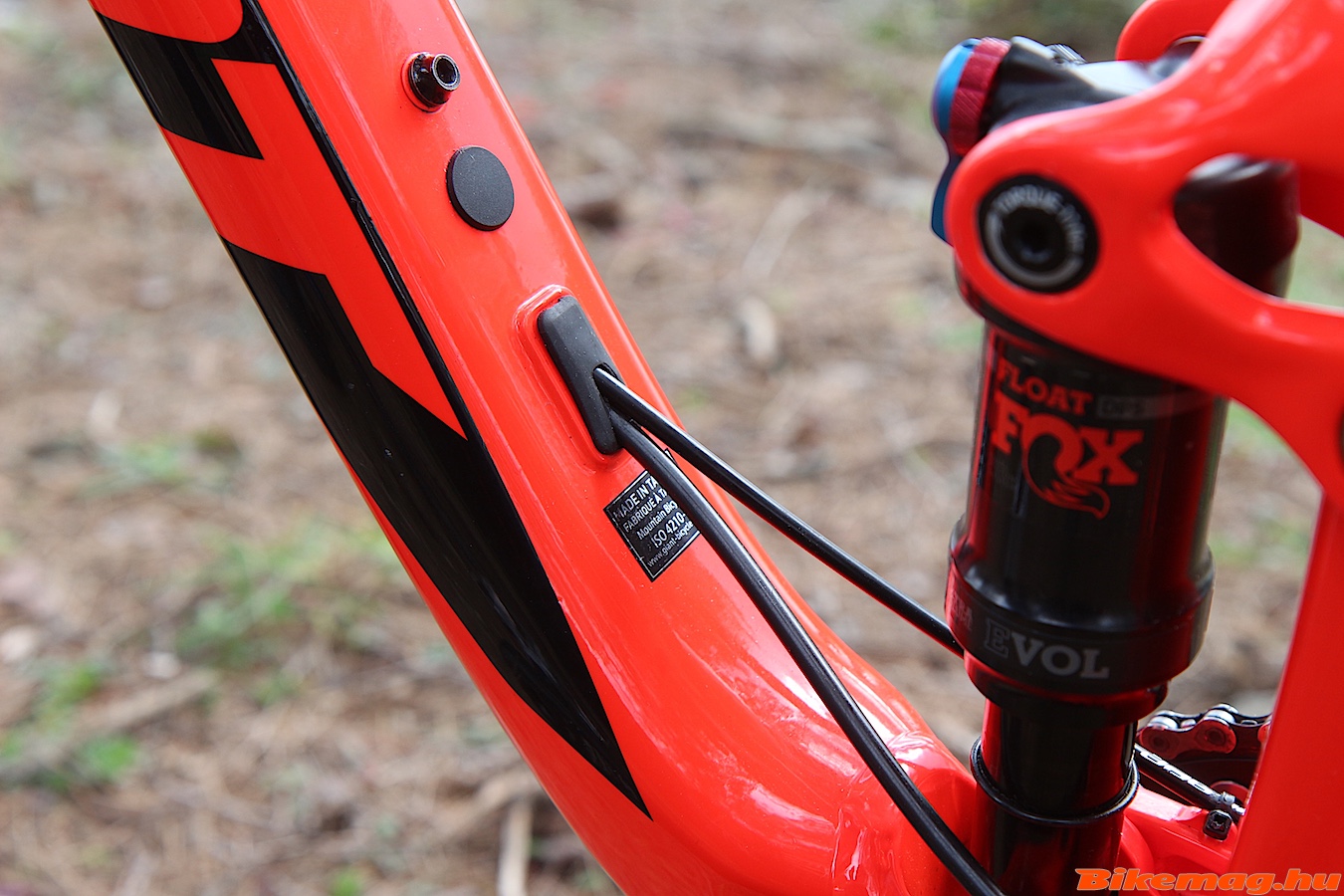
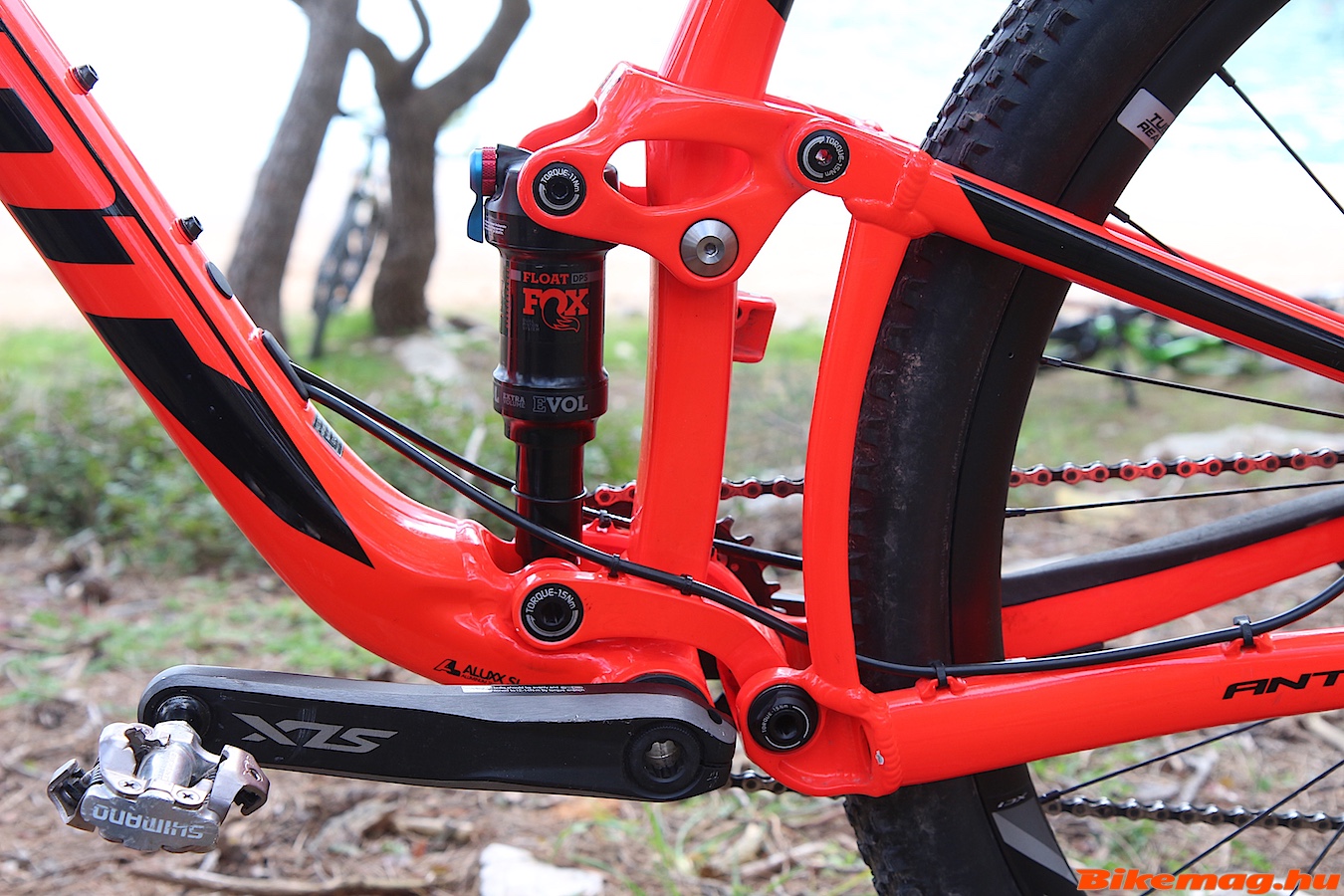
The AluxX SL Aluminum Frame is a proven material from Giant’s own „witchcraft”, and it is also astonishingly lightweight. Development must continue, so the frame follows the modern trends by offering Boosts hub compatibility, thereby significantly increasing stiffness, which provides special benefits for such a lightweight frame construction. Although Anthem could have been made stiff enough using classic 142mm axles, one may as well be hanged for a sheep as a lamb! At the back, we find Fox Float DPS Performance shock, which performs its job most beautifully. Nevertheless I’ve experienced two problems using it:
1. I truly respect the Trunnion shock mount system, but for Anthem I would have been more pleased with a traditional English mount for the „Large” frame size. If such a setup was chosen by the designers, I would not have to reach down to the pebbles on the ground in order to operate the lockout – alias the „compression” lever. It felt like living in a three-storey house with the bedroom in the attic, but the only toilet is on the ground floor… and I simply didn’t have the inclination to go downstairs!
2. The low-speed compression on the Fox rear shock has clicks with three distinct positions: Open, Medium and Firm. In „Medium” mode, the shock moved so well, there was almost no need to turn to the fully „Open” mode. The „Firm” mode virtually closes the compression circuits but still leaves a small amount flexibility in the suspension. It feels like a small elastomer working inside the shock body with a rather uncontrolled movement. Here lies the my gripe: if you do not pedal smoothly, you start to bounce on the saddle. It’s like going at a high cadence with a flat tire. Fortunately in „Medium” mode, there is practically no suspension bob, so it’s rare that you really need to close the compression valve.

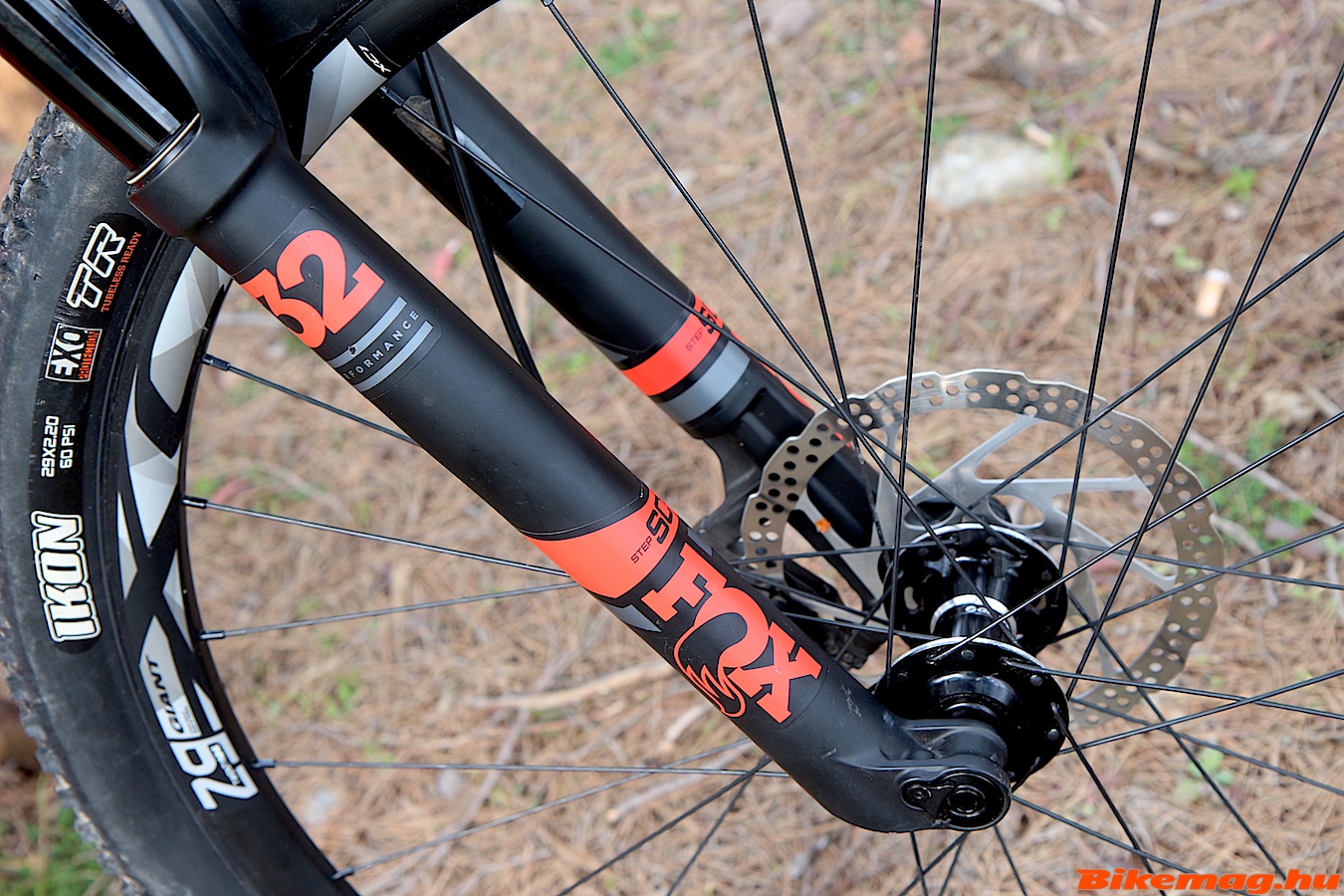
Nevertheless the rear shock works in perfect harmony with the Fox 32 Float Step Cast Performance fork, which is astonishingly „slender” by today’s standards. It looks lean even though it employs the Boost standard for the front wheel. Fox made space for the the Boost on the Step Cast forks by reducing the distance between the lowers, and by shaving off some materials on the shoulders and the fork ends. So by making all these modifications, they ended up with a pretty slim and light 32mm fork which compares favourably to the previous 32 series. No need to panic: despite the slender build, the stiffness of the fork is more than enough for this type of riding. Despite the excellent performance, I have one complaint: the FIT damping compression dial – which also provides the lockout – simply did not work. Presumably the oil level in the damper cartridge was low from the factory. This malfunction is not Giant’s fault, – as the saying goes – it happens in the best of families. In addition, it is a warranty issue, so it does not pose a great problem, just a minor annoyance.

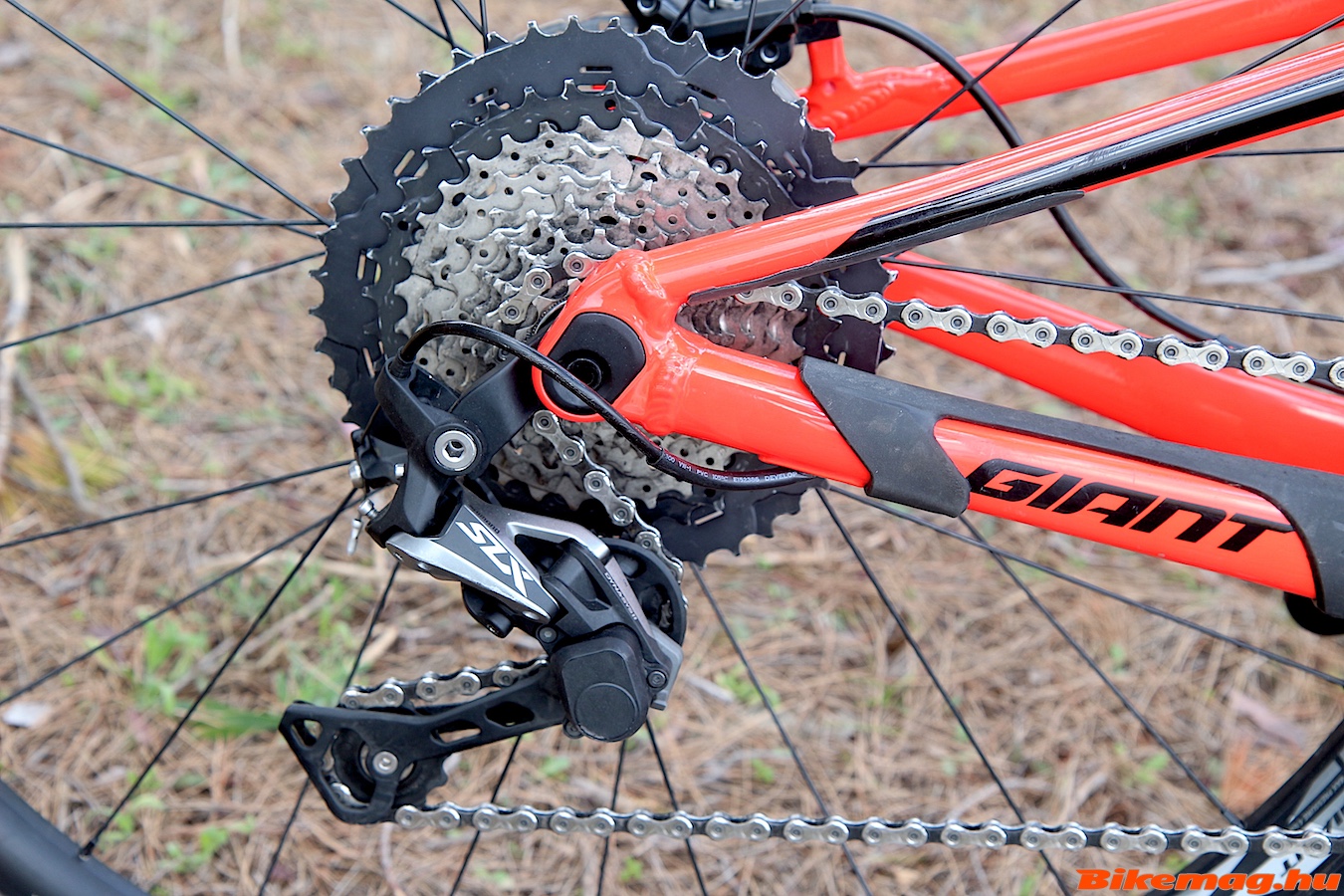
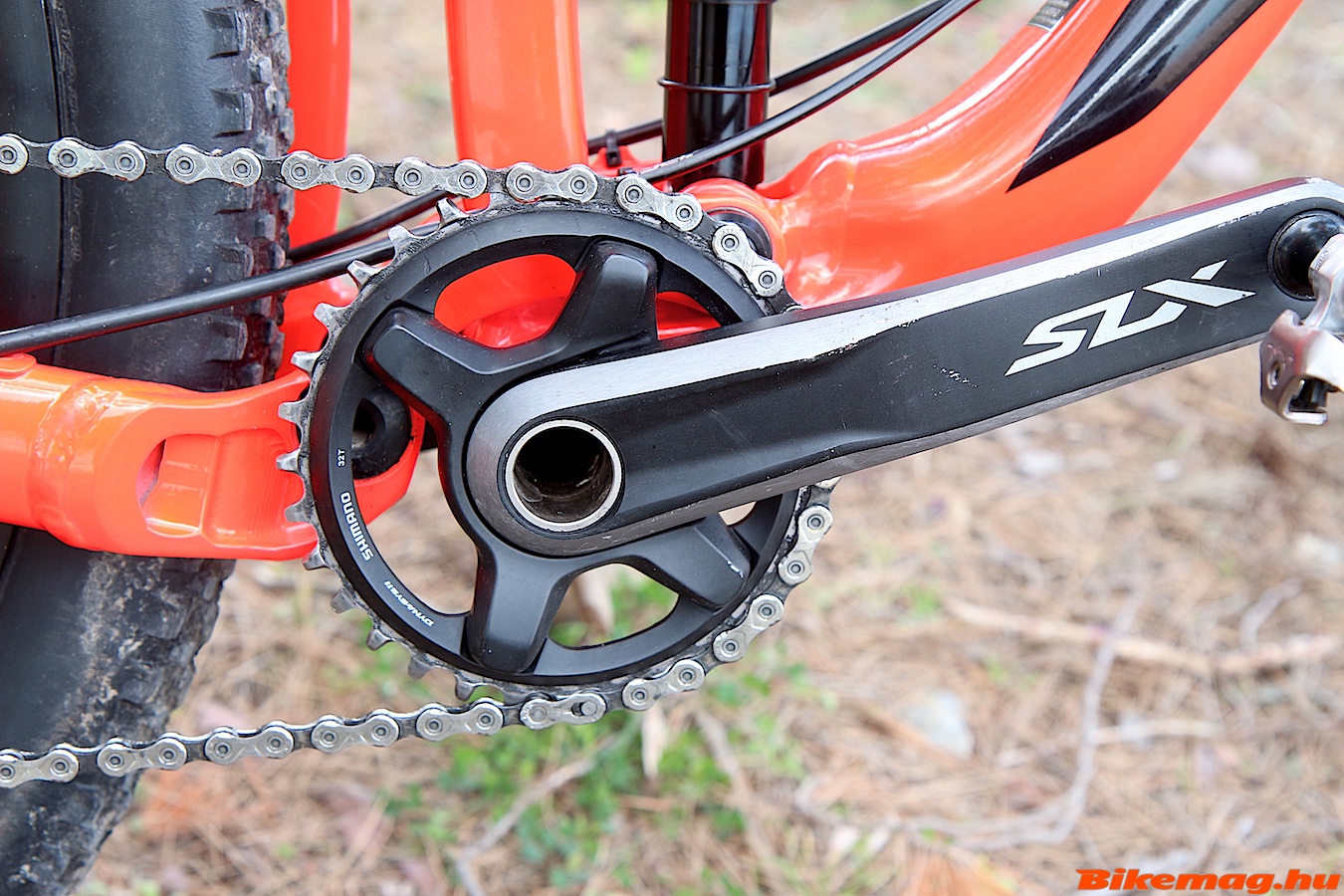
The pedalling force is transferred to the wheels via a full 1×11-speed SLX drive-train – with the exception of the KMC chain – and everything works in perfect harmony. I cannot tell the difference from the incredibly high standard set by the new XT components, the SLX moves the chain between the gears with outmost precision, even under pedalling load. The question whether the 1×11 gear range is enough for you is another matter. For most riders it will be adequate. If you want to go wider, you can get the top-of-the line Anthem 29er „1” with the 12-speed GX Eagle!

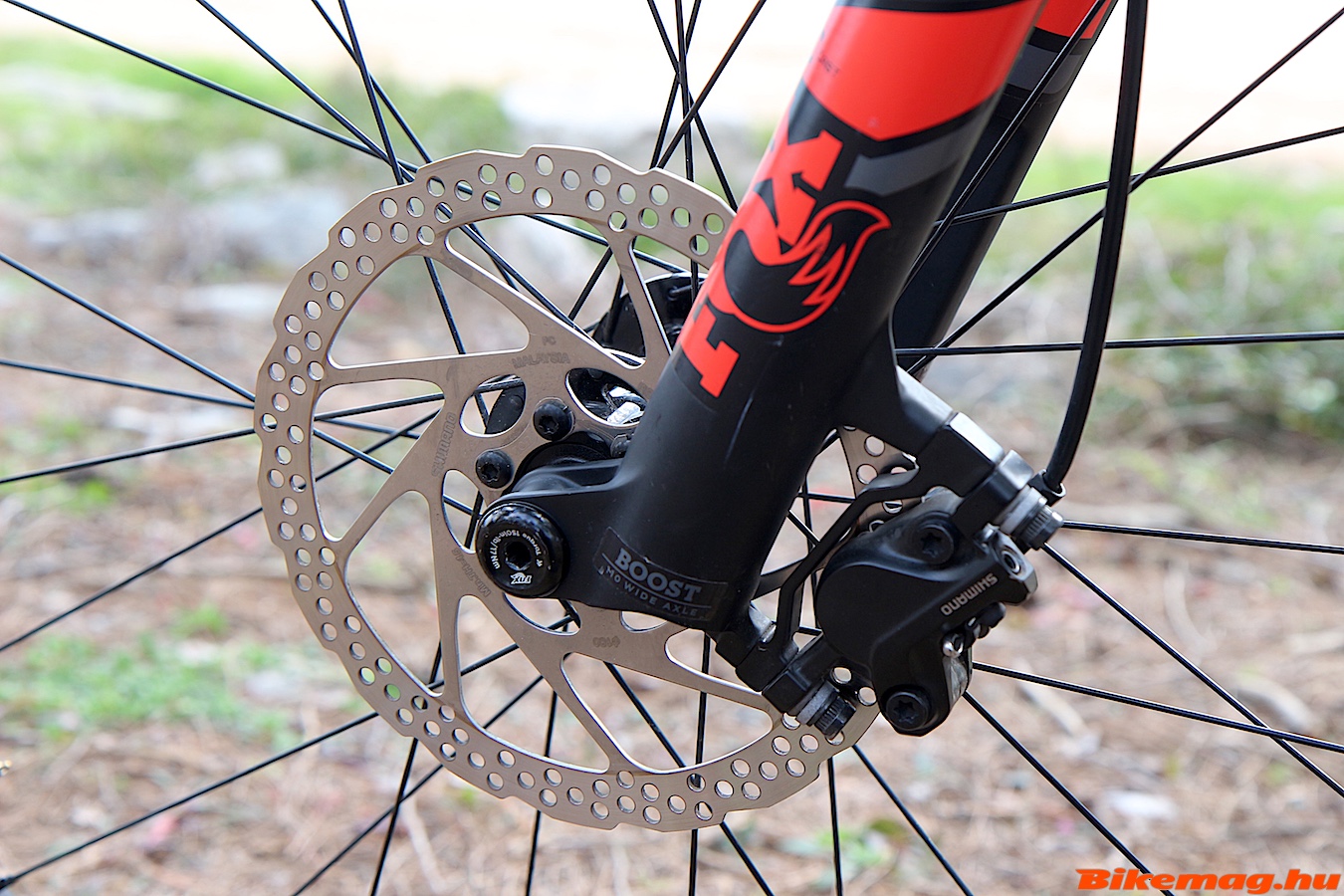
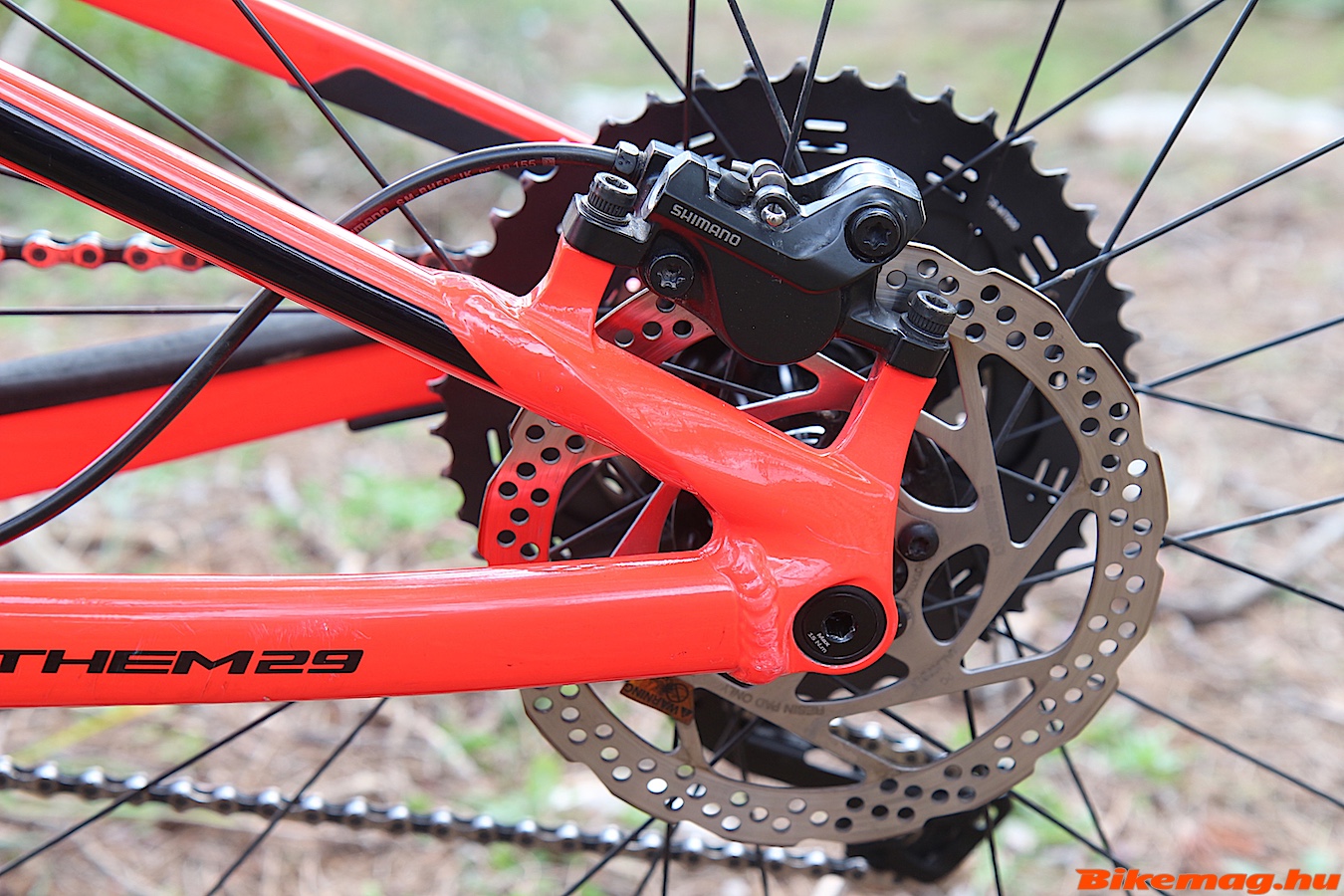
The MT500 hydraulic disc is a non-series Shimano brake sporting the familiar Deore performance and price level. I really liked the short brake lever, which is quite similar to the one found on the SLX model. Braking in practice was as expected, and there was no problem with either power or modulation.

The own-brand wheel set is typically the part you might want to replace – the sooner the better, ideally right in the shop where you purchase the bike. Perhaps this Giant tubeless model will be the exception to this rule. Obviously it’s easy to find a lighter or stiffer aftermarket model from a specialist manufacture, but you would have to dig deep in the pocket for a significantly better alternative. The one found in the Anthem bearing a Giant logo proved to be a very successful price-oriented build,so it may be worth to take a chance with it. Of course some sacrifice was made concerning weight, nevertheless the rim is quite slender, hence restricting tire size to more or less the 2.2″ size in the factory configuration. Even that’s a little too tight for my liking: a wider rim would provide more confidence. The rims and the tires are tubeless designs, hence the bike comes with no tubes inside the tires, but there is a bottle of Stan’s NoTubes selant. So you’ve already saved a couple of bucks!

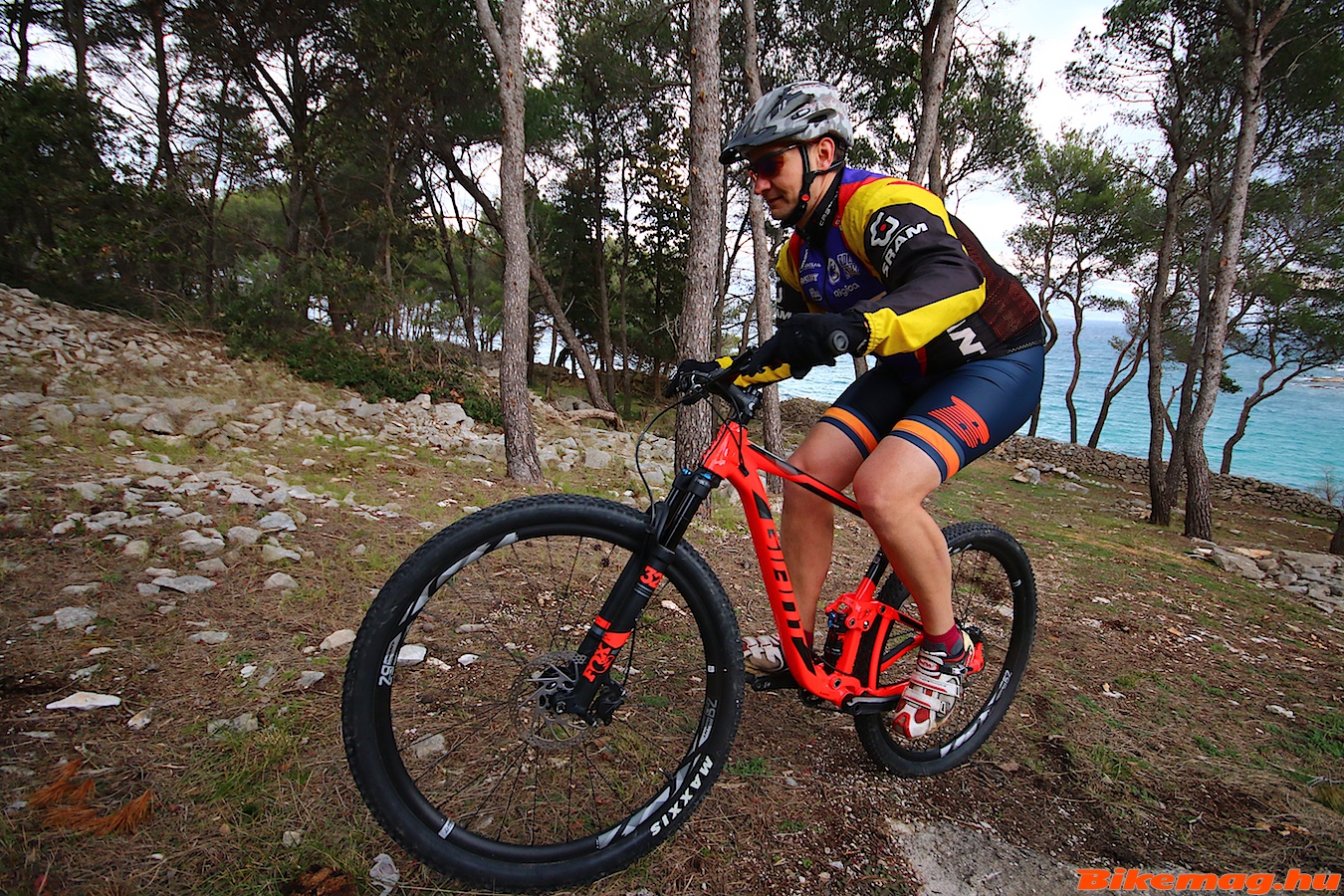
What were my overall riding impressions? Love at first sight! I used to ride an Anthem for many years, so I was glad to have the chance to test the new 29er. Our relationship began as I lifted „her”, and scale showed a slant 12.4 kilograms. It proved to be one of the lightest mountain in our group test, though it had to shake off a multitude of disadvantages:
– The frame is made from aluminium and carbon
– It’s a „fully” and not a hardtail
– The wheel size is 29er and not 650b
– And finally it’s size „L”!

The soul of every bike is the frame, the soul of the frame is the geometry. It is often said that geometry is not just the numbers or physics, but there is also a hint of magic. In this case, this is beyond doubt. The new Anthem 29er is destined for the new generation XC riding, where the downhills are technical and fast, thus it is not surprising to find a 69-degree head angle, shorter than average chain stays and a classic 73.5-degree saddle tube angle to keep a manageable wheelbase despite the long top tube. Hence manoeuvrability is not sacrifices for the added stability this new-age XC frame geometry brings. This is the recipe for perfect handling on the toughest XC courses, and incidentally it results in a machine that is ideal for marathon competitions and riding domestic MTB trails. It is possible to get carbon full suspension bike at this price level, but that might not actually have a lower weight, thanks to the Anthem’s excellent aluminium frame. The geometry of this bike is perfection in itself, the suspension likewise, and I believe these are the most important aspects for choosing an MTB bike.

How could this bike be any better? Well, it’s really just a whisker separating the new Anthem 29 from perfection, but that tiny gap is unfortunately present. My biggest complaint is the position of the rear shock’s compression lever. This frame is hungry for a remotely controlled shock, like the Fox Float DPS Factory. And although it’s user-dependent, I also missed the dropper post. Marathon riders will probably not need it, XC competitors will make their own decision: although here its not such big of a fad, as in many other countries. However, for anyone who wants to simply enjoy the bike, a good dropper post is highly recommended. And here comes the backlash: the 27.2mm seat post size in the frame seriously limits the choice of droppers. Obviously this size was chosen to cut weight and add some compliance to the post, but I would have preferred a diameter more common for droppers. But there is no need to panic, finding one is far from hopeless, and the frame is designed for internal remote control cables.

More information can be found on the manufacturer’s website.
Recommended retail price: 819,990 HUF.

Available size: S, M, L, XL
Frame: ALUXX SL Alumínium, 90mm Maestro Suspension
Fork: Fox 32 Float SC Performance, 100mm út, FIT GRIP, Boost 15×110 KaBolt, Tapered steerer
Rear shock: Fox Float DPS Performance, Trunnion Mount
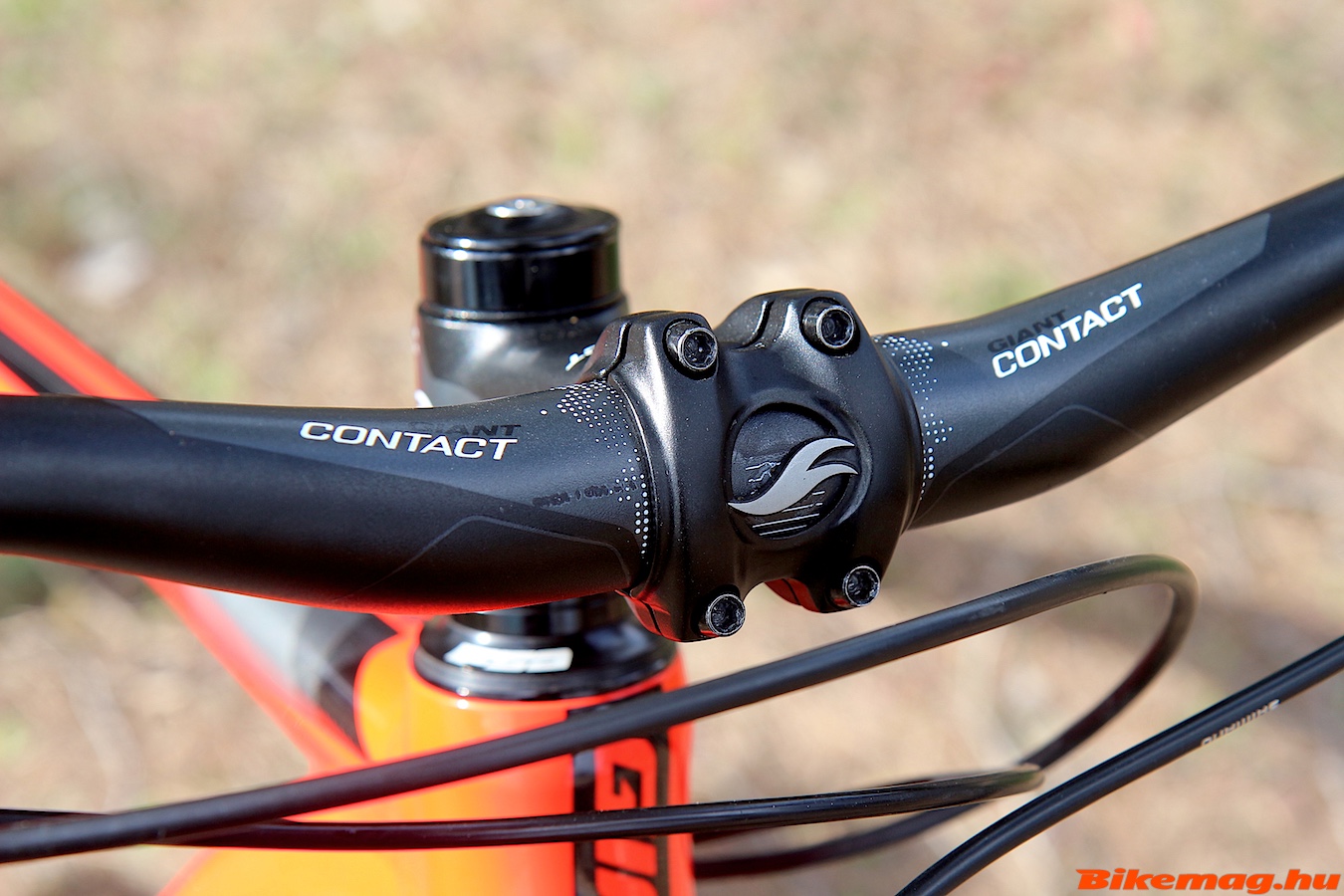
Handlebar: Giant Contact Trail, 780mm
Stem: Giant Contact
Seat post: Giant Contact, 27.2mm
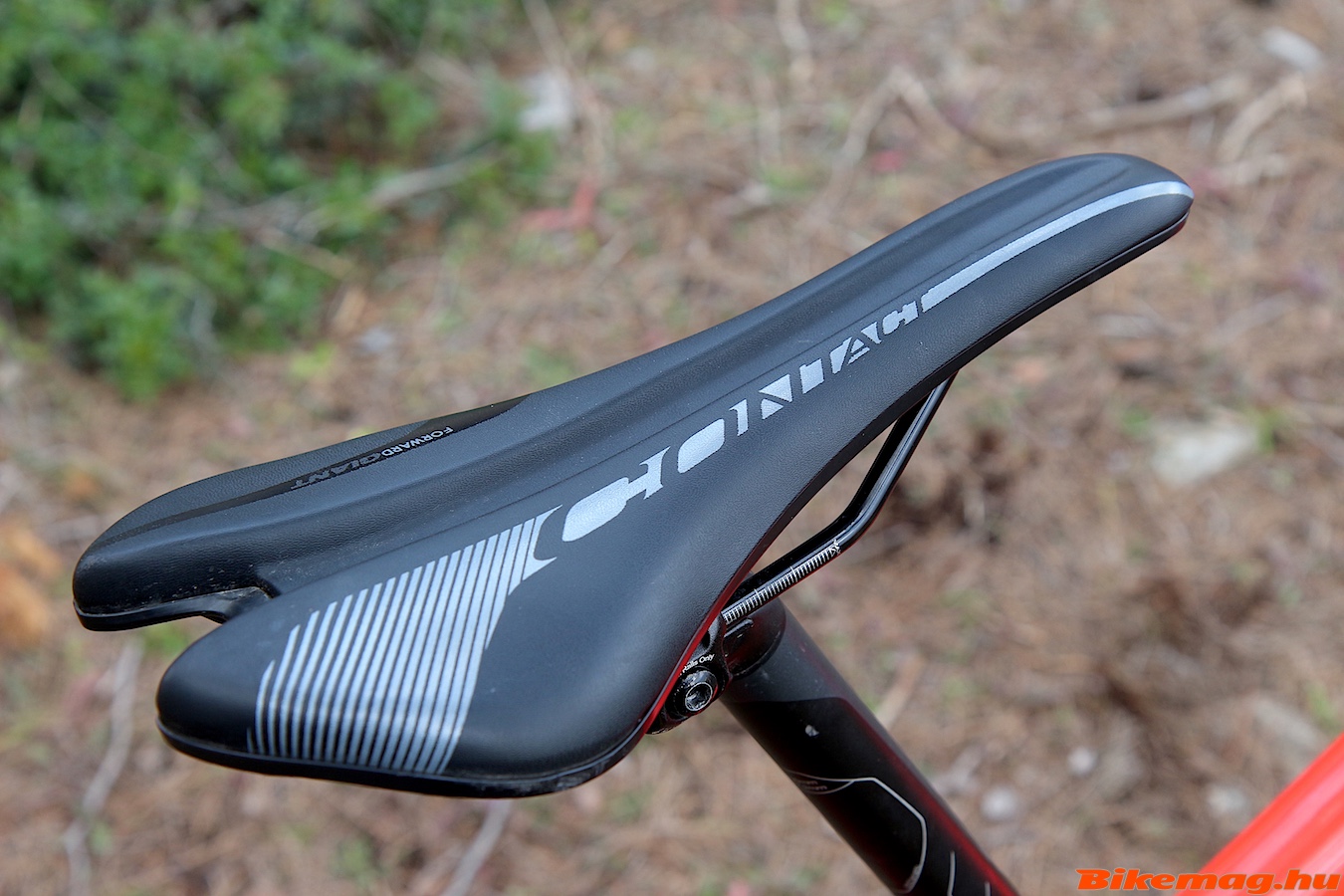
Saddle: Giant Contact
Shifters: Shimano SLX 11s
Rear derailler: Shimano SLX, Shadow+
Brake set: Shimano MT500 [F] 180mm [R] 160mm
Brake lever: Shimano MT500 I-Spec II
Cassette: Shimano SLX, 11-46T
Chain: KMC X11-1
Crank set: Shimano SLX, 32t
Bottom bracket: Shimano PressFit
Rims: Giant XC-1 29″, 21mm internal width
Wheel hubs: Giant Tracker Boost 15×110, cartridge / Giant Tracker Boost 12×148, cartridge
Spokes: Sapim Race
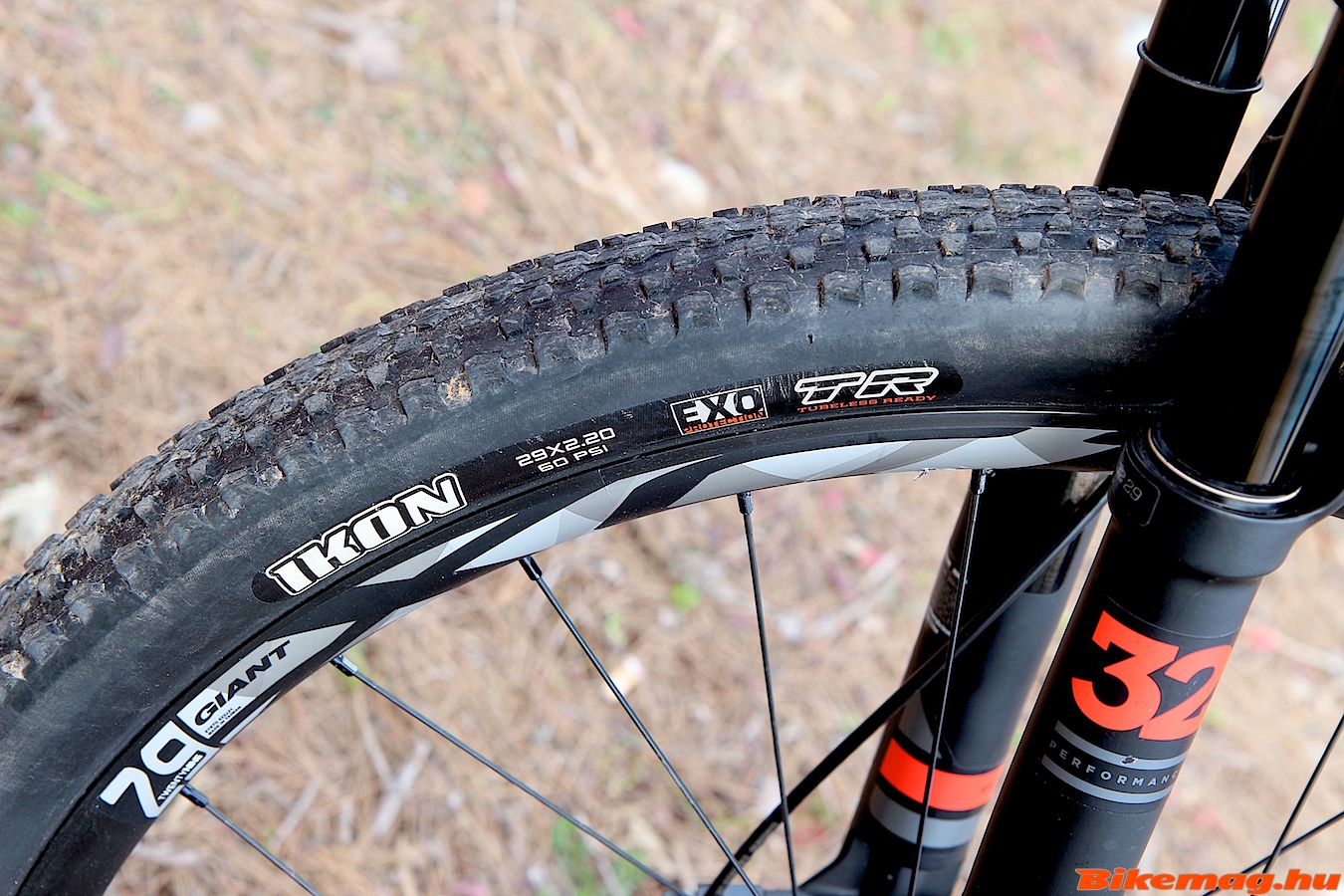
Tires: Maxxis IKON 29×2.2 60 TPI, TR/EXO, Tubeless

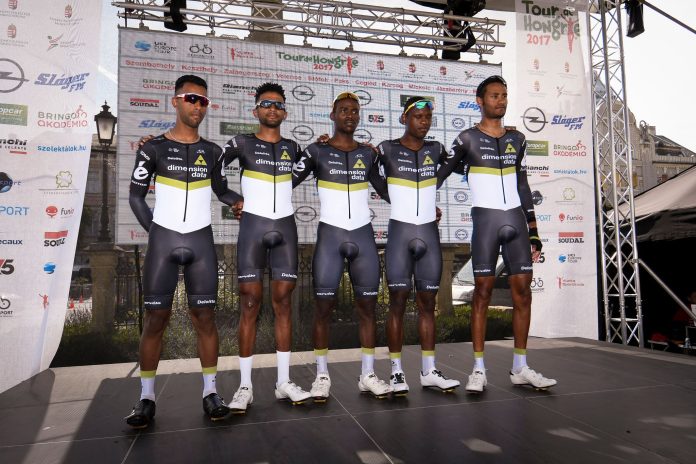
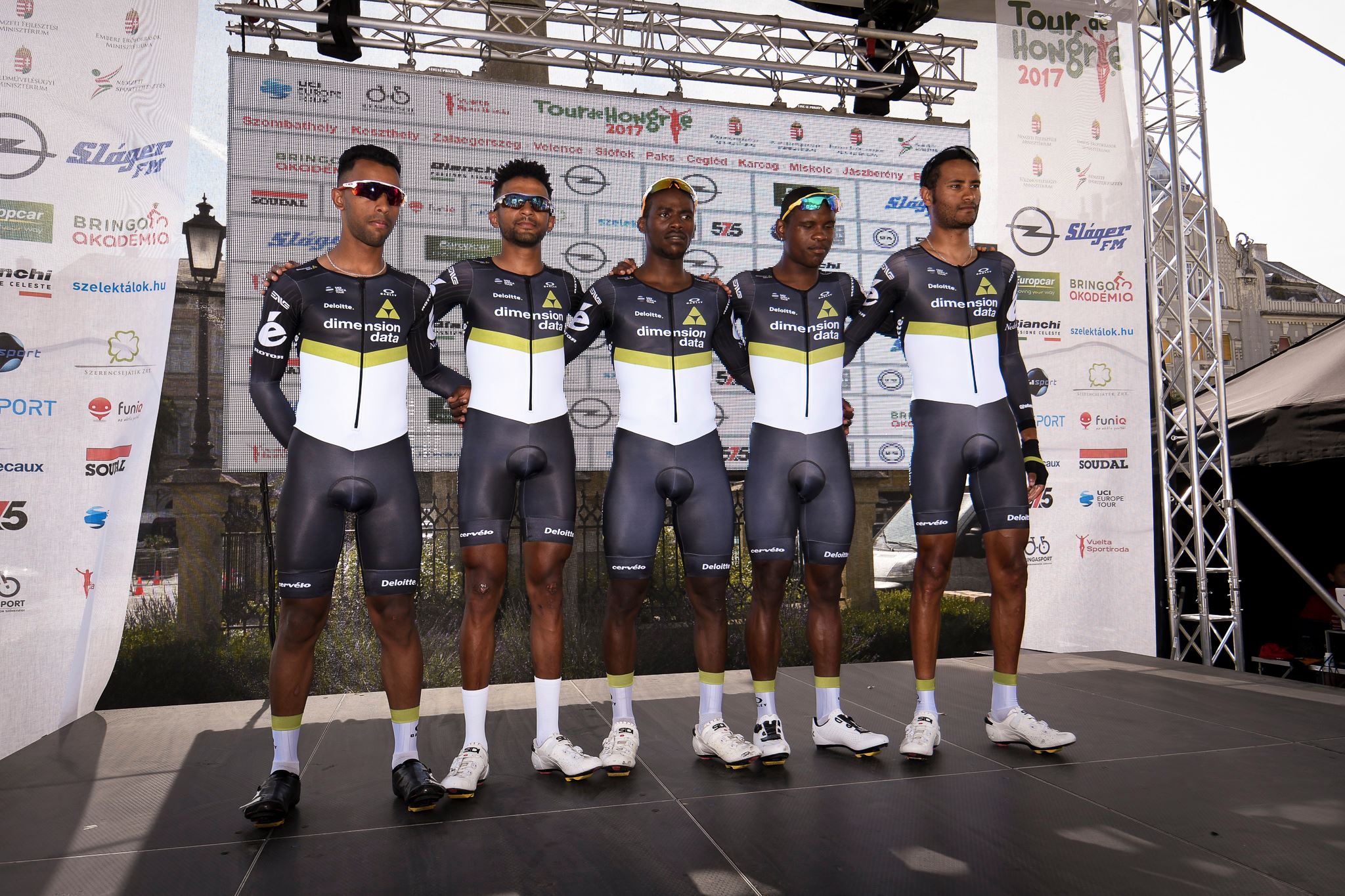
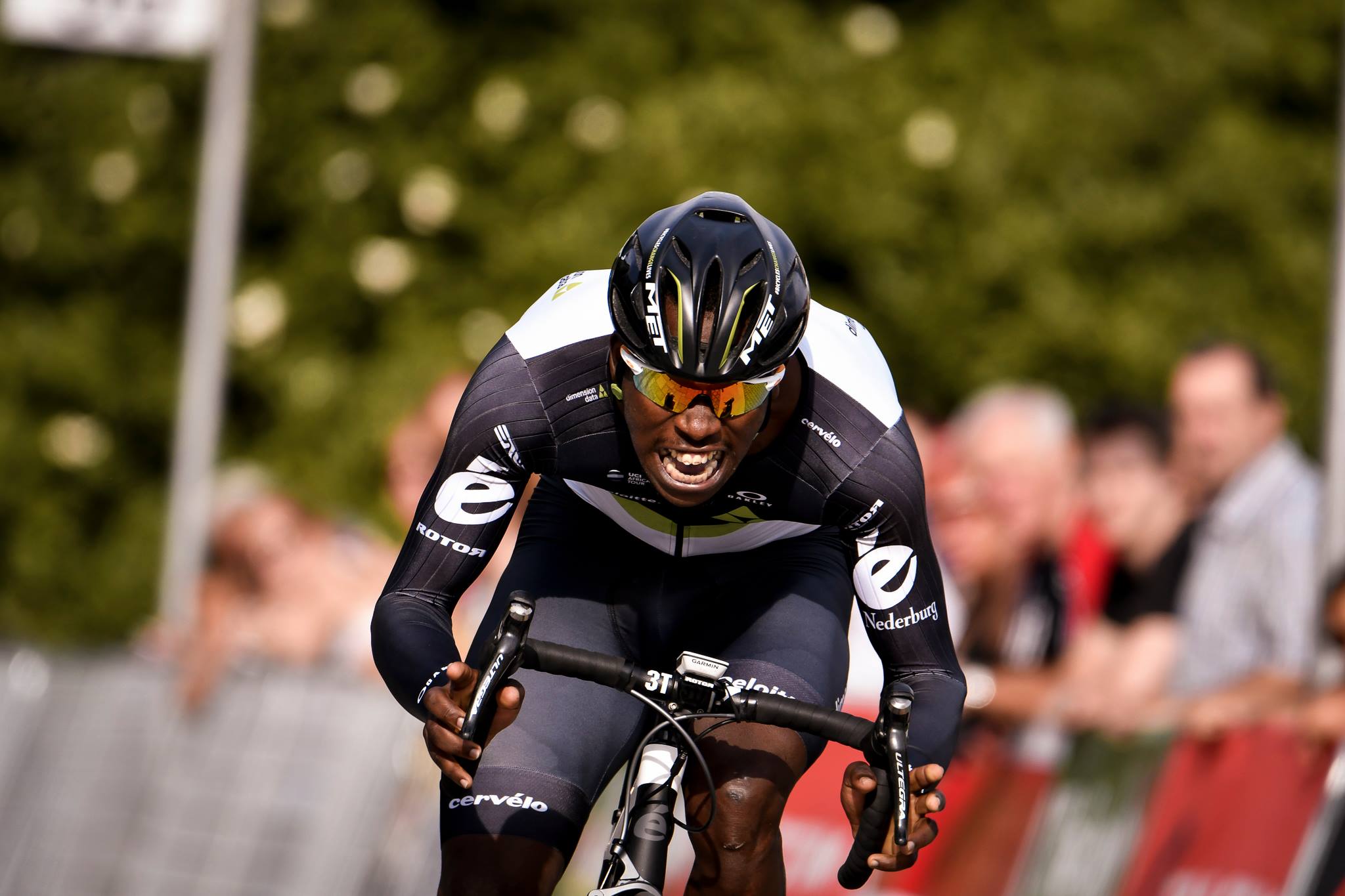
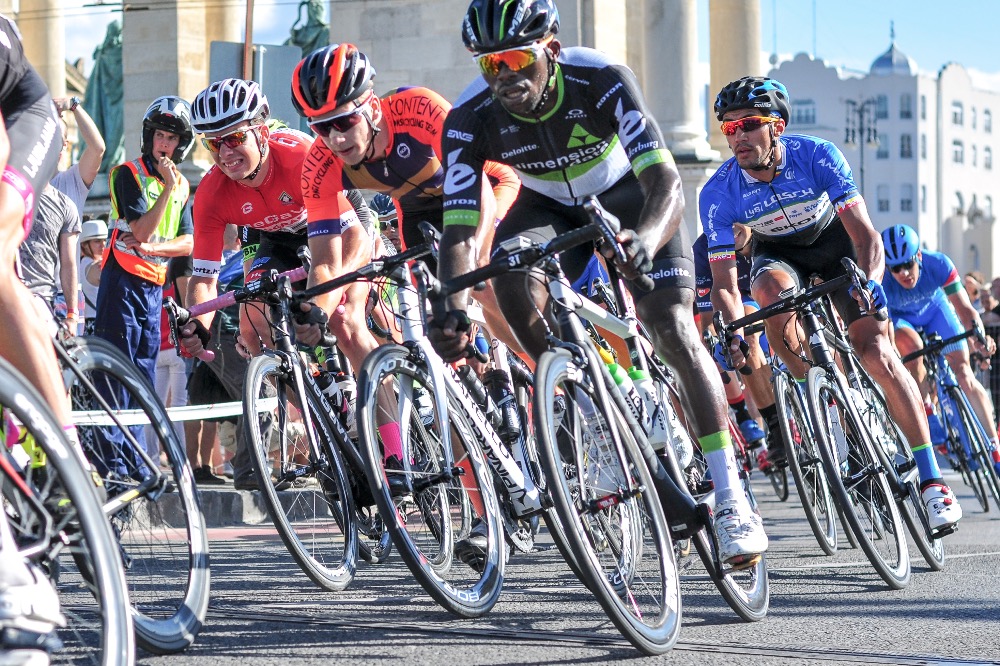
Tour de Hongrie: A névjegyüket már letették – Dimension Data for Qhubeka

A kerékpársport rajongóinak aligha kell említeni, melyik megasztár köré (is) épül a Dimension Data: a harminc(!) Tour de France-szakaszgyőzelemmel (no és még tizenöt Giro d’Italia- és három Vuelta a Espana-etapsikerrel), 146 profi diadallal büszkélkedő brit világbajnok, Mark Cavendish az első afrikai World Tour-csapat vezéralakja.


A Team Dimension Data – korábbi nevén MTN-Qhubeka – az afrikai kontinens első profi csapataként történelmet írt: mindhárom nagy körversenyen rajthoz állt. A klub korábban is nagy hangsúlyt fektetett az utánpótlás-nevelésre, s 2015 végén döntött úgy, hogy nem folytatja a közös munkát a World Cycling Centre afrikai részlegével (WCAA), hanem saját kezébe veszi a fiatalok sorsát.

Olaszországi központtal létrehozta a Dimension Data for Qhubeka kontinentális sorát, amelyben 2018-ban hét afrikai, egy új-zélandi és négy olasz bringás bontogatja szárnyait, köztük a dél-afrikaiak egyik nagy tehetsége, az U23-as nemzeti bajnok (mind időfutamban, mind a mezőnyversenyben), Afrika-bajnoki ezüstérmes Stefan De Bod.


„Mindig is az volt a célunk, hogy legyen egy saját fiókcsapatunk. A terveink, amelyekért küzdünk nem változtak, annyi afrikai versenyzőt szeretnénk magasabb szintre juttatni, amennyit csak lehet” – mondta 2016 elején Douglas Ryder, a Dimension Data családjának feje. A terv megvalósításához olasz, francia és belga versenyek, illetve az afrikai erőpróbák mellett más európai helyszíneken is szívesen gyűjtik a tapasztalatokat, így jelentkeztek már 2016-ban is a Magyar Körversenyre. Már a rajtlista is elkészült, amelyen a 163-as rajtszámmal szereplő Keagan Gridlestone az olaszországi Coppa dela Pace versenyén szenvedett súlyos koponyasérülést. Napokig kómában feküdt, az életéért aggódott az egész kerékpársport. Keagan végül szerencsére felépült (hosszú kihagyás után 2018 januárjában már Új-Zélandon versenyzett), ám a Dimension Data for Qhubeka visszalépett a Tour de Hongrie indulástól.


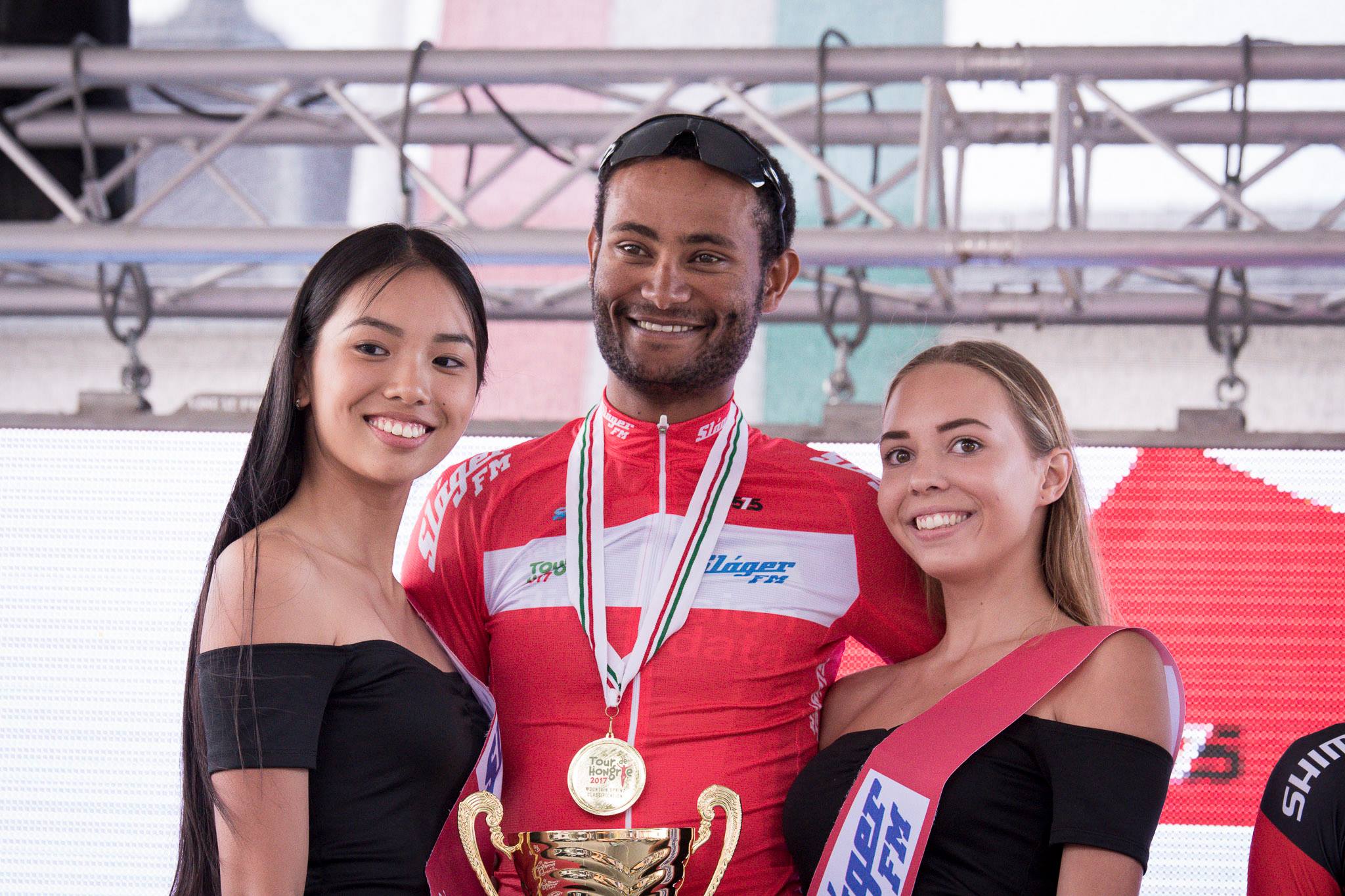
2017-ben pótolták a kényszerből kihagyott lehetőséget, nem is akárhogy: a jó erőkből álló együttes megnyerte a csapatversenyt! Sőt, az eritreai Amanuel Gebreigzabhier mind a négy szakaszon Top10-es eredményt ért el, így az összetett versenyben a hatodik helyet szerezte meg, s emellé magával vihette a legjobb hegyimenőnek járó piros trikót is. Nem véletlen, hogy Gebreigzabhier az idén már Mark Cavendish oldalán, a Dimension Data World Tour-csapatában tekerhet…


Ugyancsak felkerült a „nagy sorba” a dél-afrikai Dlamini, aki a Tour de Hongrie szombathelyi prológján negyedik lett, az összetettben az ötödik helyen zárt, s a 23 évnél fiatalabbak versenyében harmadik lett Magyarországon.


A Dimension Data for Qhubeka tagjai:
Joseph Areruya (ruandai)
El Mehdi Chokri (marokkói)
Stefan de Bod (dél-afrikai)
Simone Innocenti (olasz)
Ollie Jones (új-zélandi)
Kent Main (dél-afrikai)
Federico Molini (olasz)
Luca Mozzato (olasz)
Samuel Mugisha (ruandai)
Matteo Sobrero (olasz)
Louis Visser (dél-afrikai)
Hafetab Weldu (etiópiai)
Honlapja: www.africasteam.com
Facebook-oldala: www.facebook.com/TeamDiData
PCS-oldala: www.procyclingstats.com/team/dimension-data-for-qhubeka-2018


A legnagyobb magyar kerékpárverseny, a Tour de Hongrie augusztus 14-én kedden Siófokon prológgal rajtol, a nemzetközi mezőny a Balatonalmádi, Keszthely, Velence, Székesfehérvár, Cegléd, Hajdúszoboszló, Karcag, Miskolc, útvonalon hat versenynap alatt, tíz megyét érintve 800 kilométert tesz meg a budapesti befutóig. Ebben az évben 20 csapat kapott meghívót, minden együttes hét kerékpárossal állhat rajthoz a Magyar Körversenyen.


Az olimpiai bajnok, aki már unja a folyamatos győzelmeket

A holland Van Der Breggen rengeteget dolgozott csapattársának

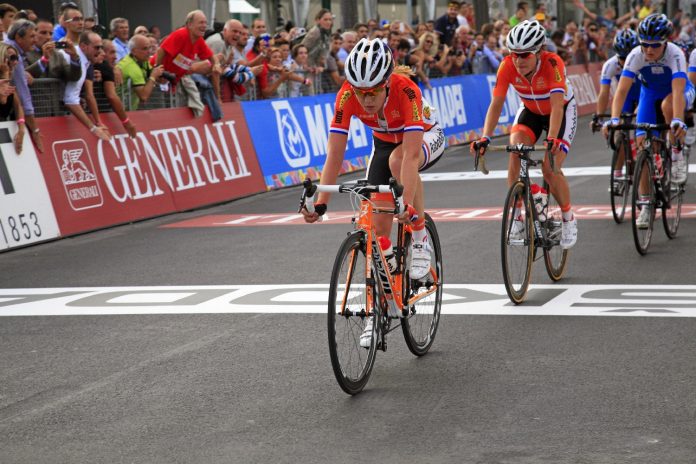
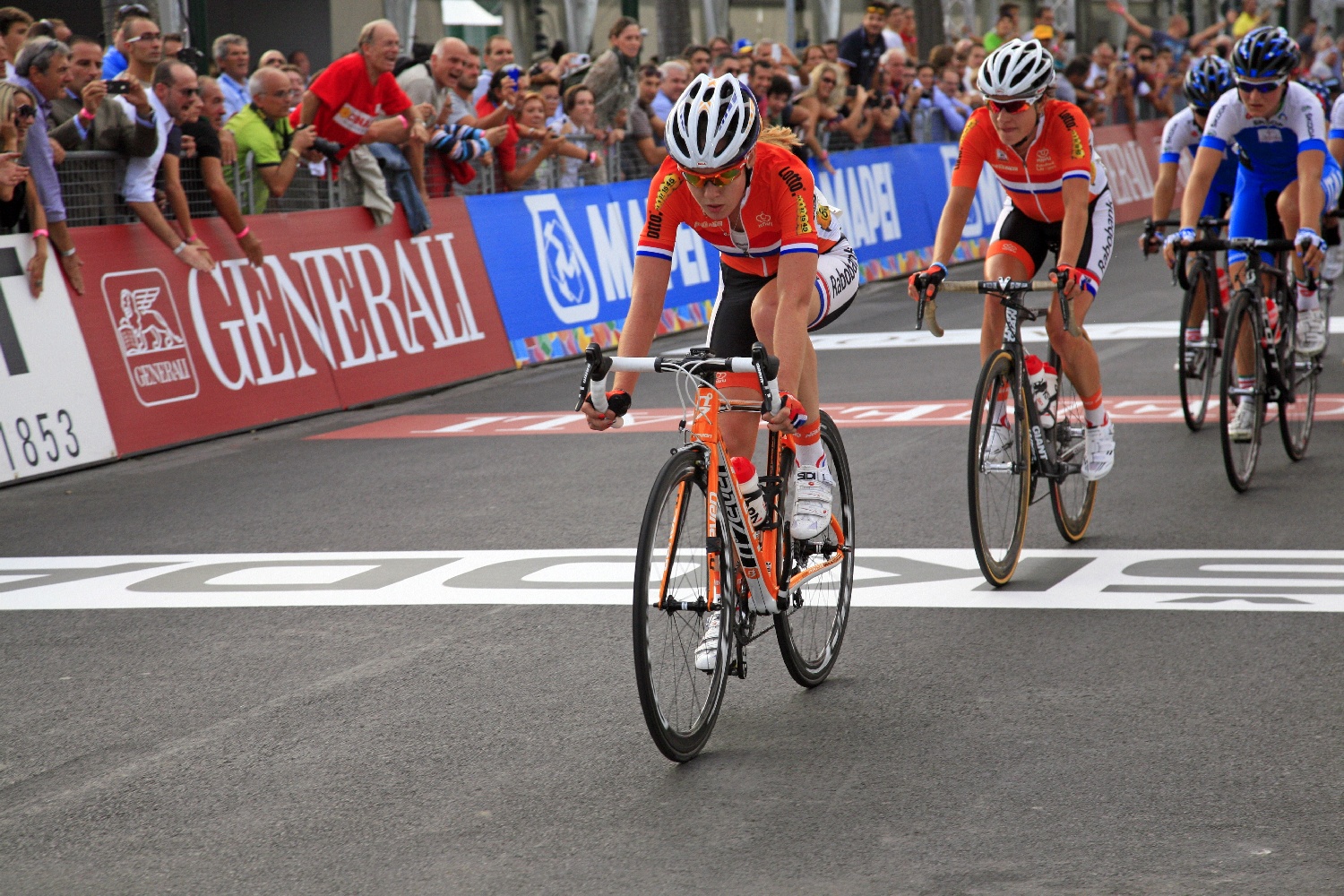
Az országúti olimpiai bajnok, Anna van der Breggen brutálisan kezdte a 2018-as szezont, de ezen a héten mégis bejelentette, hogy kihagyja a Giro Rosa-t, helyette új kihívásokat keres az aszfalton kívül, júliusban Val di Sole XCO Világkupán fog rajthoz állni.

Anna van der Breggen idén megnyerte a Strade Bianche-t, a Tour of Flanders-t, a Flèche Wallonne-t, a Liège-Bastogne-Liège-t és a Durango Emakumeen Sira-t, lényegében ő az a versenyző, aki bárhol elindul, komoly győzelmi esélyei vannak és mégis motivációs problémákkal küzd. Ezen a héten egy interjúban elmondta, hogy idén kihagyja a Giro Rosa-t, melyet már tízszer teljesített, amiből kétszer nyert, mert egyszerűen nem érez benne kihívást, hogy 2018-ban is ott legyen. Helyette az XC versenyzés vonzza, ott lesz a Val di Sole XCO Világkupa rajtjánál.

Egyébként nem újdonság számára a montizás, mindig is próbált terepedzéseket is beiktatni a programjába, sőt idén már a Cyprus Sunshine Cup-on is rajthoz állt, amit sok montis világsztár legyőzésével megnyert. Azt is elmondta, hogy nem vár magától túl sokat a Világkupán, hiszen messze nincs annyi tapasztalata, mint az ellenfeleinek, hiába erős, a technikás szakaszokon még nem elég ügyes. Ezért is választotta Val di Sole-t, mert ez a legkevésbé technikás Világkupa pálya.

A montis kaland után tovább folytatja országúti felkészülését, hiszen erre az évre a legfontosabb számára az innsbruck-i világbajnokság, mert még hiányzik a gyűjteményéből a VB arany.

Lehet egy új XCO világsztár van születőben?

Cube AMS 100 C:68 Race 29 teszt – A fully, amivel maratonokat lehet nyerni

A Cube AMS 100 egy XC fully, amivel bármilyen versenyen rajthoz állhatsz, legyen akár XCO vagy maraton, a jól tervezett rugózási rendszerével hatékonyan fel lehet vele mászni a meredek sziklás emelkedőkön és a lefelé is extrát nyújt a merev társaihoz képest.

Gyorsan lecsaptam Brac-on a Cube AMS 100-ra, hozzám közel állnak az ilyen teljesítményorientált montik, szeretek gyorsan haladni, de nem bánom ha mellette nem ráz szét a terep sem, tehát leginkább a versenyzős fullykat kedvelem. Cube-ból eddig csak a 120-at mozgó Stereo-t próbáltam, ami kicsit lomha mindenes létére pozitív benyomást tett rám, de papíron eléggé más világ, mint az AMS, ezért kíváncsi voltam, hogy mit tudott összehozni a gyártó az XC szegmensben.

A Cube nem árul zsákbamacskát, az AMS neve már sok mindent elárul a bringáról, a „100” a rugóutat jelzi, a „C:68” a váz alapanyagát, a „29” a kerékméretet, a „Race” pedig a felszereltségét, tehát aki kicsit jobban ismeri a német gyártót, az már a modell nevéből tudhatja, hogy kb mire számíthat. A Cube jó pár technológiát belezsúfolt az AMS karbon vázába, még felsorolni is nehéz őket, de a fontosabbakra mindenképpen kitérek.

A twin mold monocoqe technológiáról már többször írtunk, ez az egyik legfejlettebb karbon váz gyártó technológia, melynek köszönhetően erős, biztonságos és könnyű vázakat tudnak készíteni. A C:68 valójában nem is egy fantázianév, hanem azt jelöli, hogy a vázanyag hány százaléka karbonszál, melyen gondolom sokan meglepődnek, a váz 68 %-a karbon, a többi gyanta, de ez még az átlag fölött van, általában 60 % körüli a vázak karbonszál aránya. És miért is jó a több karbon? A válasz egyszerű, összességében kevesebb anyagot kell felhasználni azonos erősségű váz elkészítéséhez, melynek köszönhetően könnyebb vázakat tudnak létrehozni, de megfordíthatjuk a gondolatmenetet, mondhatjuk azt is, hogy azonos tömeg mellett erősebb vázakat képesek gyártani.

A Cube teljes mértékben halad korral, az AMS minden bovdene belül fut, ami tervezéskor mindig valódi mérnöki teljesítmény, bár a szerelők dolgát kicsit megnehezíti. Az integrált PM tárcsafékkonzol, a PressFites középcsapágyház és a Tapered fejcső már elmaradhatatlan kellékei a magasabb szintű Cube kerékpároknak. A kerékagyszabványoknál is fejlődést fedezhetünk fel, ugyanis BOOST 148 szabványt alkalmaznak az AMS-nél, melynek lényege, hogy a +3-3 mm-nek köszönhetően merevebb kerekeket lehet fűzni, pl egy 29″-os keréknél 21 %-kal merevebb a BOOST-os kerék, mint a hagyományos.

A Cube FSP4LINK névre keresztelte az AMS-ben alkalmazott felfüggesztést, mely valójában a klasszikus virtuális 4 forgáspontos rendszer továbbfejlesztése. Amennyire csak lehetséges megpróbálja kiküszöbölni a hajtás közbeni felesleges bemozdulást és a fékezéskor fellépő bekeményedést. Az előbbiben a kormányról vezérelhető Rock Shox Monarch XX rugóstag is nagyban a rendszer segítségére van.

Az első villa választást sem aprózta el a Cube, egy 100 mm-t mozgó Rock Shox SID XX dolgozik az AMS elejében, a rugóstaggal együtt hidraulikus lockout-tal a kormányról zárható és a nagyobb merevség érdekében 15 mm-es Maxle átmenőtengely rögzíti a kereket.

A hajtás-, váltás-, fékezés elemei mind a már sokat bizonyított Shimano XT szettből kerültek ki, rengeteg közép-/felsőkategóriás bringán találkozunk ezzel a szettel. A hajtás 2×11-es 36/26-os hajtóművel és 11-42-es sorral, elég kevés helyen nem lehet felmászni ezzel az áttétellel és még síkon is komoly tempót lehet vele diktálni.

Gyári kerékszett jár a Cube AMS-hez, a Fulcrum Red 44 kerekeit választotta bele a német gyártó, 28 küllővel és a BOOST szabvánnyal kellő merevséget biztosítanak. A Schwalbe Rocket Ron – Thunder Burt páros felel a megfelelő tapadásért, mindkettő 2,25-ös szélességű és LiteSkin verzió, egyik sem egy nehéz darab, ezzel is hozzájárulva az AMS fürgeségéhez.

Ahogy már megszokhattuk saját márkás kiegészítőket találhatunk a Cube kerékpárokon, az AMS-nél sincs ez másképpen, viszont azt is tudni kell a Cube kiegészítőiről (kormány, kormányszár, nyereg, nyeregcső), hogy komoly tervezési munka áll mögöttük, mindegyik igényes, minőségi darab.

A Cube mindig is ügyelet a kerékpárok megjelenésére, az AMS-en is minden egyes apróságra, részletre odafigyeltek, a komplett bringa feketében és kékben pompázik. A képek sajnos nem adják vissza az AMS valódi megjelenését (zárójelben megjegyezném, hogy a Cube-okat nehéz fotózni a festésük és a gyakori matt fekete színük miatt), amit a szürke háttér is kicsit tompít, életben ennél sokszorosan jobban néz ki. Persze biztos nem mindenkinek tetszik az ilyen dizájn, de én pl szeretem a németes megjelenést.

Menet közben nem kellett fél perc ahhoz, hogy rájöjjek, hogy egy ez igazán jó bringa, olyan gyönyörűen haladt a köves horvát utakon, ahol a többi bringa már teljesen szétrázott, hogy az leírhatatlan. Gyorsan elfogott az az érzés, hogy kell nekem egy ilyen monti. Felfelé simán odaverte a középkategóriás merevfarúkat, pedig nem volt akadályokkal teli az emelkedő, hihetetlen, de nagyon kijött a különbség kerékpár és kerékpár között. A montis bázisunk egy meredek emelkedő tetején volt, így minden bringával meg kellett mászni azt a falat akár többször is és az AMS végzett nálam a legjobb helyen. Zárt teleszkópokkal kiállva is félelmetesen lehet vele menni, pl a képeknek minimum 10-szer kellett nekifutnom maximumon és egyszer sem volt az, hogy hagyjuk már abba a fotózást, mert nem bírom a hintázás miatt, minden egyes alkalommal élveztem, ahogy gyorsul az AMS.

Lefelé nagyon sokat segít a 100 mm rugóút, rendesen a talajra tapasztatja a kerekeket és nyeli az akadályokat, de szerencsére a mozgása megmaradt XC-snek, lehet érezni a bringa hátulját, nem olyan érzésre mintha valami lapos gumis fatbike-kal mennénk lefelé, mint egy-két hosszabb rugóutas bringánál, hanem azért tudom, hogy kb min mentem át. Egy merevfarú XC géphez képest nehéz terepen jóval gyorsabb, nem pattog el a hátulja, még fékezés közben is aktív a rugózás, szépen lehet ívről ívre tenni. A Cube AMS pont az a kategória, amit a fully között én szeretek, fürge, de aktívan simítja az utat.

A Cube AMS-t nem csak profi versenyzőknek ajánlanám, hanem mindenkinek, aki megengedhet magának egy ilyen bringát, hobbi maratonzásra is kitűnő választás (sőt személy szerint én arra használnám) vagy akár hétvégi túrázásra is olyan bringásoknak, akik szeretnek haladni és igénylik az össztelósok nyújtotta többlet szolgáltatást.

Ajánlott fogyasztói ár: 1 299 990 Ft
A kipróbált kerékpár megvásárolható bármely Cube kereskedőnél 30 % kedvezménnyel 899 990 Ft-ért.

Tömeg (mért): 11,94 kg
További információk a gyártó honlapján.

Nyilvánosak az UCI tervei 2022-ig – Minden szakágat érintő közös világbajnokságot szeretnének

David Lappartient

A Nemzetközi Kerékpáros Szövetség elnöke elmondta a 2022-ig szóló terveiket, melyek között szerepel a 4 évenkénti rendezendő minden szakágat érintő közös világbajnokság, a tárcsafék végleges engedélyezése, a nemek közti azonos bánásmód, az enduro szakág versenyeinek felvétele az UCI versenynaptárba és a snow bike rendezvények UCI regisztrálása.

David Lappartient

A tervek szerint az UCI egyik legfontosabb feladata a következő 4 évre a nemek közti egyenlőség biztosítása, ennek érdekében számos intézkedést fognak tenni, pl létrehoznak egy szabályzatot, amit minden csapatnak, versenyzőnek, személyzetnek alá kell majd írnia. Továbbá a pénzdíjak terén is történnek változások, pl a következő szezonban az Telenet UCI Cyclocross Világkupákon már egyenlő pénzdíjakat fognak osztani mindkét nemnek. Ezenfelül az UCI női versenyzők fizetése is szóba került, mivel eddig nem volt előírás a minimum összegre (jelenleg rengetegen fizetés nélkül versenyeznek – szerk.), a jövőben ezt is be szeretnék vezetni.

Továbbá a nemek közti egyenlőség a díjkiosztó ceremóniák kapcsán is szóba került, itt is a férfiaknak és nőknek (a pódium lányokra/fiúkra kell gondolni – szerk.) egyenlő arányban kellene majd megjelenni, ezenfelül UCI rendezvényeken a pódium lányok/fiúk csak az UCI által jóváhagyott ruházatot viselhetnék.

A három éves tesztidőszak után a tárcsafékeket az országúti kerékpársportban és a BMX-eken is engedélyezik.

2023-tól egy 4 évenkénti az összes szakágat érintő világbajnokság megrendezése is tervben van, ami a lemaradt szakágak felzárkóztatása érdekében történne. A tervek szerint ezeket a versenyeket mindig az olimpia előtti évben rendeznék.

Az Enduro World Series versenyeit 2019-től az UCI versenynaptárba integrálják, ugyanez vonatkozik az egyre népszerűbb snow bike versenyekre is, amik Class 3 besorolást kapnak majd a naptárban.

Dopping ügyekben is történik változás, a következő szezontól betiltják az egyik erős fájdalomcsillapító használatát, a tradmadolt, mely komoly károkat tud okozni a versenyzők szervezetében. Ezenkívül azt is tervezik, hogy nem engedik rajthoz állni a túl alacsony kortizol szintű versenyzőket, ami erősen doppinghasználatot sejtet a háttérben.


Merida Reacto Disc 5000 review – Disc brake aero road bike not just for the pros

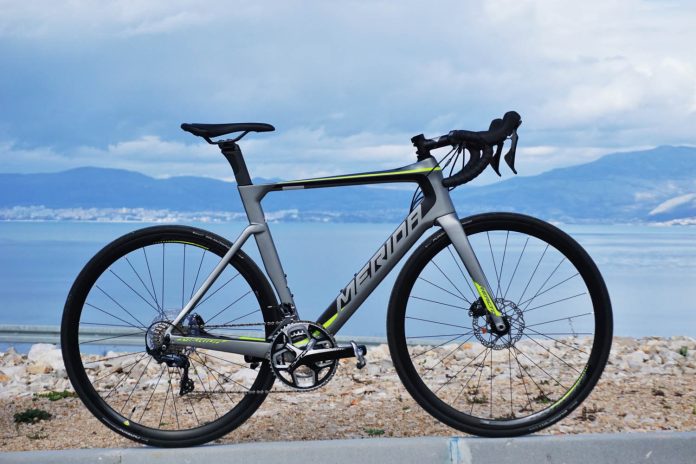
The Merida Reacto Disc 5000 makes its entry from the shadows of the professional bikes, inherits the engineering work targeting extremely low air-resistance and stiffness of high-end Merida bicycles developed for ProTour riders. Whether it is road racing, time trial or triathlon, the Reacto can save you valuable seconds!
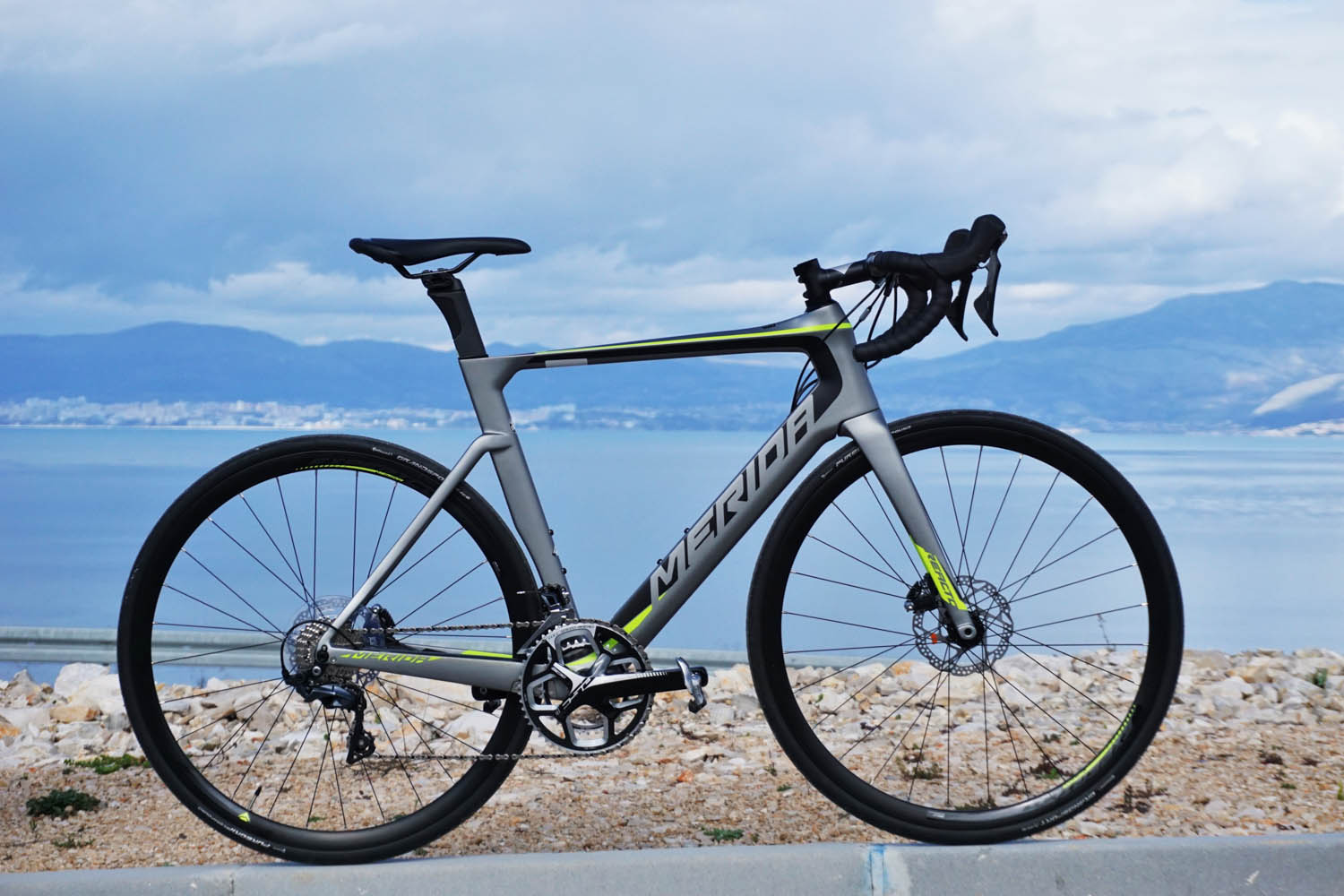
The Reacto name definitely sounds familiar to the fans of top-level road bike racing, since the World Tour BAHRAIN MERIDA professional team has been using the Merida top-of-line aero bike since 2017. The concept of Reacto and other aero bikes dates back to the beginning of the decade, when many manufacturers have come to realise that in most road race competitions, the lowest possible weight does not provide offer a significant technical advantage. The UCI limits the weight of bikes to such extent that the threshold may be achieved by bikes in the sub-premium price level. This limitation notwithstanding, the +/- 1 kg of weight on the bike is rarely noticeable in practice, on the other hand air resistance is hard to fight. It does require significant energy to cut through the air for both at pro or amateur rider.
Undoubtedly the rider had the greatest frontal surface, but it is still useful to make bicycles more aerodynamic to save some valuable seconds or watts. When the manufacturers set out to crate the fastest and most aerodynamic bikes, they have also aimed to improve drive stiffness, to avoid loosing energy due to frame flex. In the course of field sprints, air drag has a key role (since physics dictates, that air resistance increases with speed on the power of two), nevertheless the watts exerted are staggering, and the frames have to have the construction to withstand these forces. That’s how the new aerodynamic road racing bikes were born, which quickly became the favourites of professional riders on flat stages. Merida named their „aero” road bike Reacto, which soon became a common sight at the highest level of competition, ridden by the stars of BAHRAIN MERIDA. The renowned Scultura road bike remained in the lineup, aimed at the mountain stages and as an all-rounder race model, as a perfect complement for the Reacto.

In the last few years, the Reacto line has expanded to embrace a complete family of models. There is the entry-level offer up to the top-of-the-line model ridden by the professionals bike racers. The subject of our present test is a disc-equipped, carbon frame CF2, which is one level below the CF4 professional series, where the frame geometry is designed to meet the needs of hobby/amateur athletes. Merida knows well that different type of riders require different bicycles: there are those who earn their living by racing in the saddle at the top level, while others just want to enjoy the pleasure of road riding at the weekend. Many riders would stop cycling altogether if they had to suffer the miles in the same body position as the professionals, hence the CF2 frames are designed for comfort, hence moresuited to average physical abilities. (Of course, is a small minority who prefer the geometry used by professionals: they still have the choice to buy a Recto CF4 model!)

Readers may not be interested in detail concerning the technical solutions Merida employed in the development of this truly streamlined bicycle, nevertheless please bear with me! First of all, there are the special tube shapes that allows the Reacto to slice the air instead of pushing it. This is true for most manufacturer’s aero road bike offerings, they are seek machines that simply look fast even when it is standing still. To further this concept, Merida spent a great amount of time and effort to develop the optimum shape of the tubes for advanced aerodynamics. Let’s examine these details!

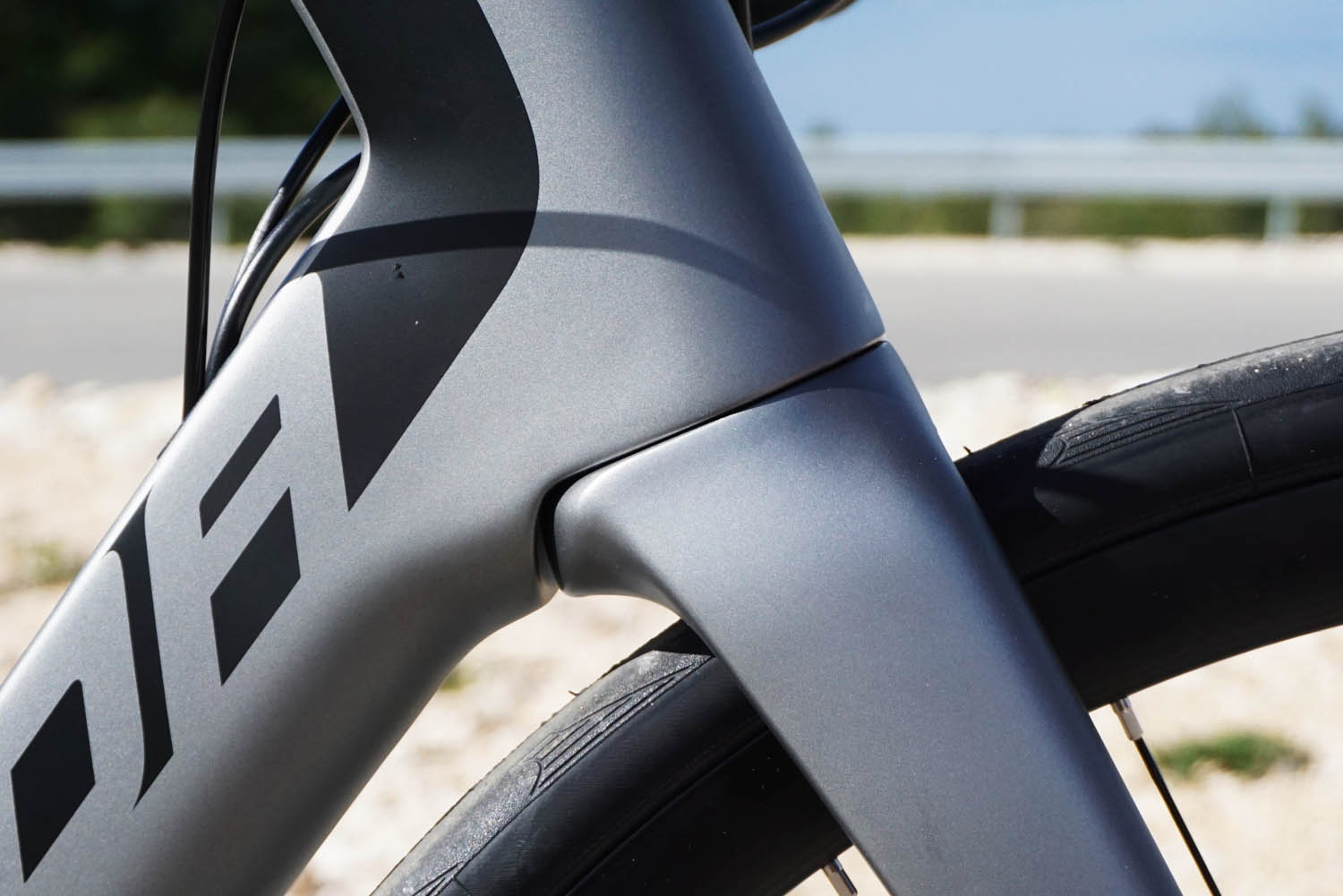
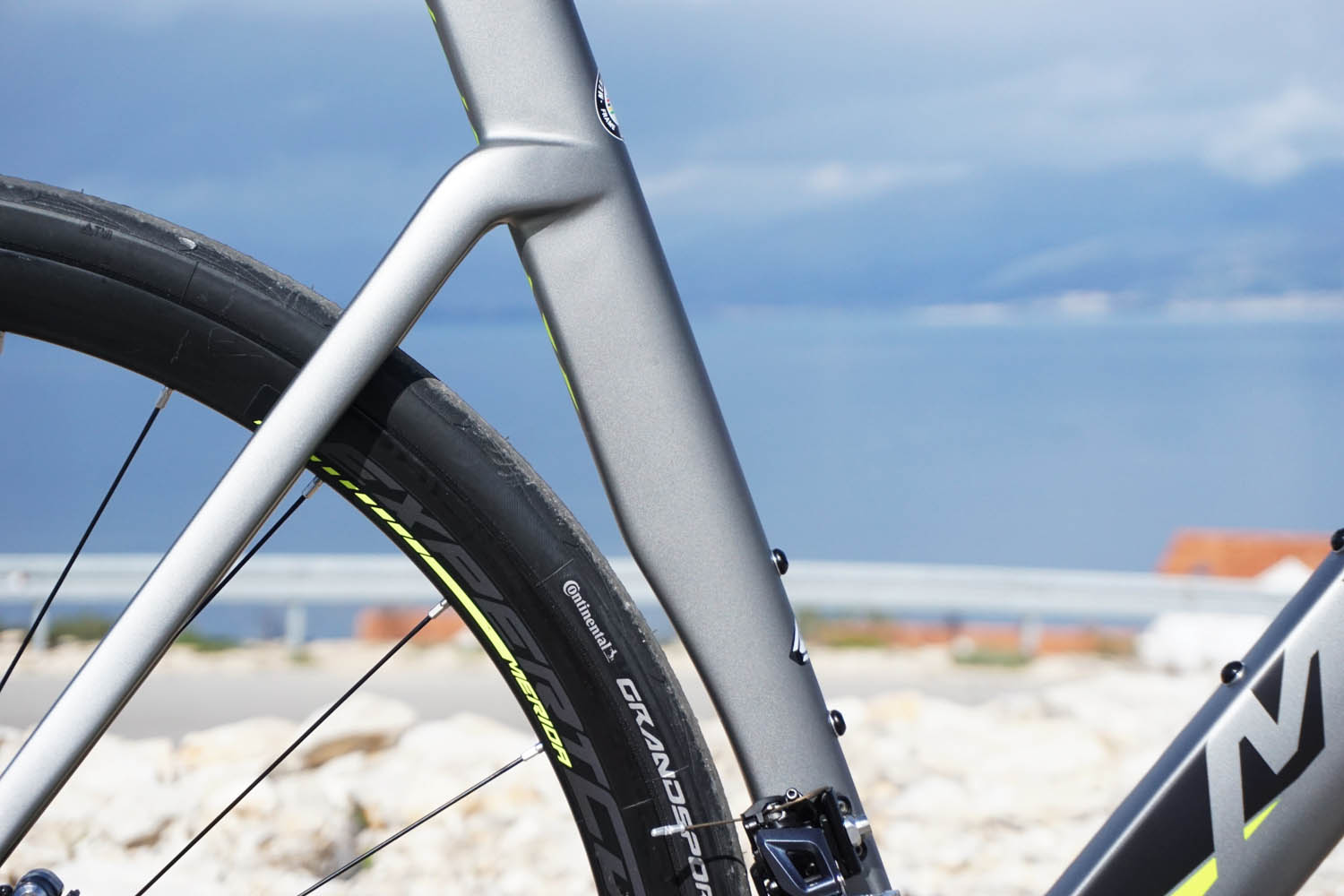
First of all, there is the perfect integration of the frame and fork, no gap or broken line to be seen, nothing to cause air turbulence. Incidentally, the design of the frame set turned out to be also quite attractive! The shape of the seat tube – in addition to being streamlined – embraces the rear wheel to form a perfect rear-end integration. Fortunately the manufacturer did not follow the UCI’s infamous „credit card rule” (a minimum gap between the wheel and the frame which is checked by inserting a bank card), so in case you pick up some road debris with the rear tire, it will not scratch the wheel-hugging part of the frame.
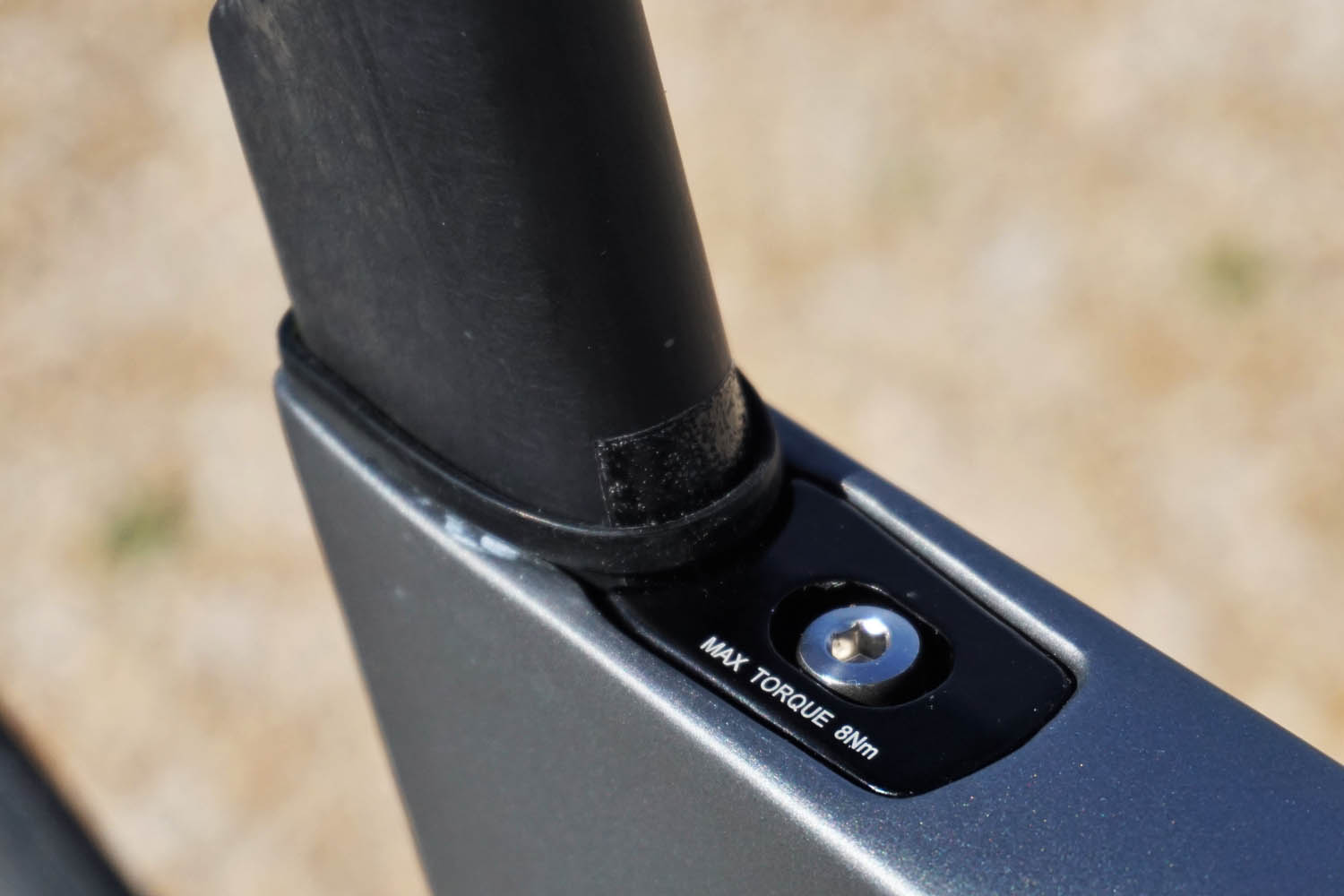
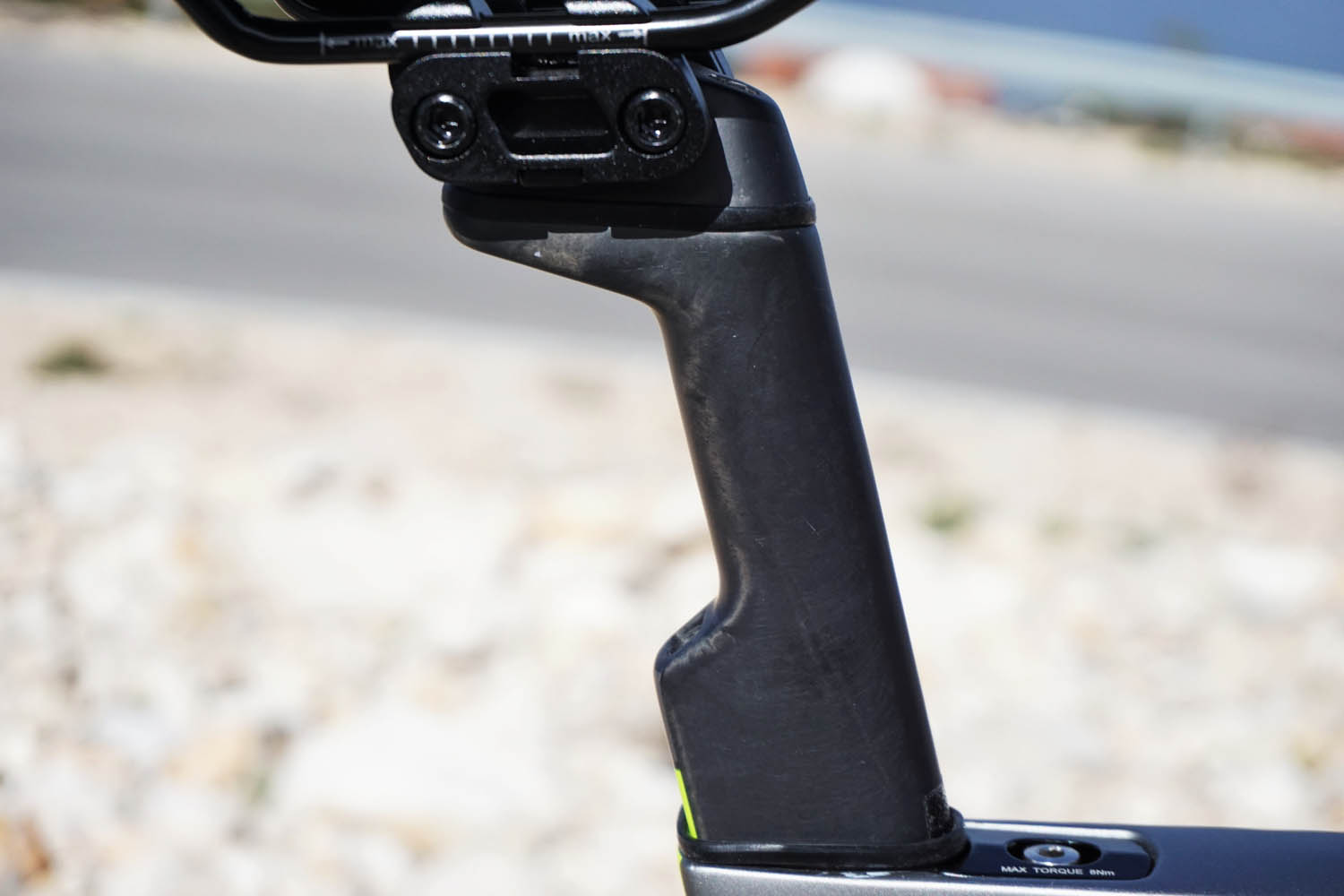
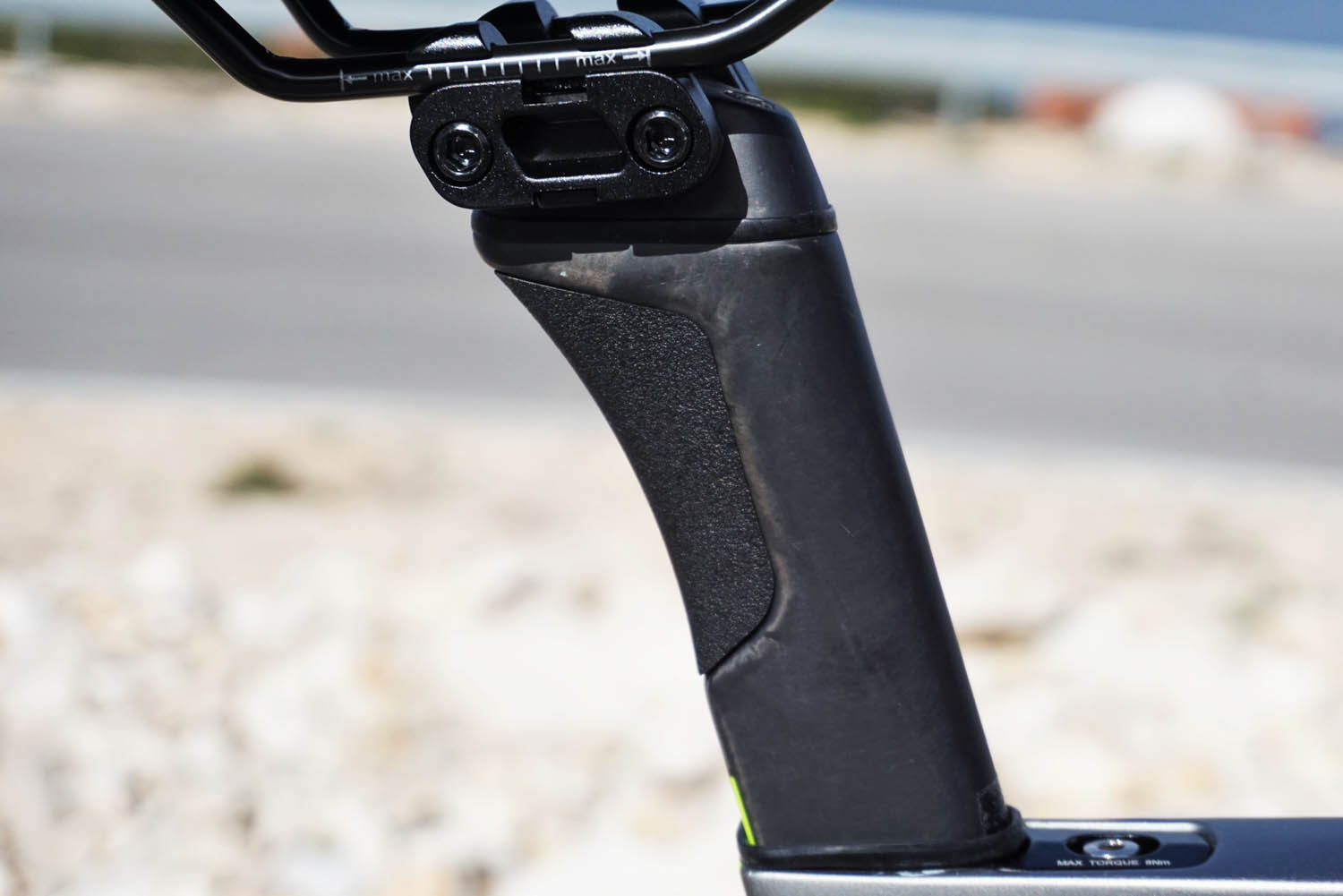
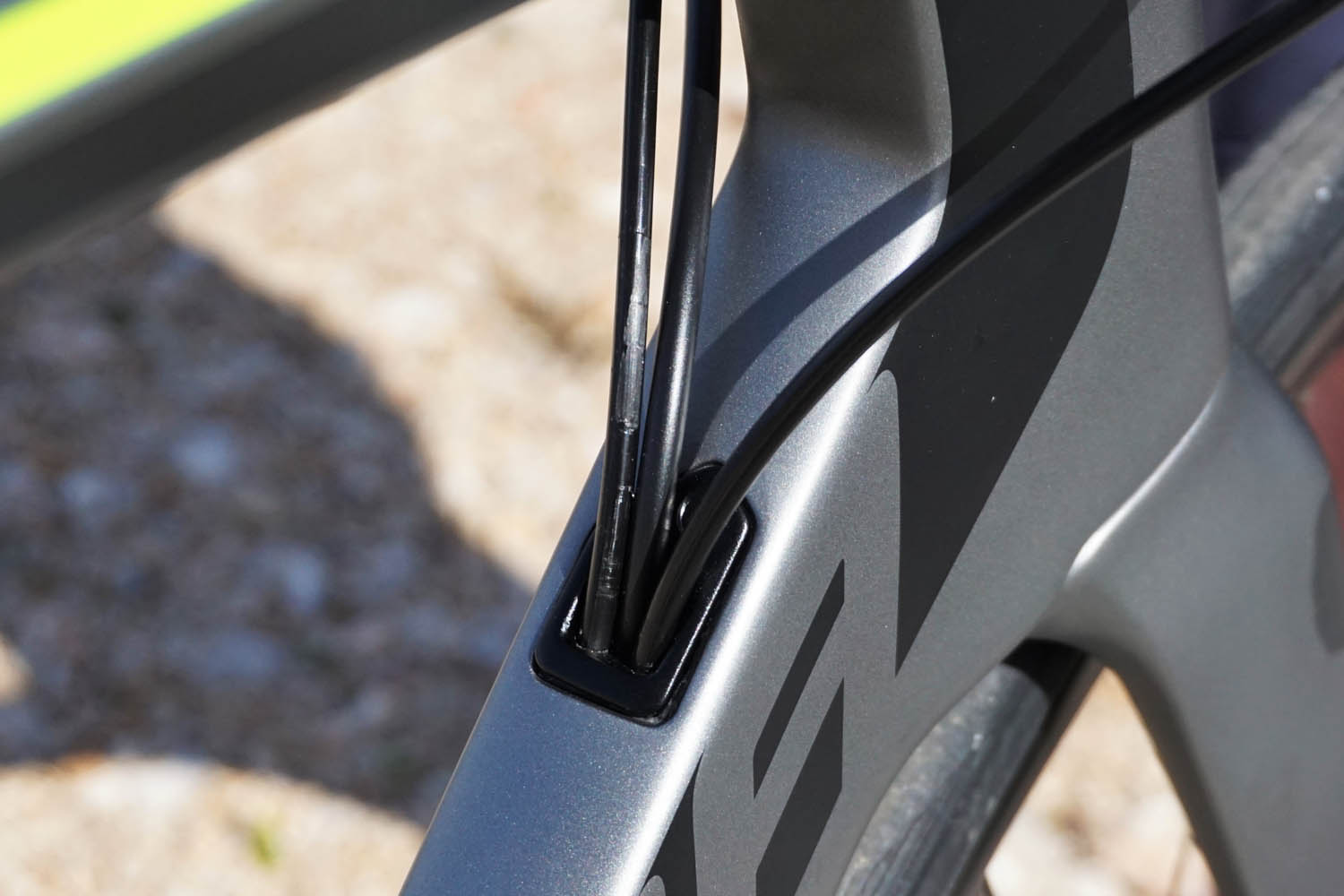
The aerodynamic concept is also quite apparent in the case of the head tube, the down tube and the seat stays, and all the details were taken into consideration by Merida. For example, the cables run inside the frame tubes, so they do not drag the passing air. My personal favourite is the wedge-type seat tube attachment integrated into the top tube, which has been used by other manufacturers with great success. I would also like to mention the seat tube shape, which is distinctly flattened, reminiscent of the specialist time trial bicycles. The manufacturing precision is staggering, it can be inserted and moved easily, despite the complex shape. This is the pitfall of such designs seen on many aero road frames where the seat post could not be perfectly positioned, proving to be noisy, or slipped during use. In the case of the Reacto, we experienced no such problems, the frame was completely silent in practice. Moreover we get a lifetime warranty for the Reacto frameset!

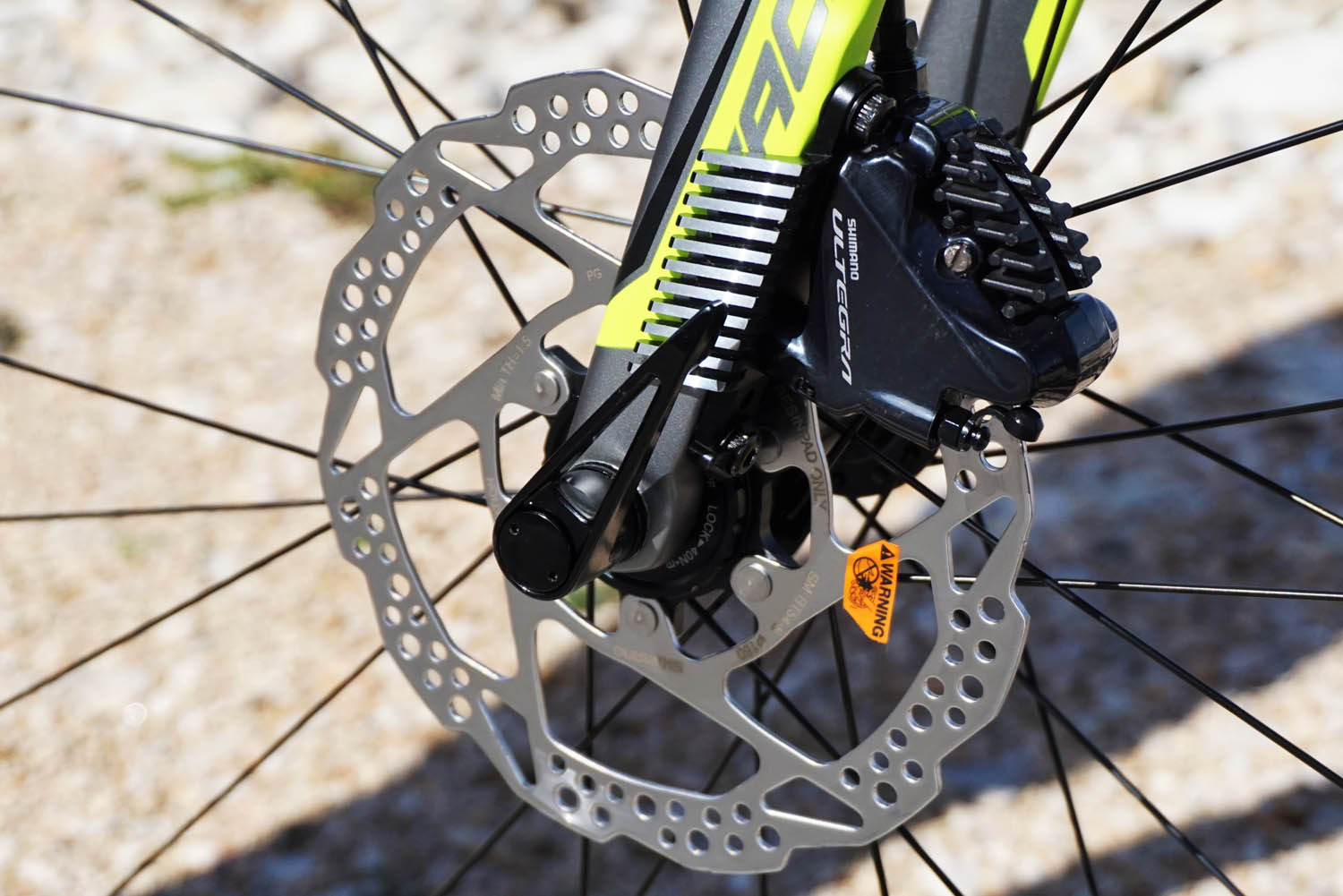
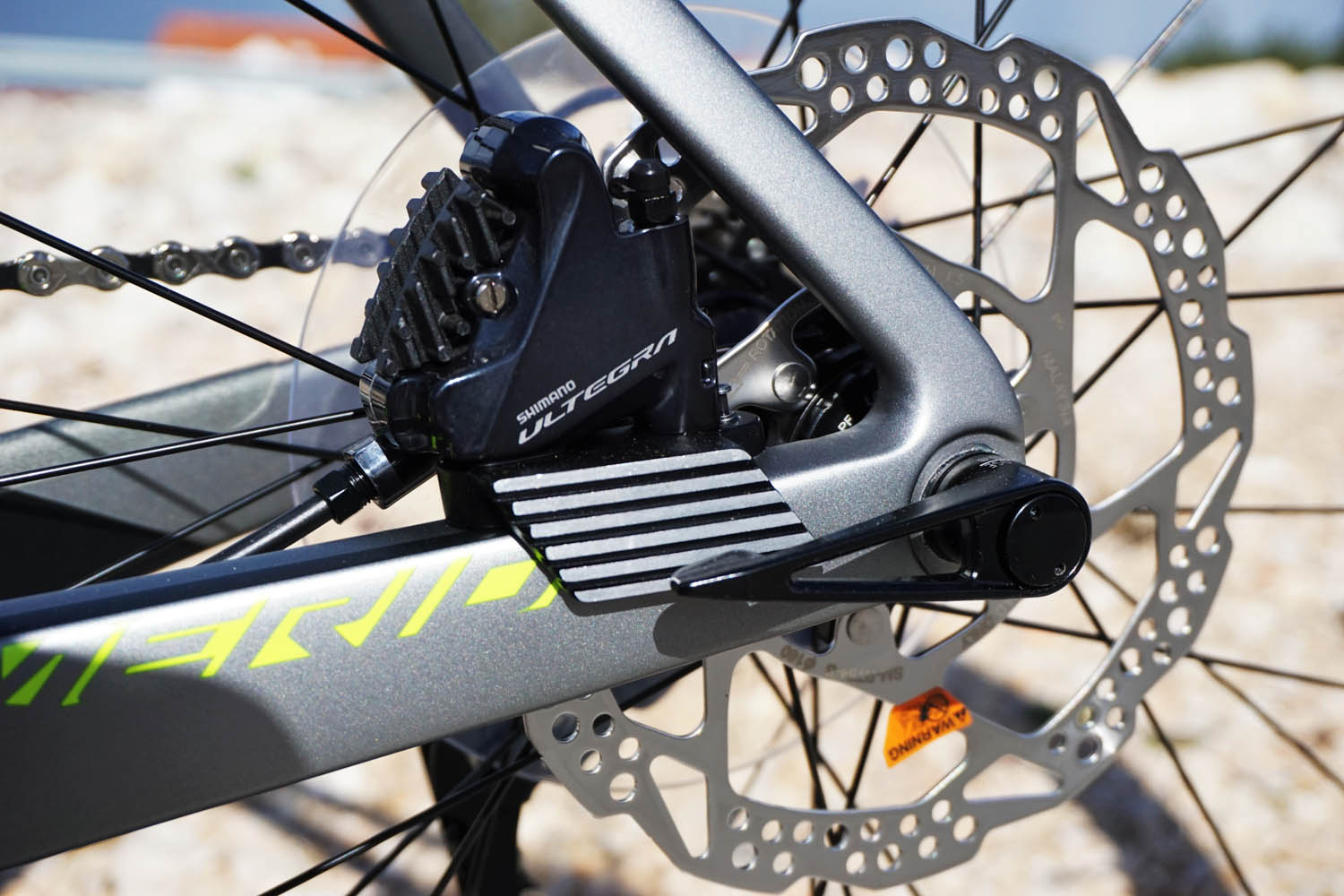
As a modern disc brake-equipped bike, the frame naturally employs thru-axles to secures the wheels, which is beneficial for stiffness and stability. I would highlight another advantage of this advanced design, namely it is easy to put the wheels back into the frame or to the fork, unlike in the case of frames employing traditional dropouts. Merida payed close attention to the ease of use, hence operating the thru-exles and positioning the wheels is much facilitated compared to other disc brake road bikes. The wheel almost pops into place, there is no need to find the exact position for the axle to be inserted. (This is no coincidence since the dics version of the Reacto is used in pro-level competition, where wheel changes have to performed as quickly as possible!)
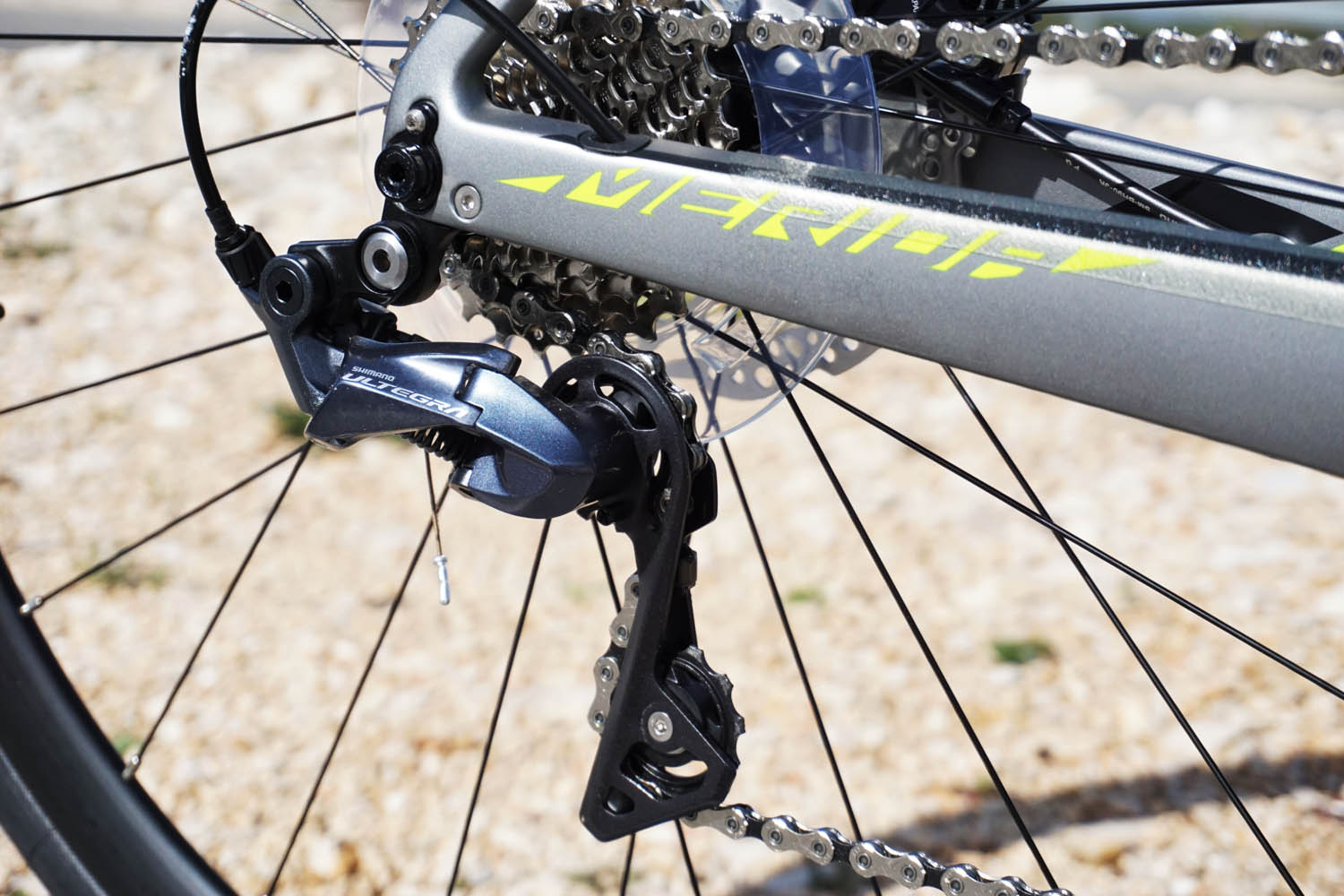
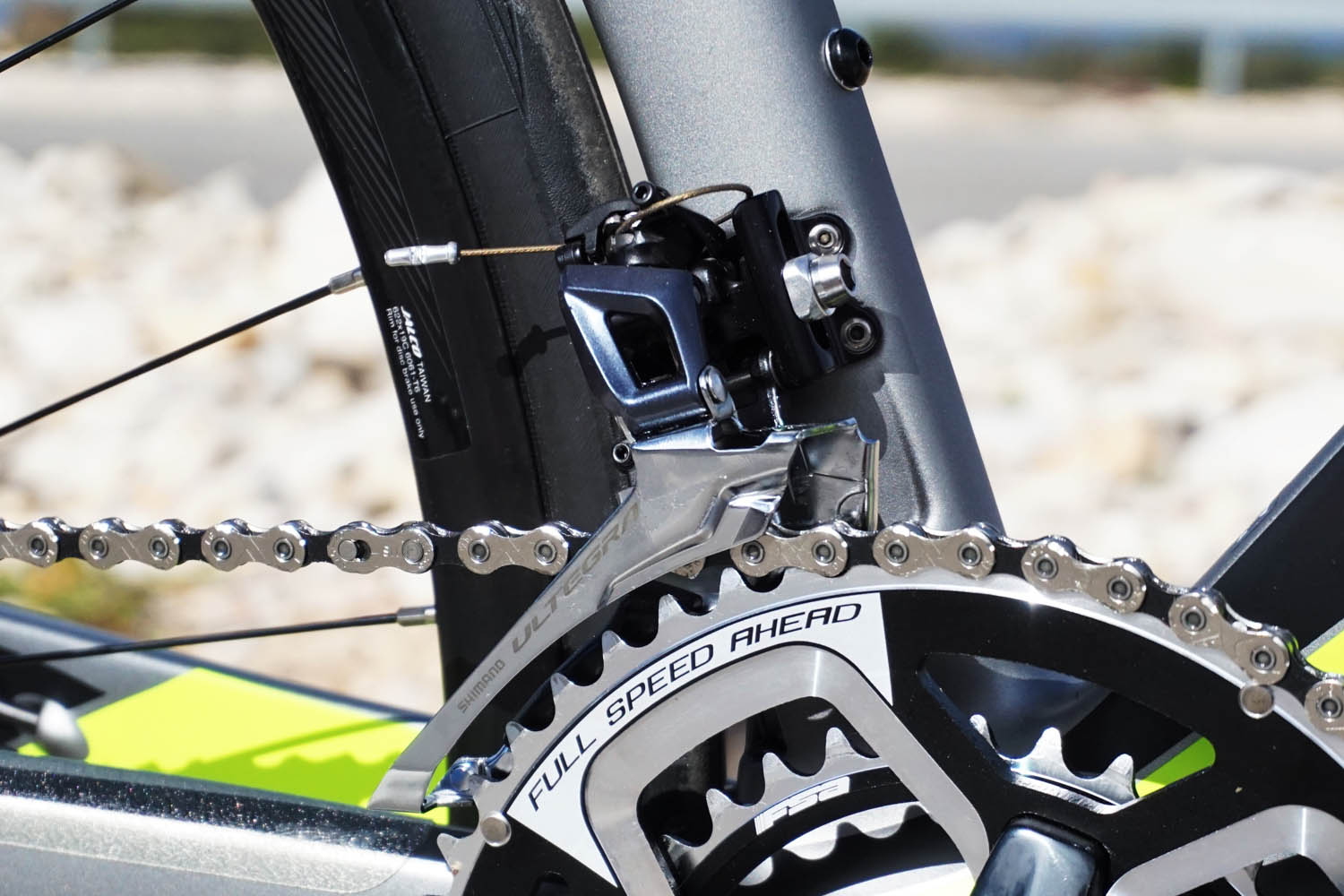
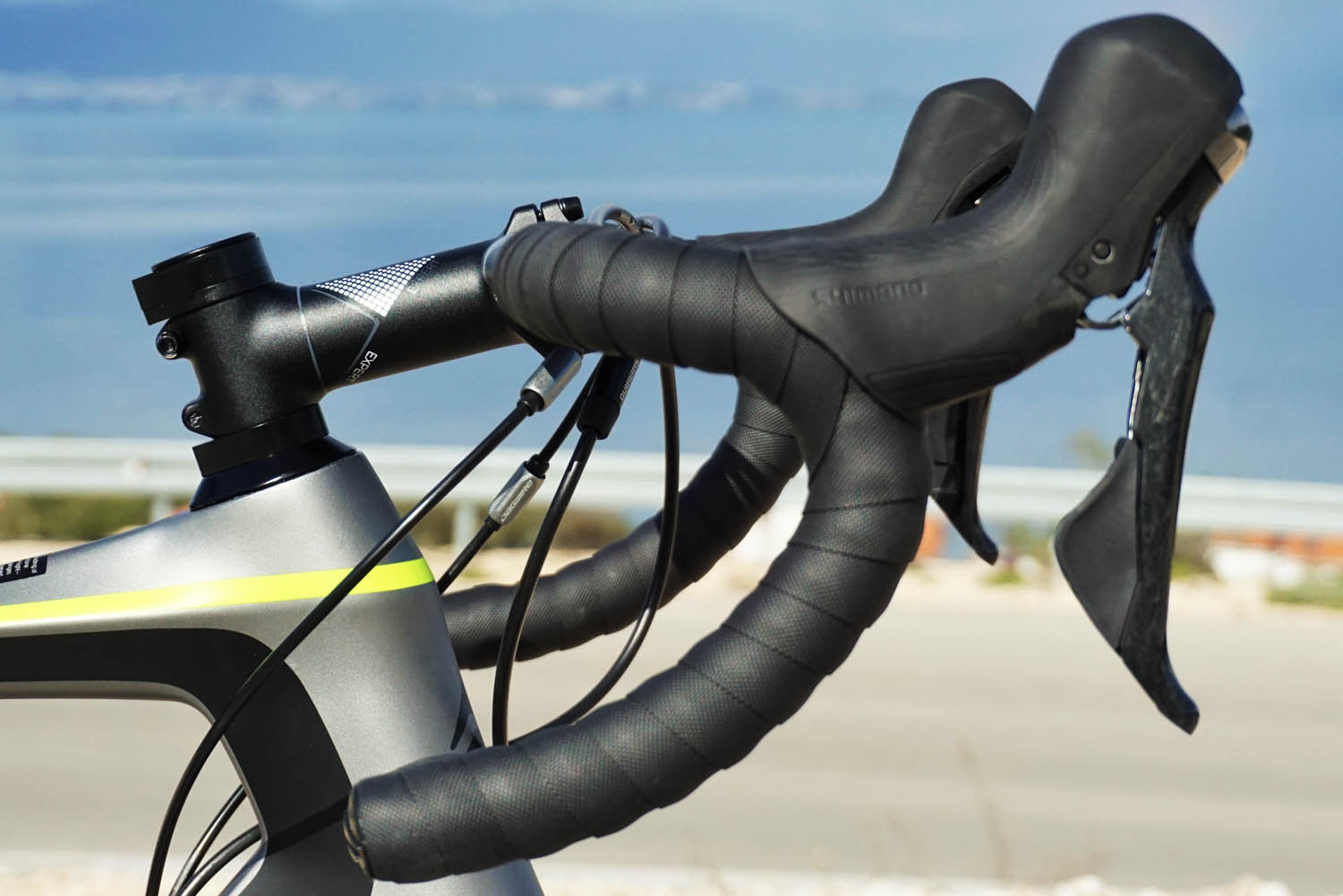
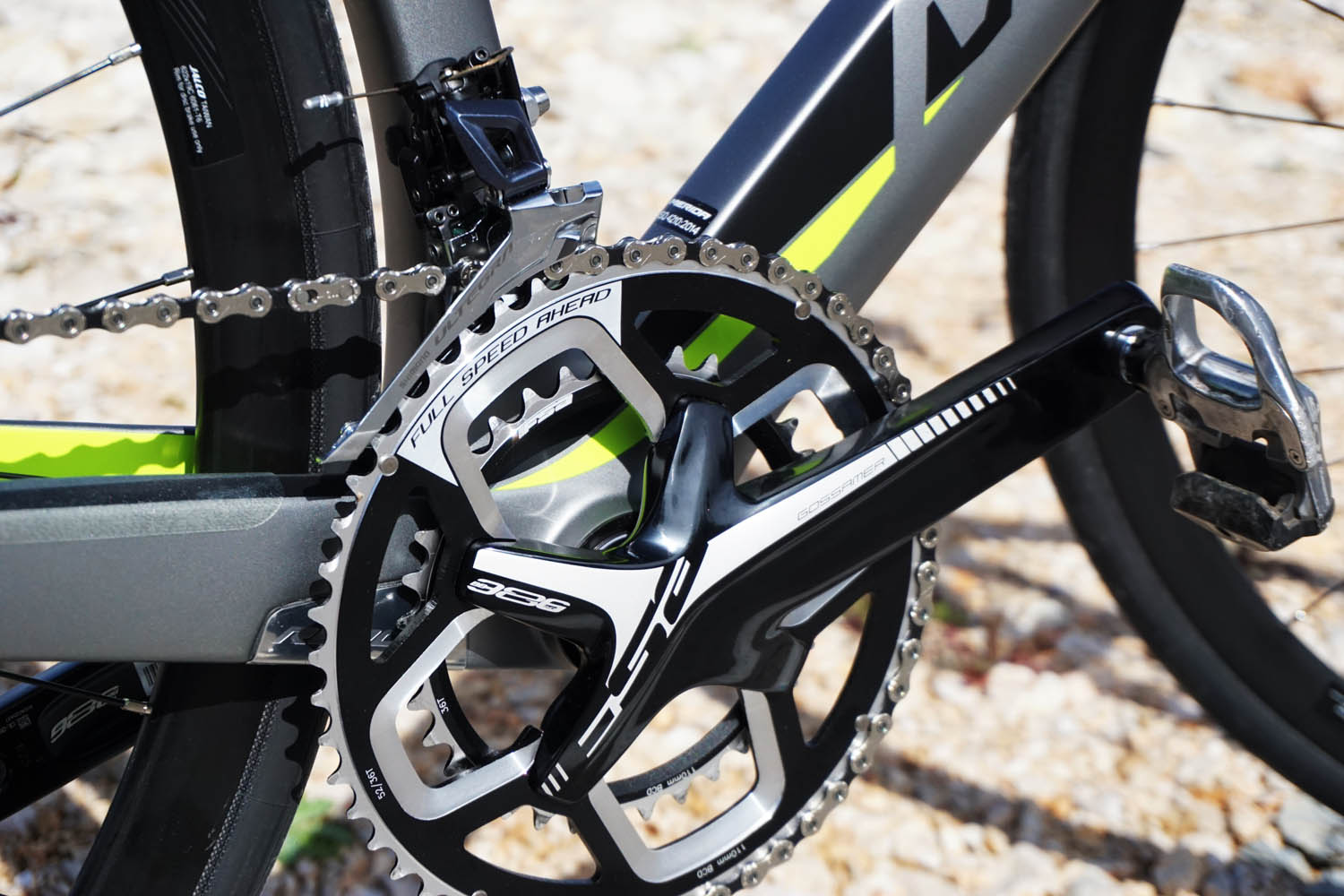
With the exception of the crankset, we get the complete new Ultegra R8000 groupset. Recently we tested Shimano’s brand new offering, so I’ll not dwell into the technical details. In a nutshell, it does its job perfectly and effortlessly, the complete set is designed for harmony, the new front and rear derailleur is in line with the Japanese brand fine reputation. The FSA Gossamer crankset complements the Reacto concept perfectly with the „semi-compact” 52/36T chainrings, providing ideal gear ratios for flatland, hilly terrain and the mountains.
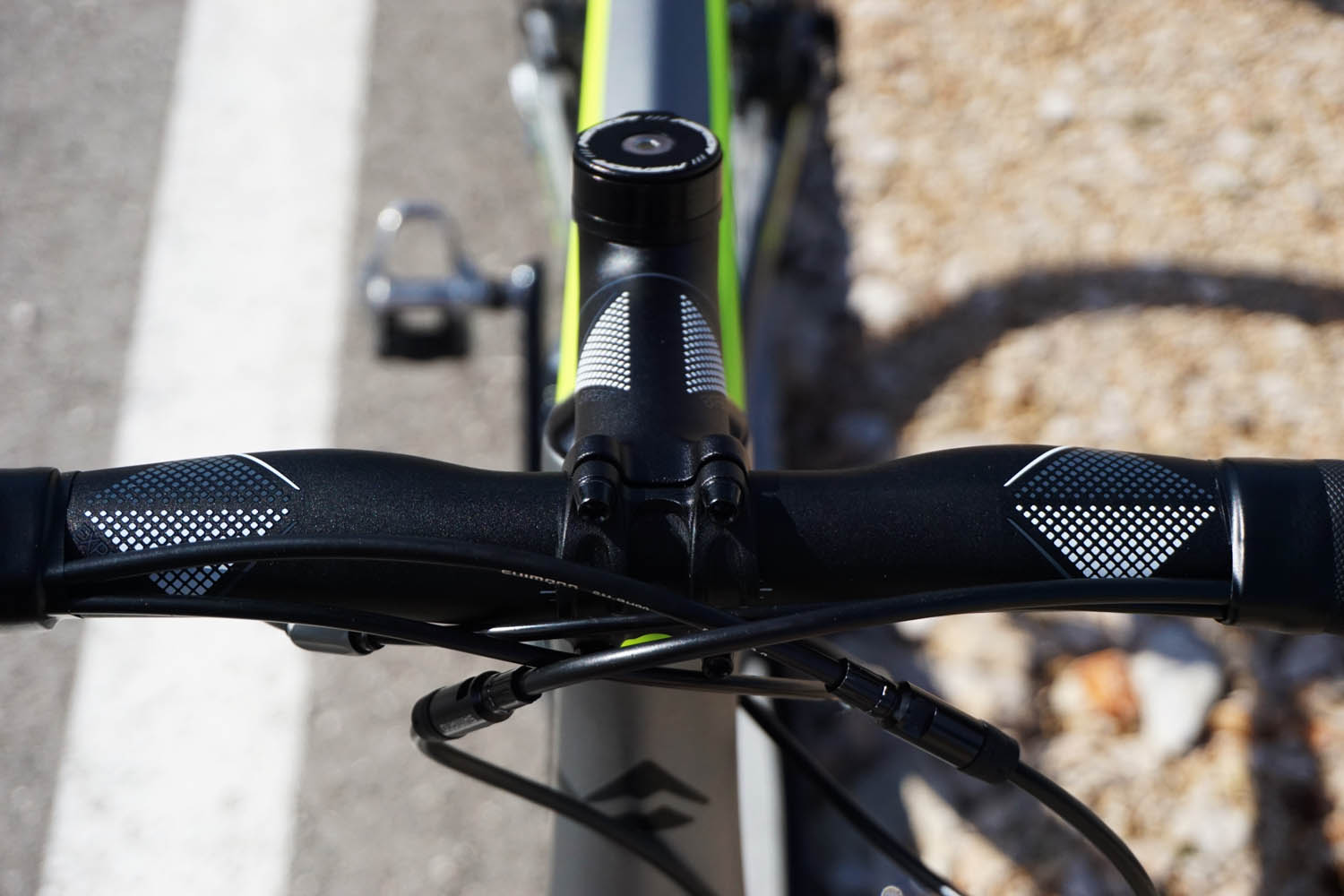
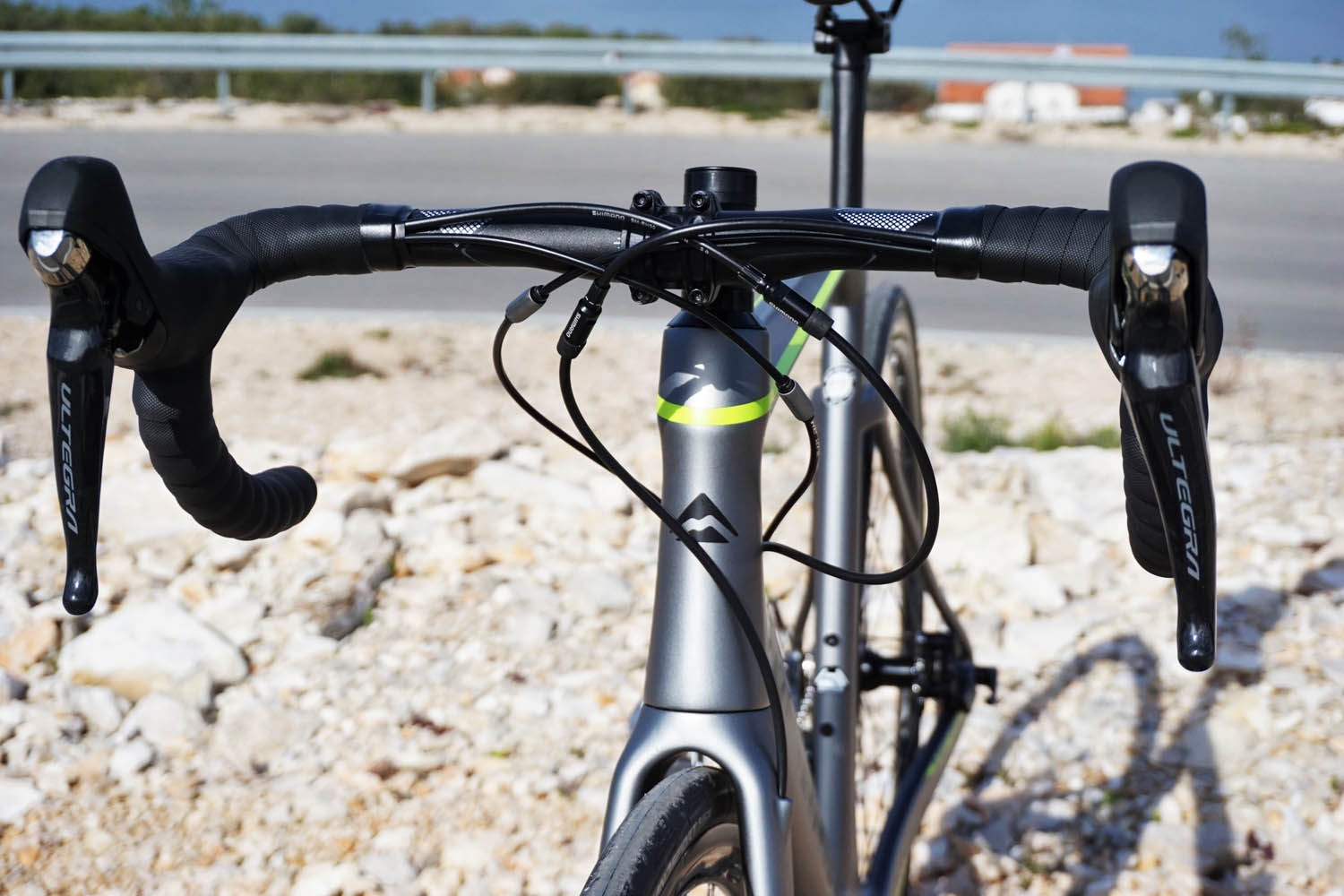
Let’s briefly deal with the accessories! The handlebar and the stem are own brand models, but there is no need to worry since they are high-quality pieces. The bend of the handlebar follows the modern trends, and the top is flattened for a comfort and a good grip. The aero-shaped stem spacers are also worth mentioning: although it’s a minor detail, the seamless design makes the cyclist’s heart beat faster!

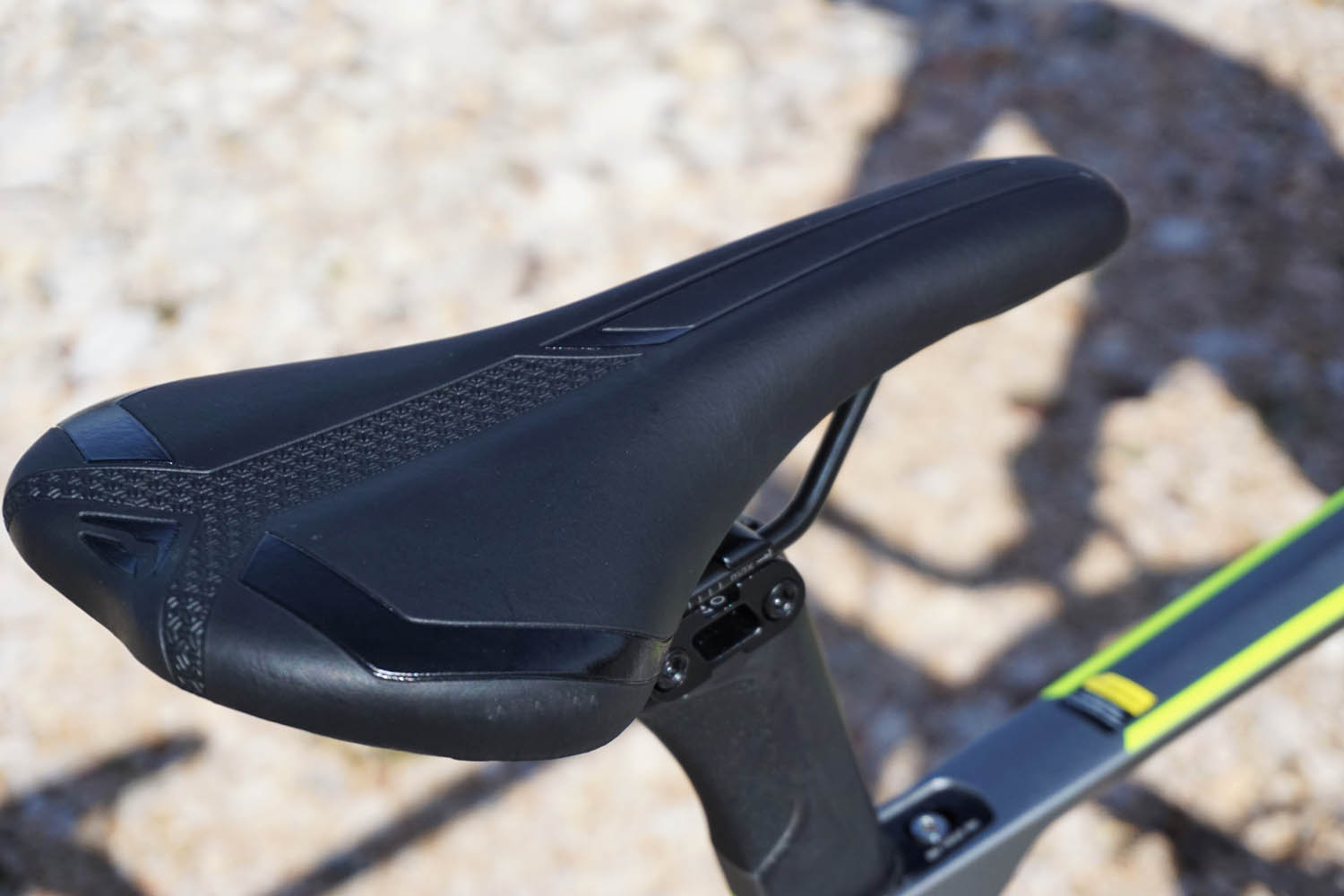
I’ve already mentioned the seat tube, which designed specifically for this frame and Di2-compatible, in case the owner wishes to install an electric shifting system. Interestingly, on this model the clamp mechanism is reversible, so triathletes can achieve a steeper virtual seat tube angle, than specified for the frame. From 2019 all CF2 Reacto will be equipped with such a clamp. The saddle has a Merida logo, and it’s quite comfortable. The wheels are also from the manufacturer’s own products range, undoubtedly some weight could be saved if it was substituted by a premium wheelset. The rim is medium-height, aero-profile aluminum type with a 25 mm width Continental Grand Sport Race tires on the top. It sounds good to me, since I detest when the manufacturers are trying to save costs on one of the most important components, the tires.
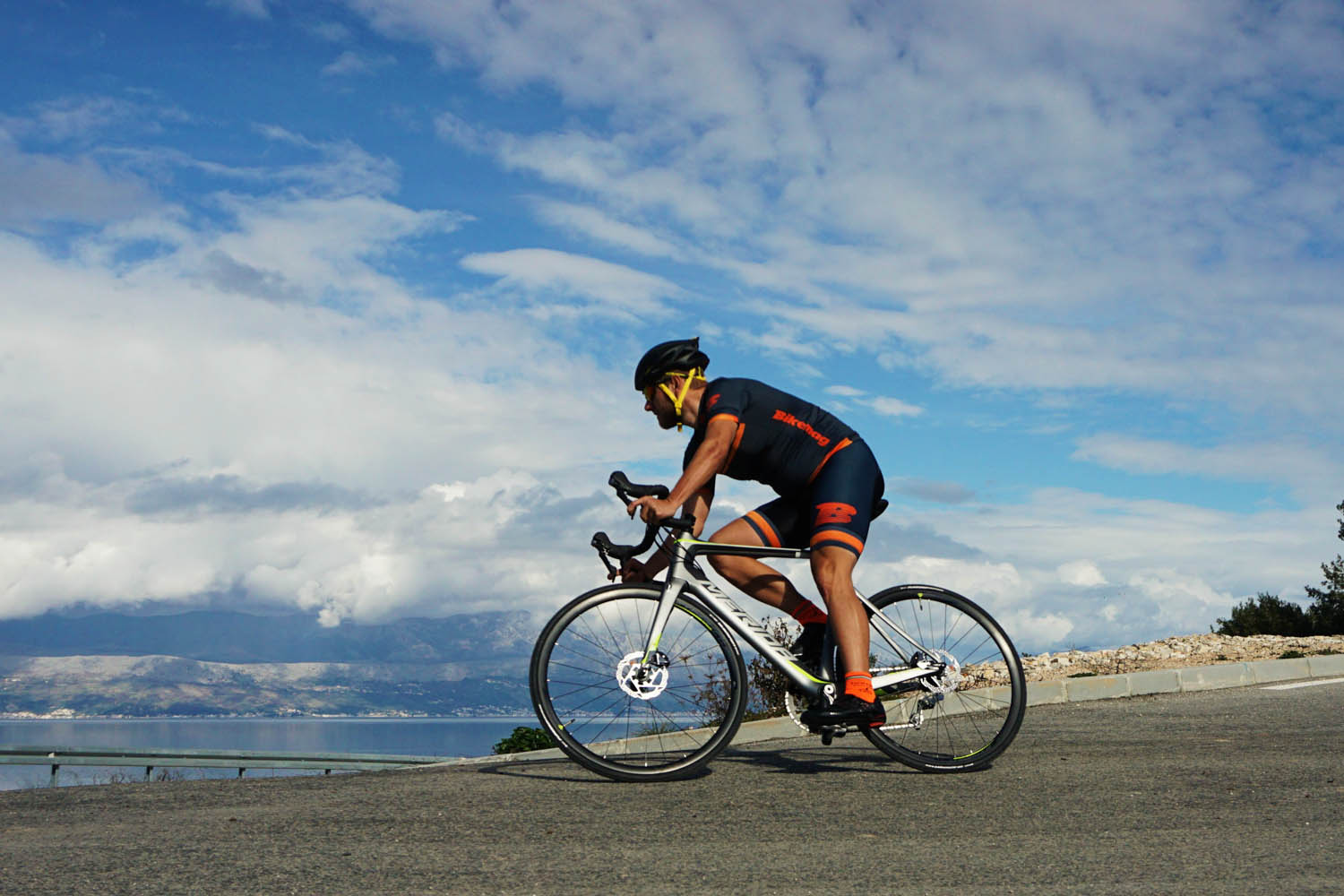
Riding experience:
I was able to review the bike on the island of Brac, where there are relatively few flat stretches of road, on the other hand, steep slopes and descents are in abundance. Therefore I had the chance to test the rigidity of the frame on the climbs and aerodynamics on the downhills. First of all, it is important to note that the body position on the bicycle is different from the „normal” road bikes. The saddle is further forward and needs to be compensated by the handlebar position to some extent. Hence the Reacto requires the rider to take a more aerodynamic position, so not only the bicycle is „aero”, but also we also make our contribution to achieve higher speeds. Nevertheless the handling is almost the same as on a typical road bike, so you are not forced to adapt when hopping on the Reacto. It would not have been a good idea from Merida to change the handling since pro riders often swap between the Scultura and this bike, moreover the Reacto is ridden not only on flattish terrain, but on climbs and descends as well.
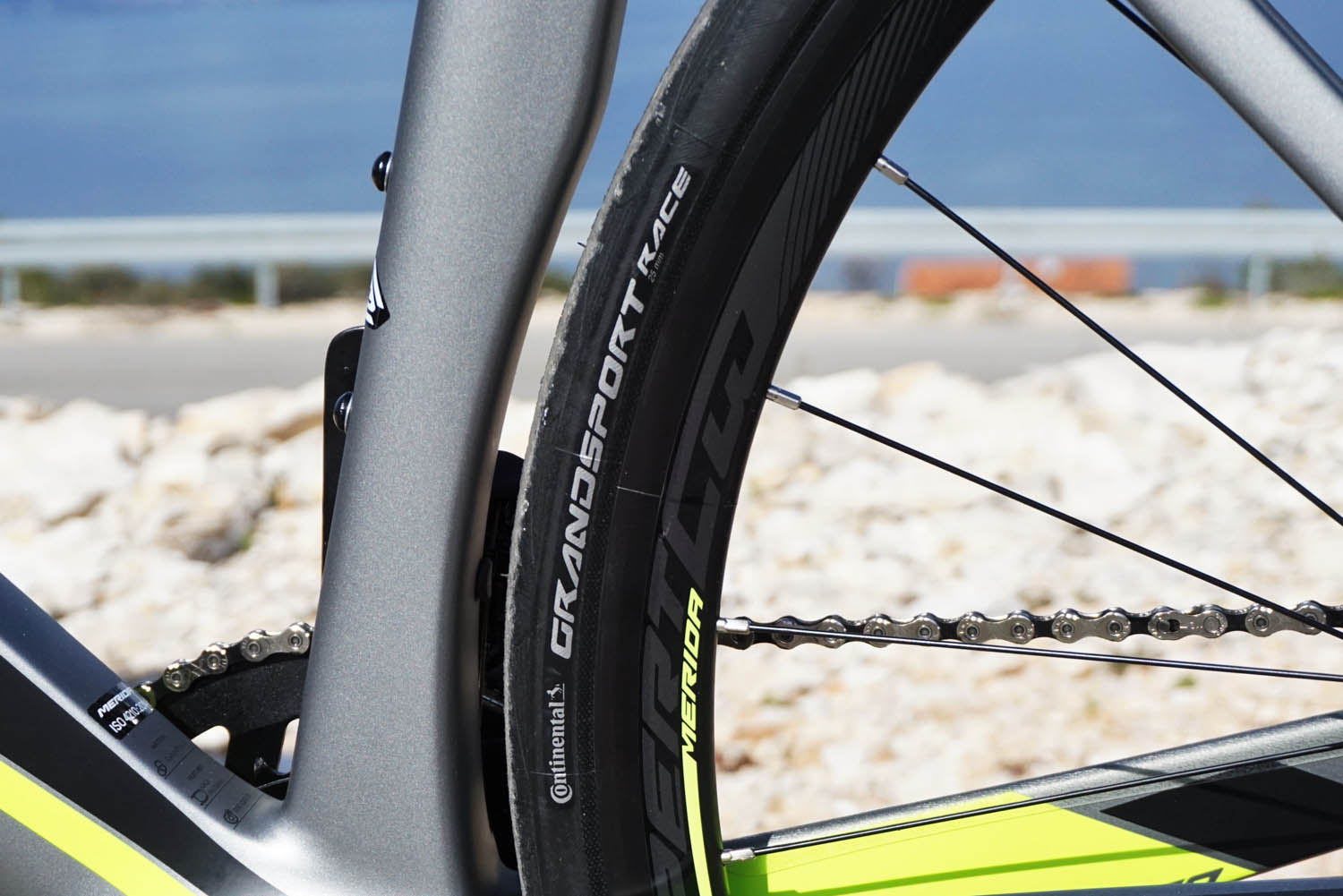
Despite the oversized, rigid aero shaped tubes, the back end of the frame does bot transmit vibrations as much as I have expected: actually many all-rounder road bike were far more uncomfortable. On the Reacto I never felt road surface irregularities as „blows” from the bottom. Nevertheless, while riding, one could feel that the frame structure is rigid and stiff, not wasting any energy whatsoever. One of the climbs of the island it is so steep that I could only pedal while standing out of the saddle to maintain a reasonable speed: the Reacto did very well, continuing in straight straight, not wandering sideways at the back.
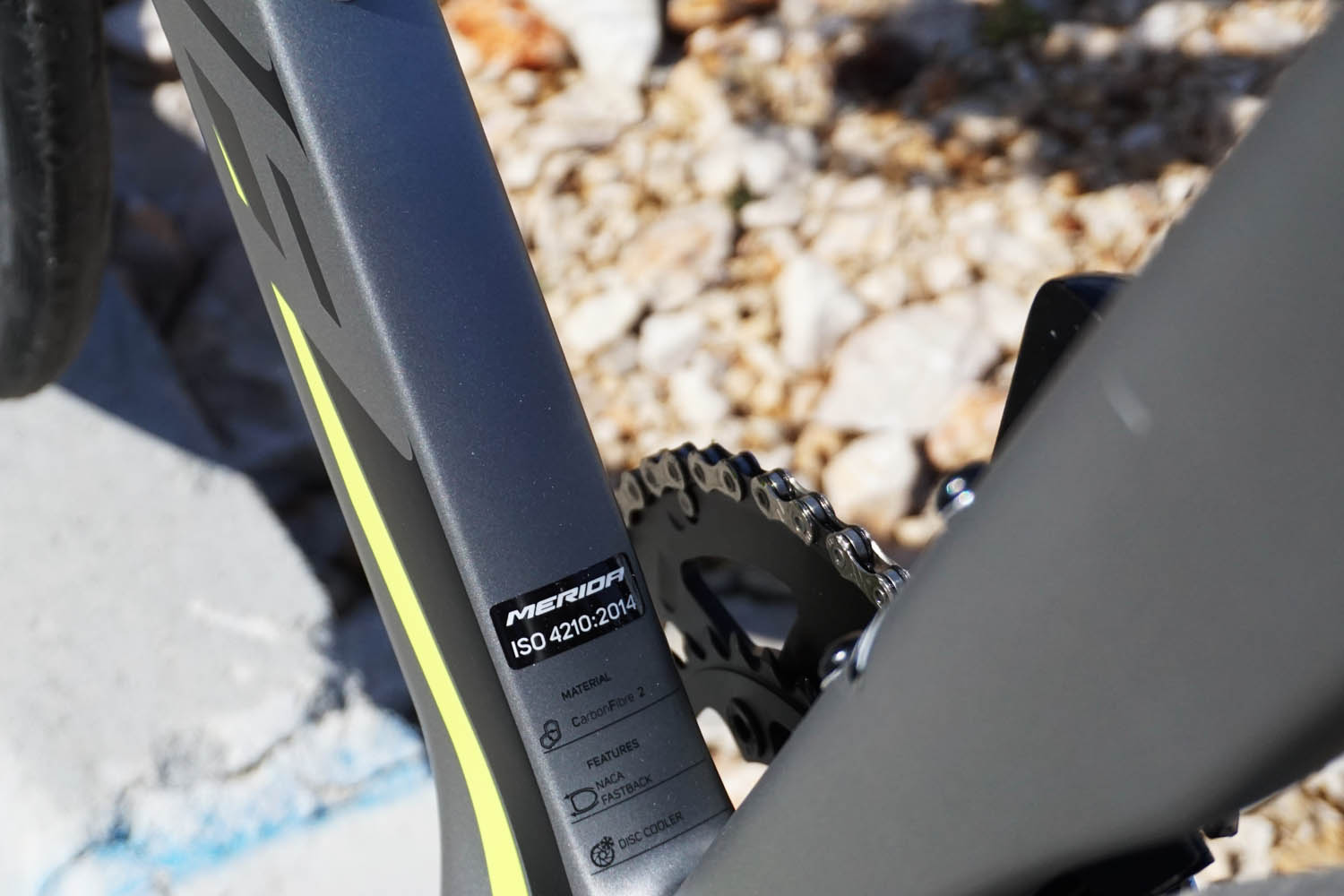
For the shifting and braking I would not waste any words: the Ultegra kit has now developed to absolute perfection, the braking force is brutally strong – regardless of the weather. The only thing that I did not embrace on this bike – though it may bring great benefit for others – is the long head tube. I’ve been riding road race brakes since I can remember, and I got accustomed to a low and deep drop handlebar position. This unfortunately can not be accomplished on the CF2 Reacto, on the other hand hobby/amateur athletes will probably love the fact that it does not require a overly bent back. So if you prefer the „brutal” racing frame geometry, you have to consider the more advanced Reacto CF4 models.
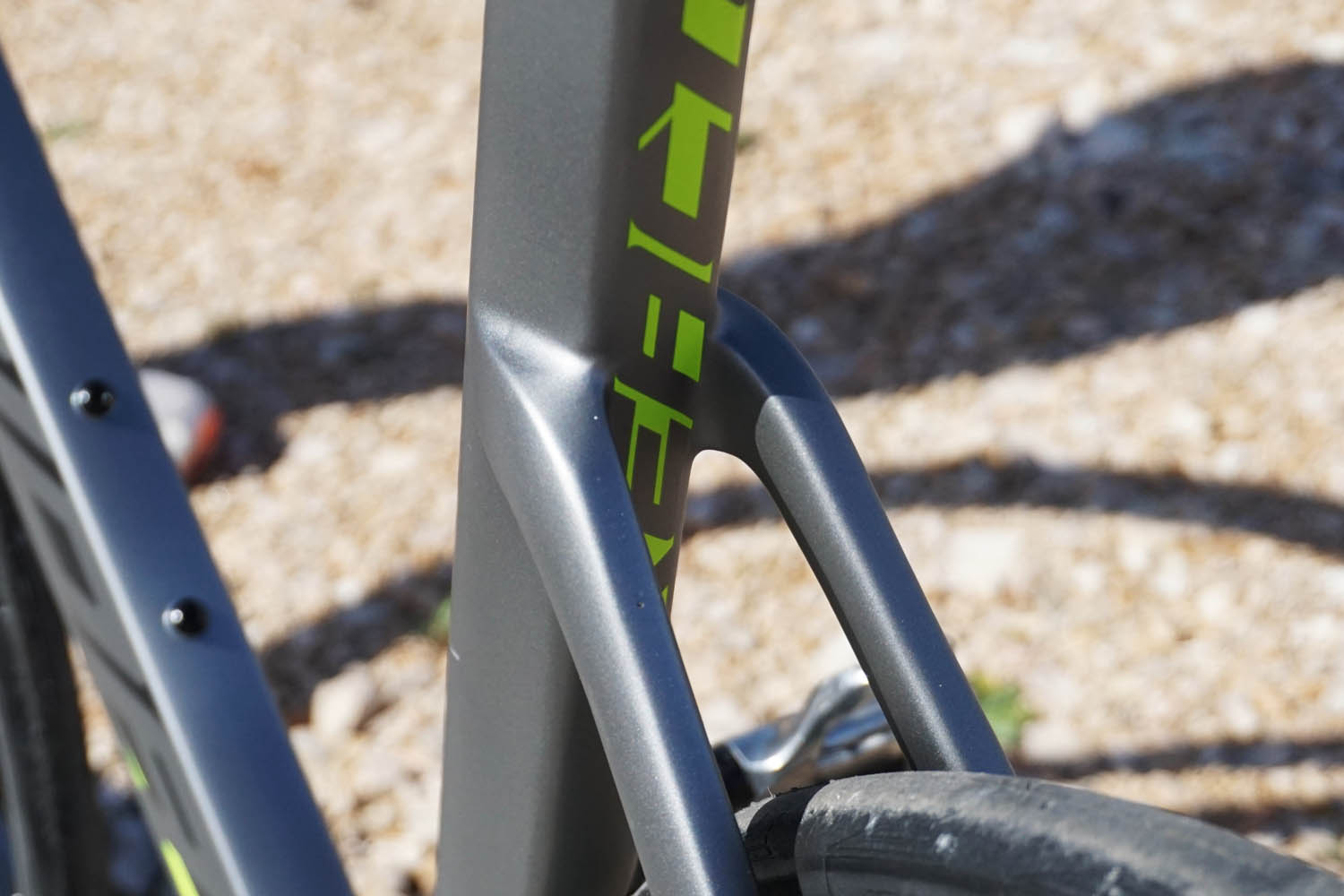
In addition to the amateur riders, the Reacto Disc 5000 could also be an excellent choice for triathletes. They generally do not require deep drop handlebar position, since their sport employs time trial handlebars, on the other hand aerodynamics are of particular importance to them, especially in a race where it is forbidden to ride in a group. The amateur Time Trial riders will also expected embrace the Reacto, due to its profound aerodynamic design, and it can be adapted to a TT-bar setup with ease. And also it’s perfect for those, who simply like a bike that looks fast even when it’s standing still!

If you want to try the bike before you buy it, please visit one of the Merida test partners!

Specifications:
Frame: Reacto CF2 Disc [386] R12
Available sizes: XS (47) S (50) -SM (52) -ML (54) L (56) -XL (59) cm
Fork: Reacto Carbon pro 12 FM
Brake lever: Shimano Ultegra Disc
Brake (Disc): Shimano RT54 160
Chain: KMC X11-1
Crankset: FSA Gossamer Pro 52-36 [386]
Bottom bracket: FSA Gossamer Pro 386
Shifter: Shimano Ultegra Disc
Front derailer: Shimano Ultegra DF
Rear derailer: Shimano Ultegra RD-R8000SS
Cassette: Shimano CS-5800-11 11-28
Handlebar: Merida Expert Aero 31.8
Stem: Merida Expert 31.8 -5
Wheels: Merida Expert CW pair Disc
Front hub: Merida QR48N 12-100
Rear hub: Merida QR48 12-142
Saddle: Merida Race
Seat post: Reacto carbon Race [Di2 ready]
Tires: Continental Grand Sport Race 25 fold
Weight: 8.66 kg (measured) – M-L (54 cm)

Recommended retail price: 729 000 Ft
Lifetime warranty on the frame.
More information on the distributor’s website.

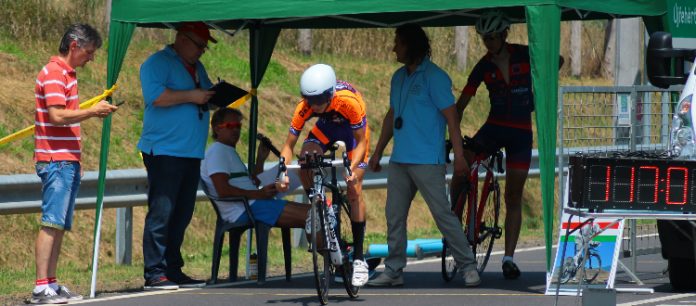
Már alig 2 hét a Duna Maratonig – Nehogy lemaradj, nevezz időben!

Szombat éjfélig nevezhetsz kedvezményesen a Duna Maraton távjaira. Érdemes időben nevezni, jelentős összeget spórolhatsz meg!
Hamarosan zárul a kedvezményes nevezési időszak a Duna Maratonra, június 23. éjfélig a rövid-, közép-, hosszú távokra 8000 Ft-ért, míg a Mini távra 6000 Ft-ért nevezhetsz. Akkor se csüggedj, ha lemaradtál, bár magasabb nevezési díjjal, de továbbra is lehetőséged lesz nevezni egészen a versenyig.

Van egy jó hírünk azoknak, akik a Prológot vagy az Eliminátort szemelték maguknak, rájuk nem vonatkozik a szombat éjféli dátum, ők továbbra is ugyanannyiért nevezhetnek. A Fagyi Kupa gyerekversenyeire pedig a nevezés ingyenes, mindössze csak regisztrálni kell online az indulni szándékozó fiatalokat.

A vasárnapi Duna Maraton mellé már a Prológ, az Eliminátor és a Fagyi Kupa kiírása is felkerült a honlapra és hamarosan a Prológét is olvashatjátok. A kiírásokat itt olvashatjátok.

Ha elfáradtál a versenyeken akkor pedig a Főtéri Sörfesztiválon hidratálhatod magad a Duna Maraton vendégeként kedvezményes árakkal.

Idén további újdonság, hogy a 100 legjobb versenyző GPS nyomkövetőt kap, akiket így a célterületen egy kivetítőn követhetnek a nézők.