

A decade ago, it was unimaginable that cars like BYD or Omoda would become a common part of everyday street traffic. This shift is also taking place in the cycling industry, and the question of what a performance-oriented Chinese road bike can offer in 2026 is becoming increasingly relevant.
Last summer, while I was looking for a new wheelset, I had an idea that it might be worth reviewing a Chinese carbon wheelset. From this idea came the opportunity to test Superteam’s flagship S-All Carbon Ultra H2 set. During active use, I took the idea a step further: it would be great to build and test a complete Chinese road bike.
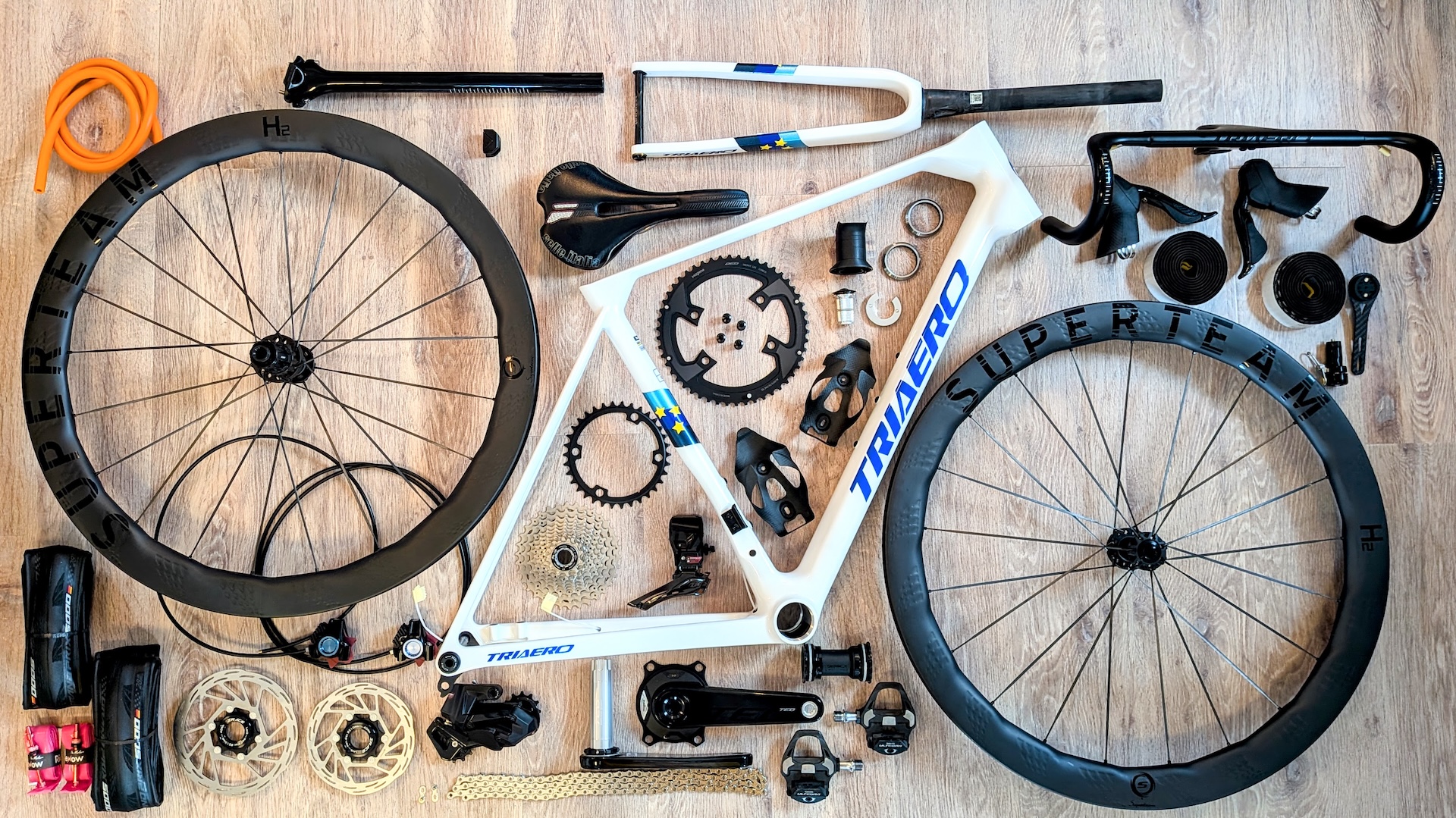
I started working on it. After months of active work and numerous outreach efforts to manufacturers, the project came together. The goal was to source the main components from Chinese brands. The result is a road bike with an excellent price-to-value ratio.
The Foundation: ICAN Triaero Flyee frameset
Chinese factories produce a large number of carbon frames. Top manufacturers are heavily investing in brand building, and thanks to strong engineering work, their products are now challenging the top tier, which is also reflected in their pricing. At the other end of the spectrum are the so-called “no-name” open-mold framesets. These offer questionable quality and technical background, so I would advise against buying them.
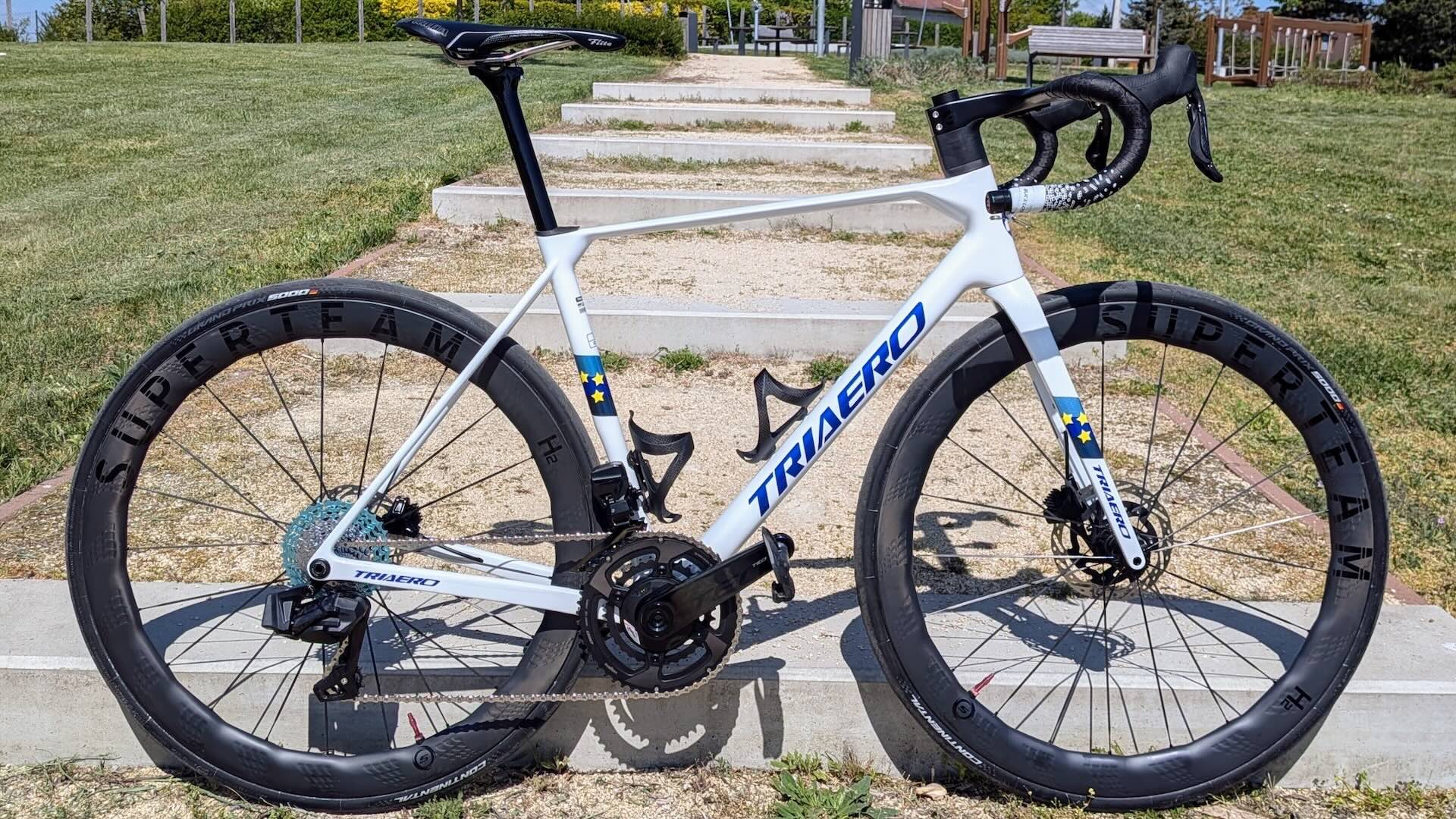
The Triaero Flyee frameset received for this test sits between the two categories. I quickly grew fond of the frame, as it combines a classic shape with modern yet rational solutions, along with premium materials, all at a friendly price.


The frame weighs around 900 grams, and the use of a Toray T700–T800–T1000 carbon layup suggests a well-thought-out frame construction. The design follows a classic shape, without any aggressive aero features, which I don’t particularly look for. I value the added comfort of a more slender, refined bike much more, as the aerodynamic advantages are not really significant at my riding speed.
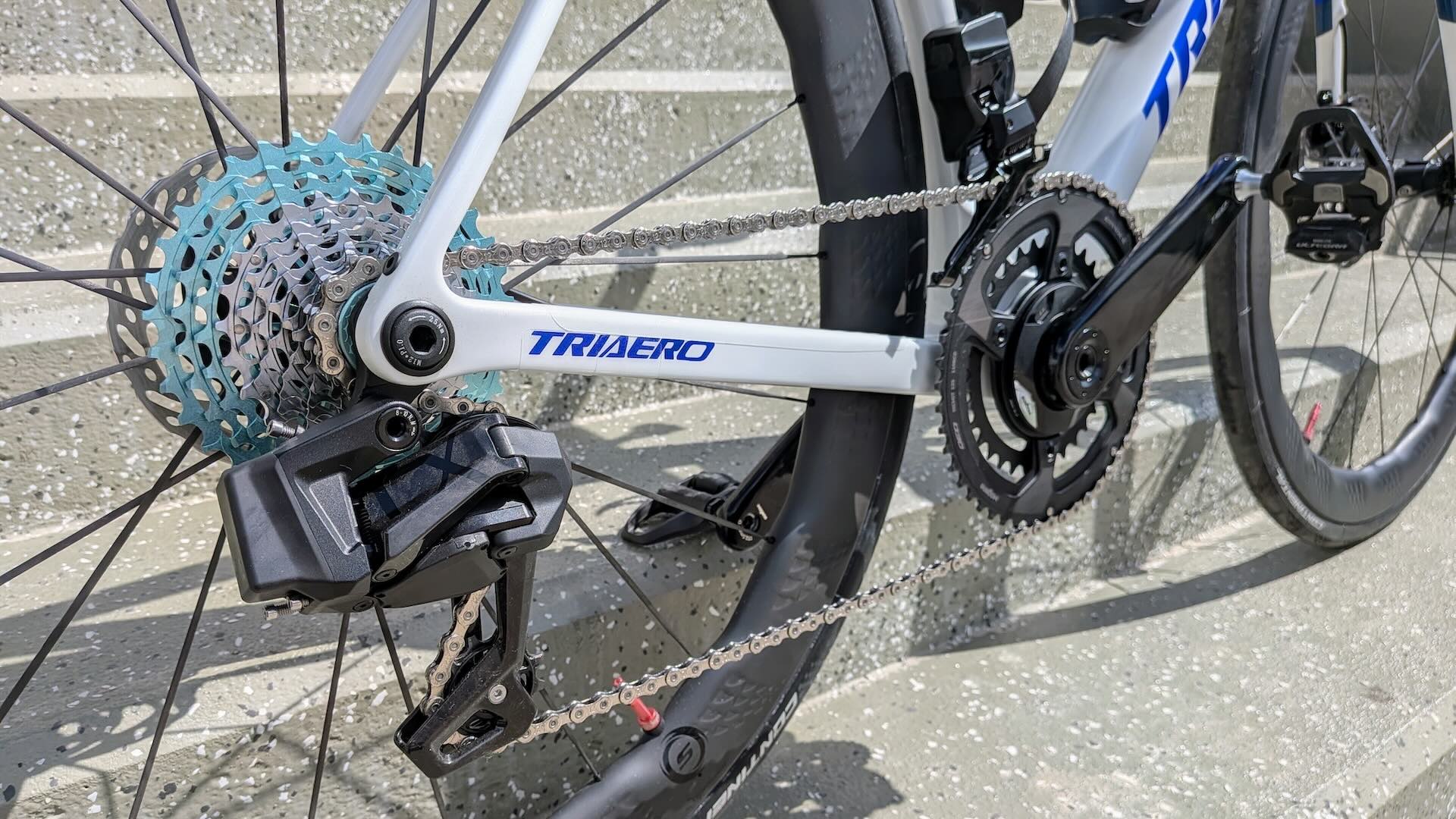
The frameset incorporates many smart solutions: a Universal Derailleur Hanger (UDH), a T47 bottom bracket standard, and the option for mechanical cable routing. My favourite, however, is the classic round seatpost with a 27.2 mm diameter, which offers both comfort and versatility.
Connection with the bike: ICAN Triaero Blade-R cockpit
The cockpit is not included with the frameset. I believe this is a pricing decision, as it allows the frameset to stay under $1000. Naturally, there is a matching option available, called the Blade-R.
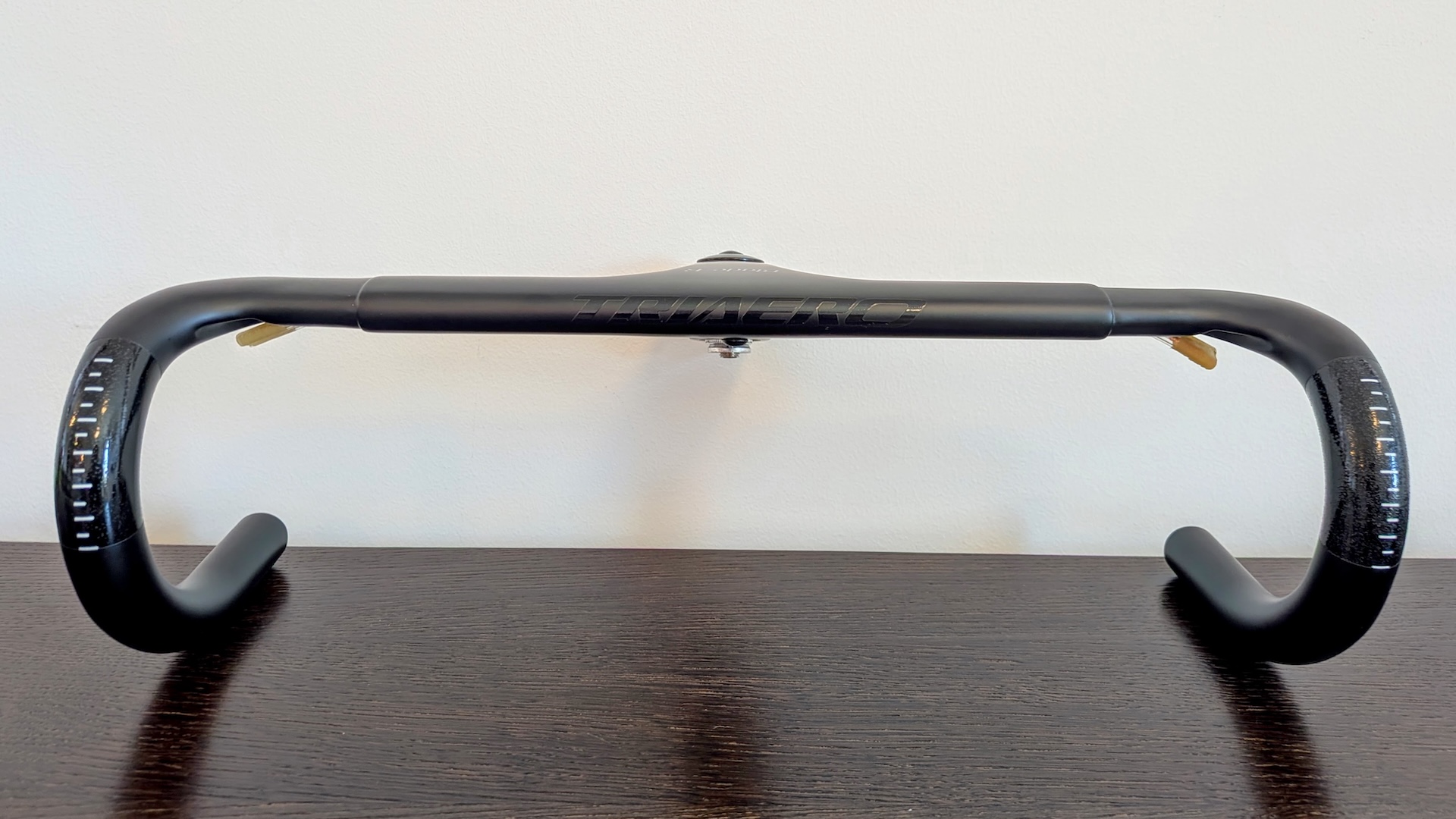

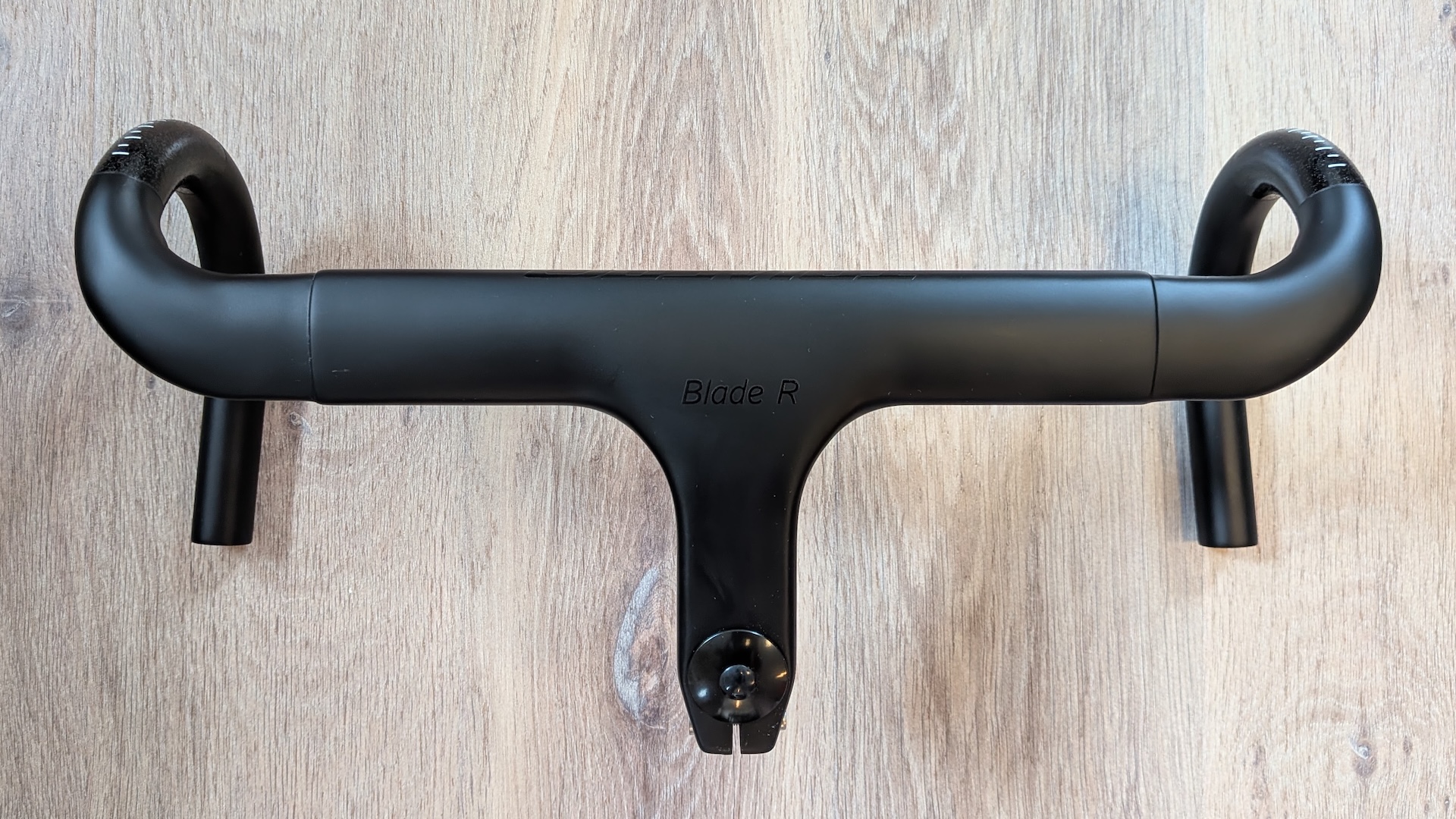
The cockpit is made from relatively compliant T700 carbon and features an aero design. Its dimensions are compact, with a 70 mm reach and a 125 mm drop. It feels a bit unusual to me that the end of the bar tape is defined by a ridge at the outer edges of the straight section. We’ll see how this works in practice, as I also like to hold the handlebar on the tops.
The included spacer kit consists of 5, 10 and 20 mm elements, allowing the handlebar height to be adjusted in 5 mm increments within a maximum range of 35 mm. For mounting a bike computer, a standard two-screw mount interface is provided under the handlebar.
Out of the comfortzone: WheelTop EDS TX groupset
It is no coincidence that very few bikes are equipped with derailleurs other than those from the two “S” brands. Quite simply, this is the most trust-sensitive component on a bike, so this is where Chinese manufacturers face the biggest challenge.
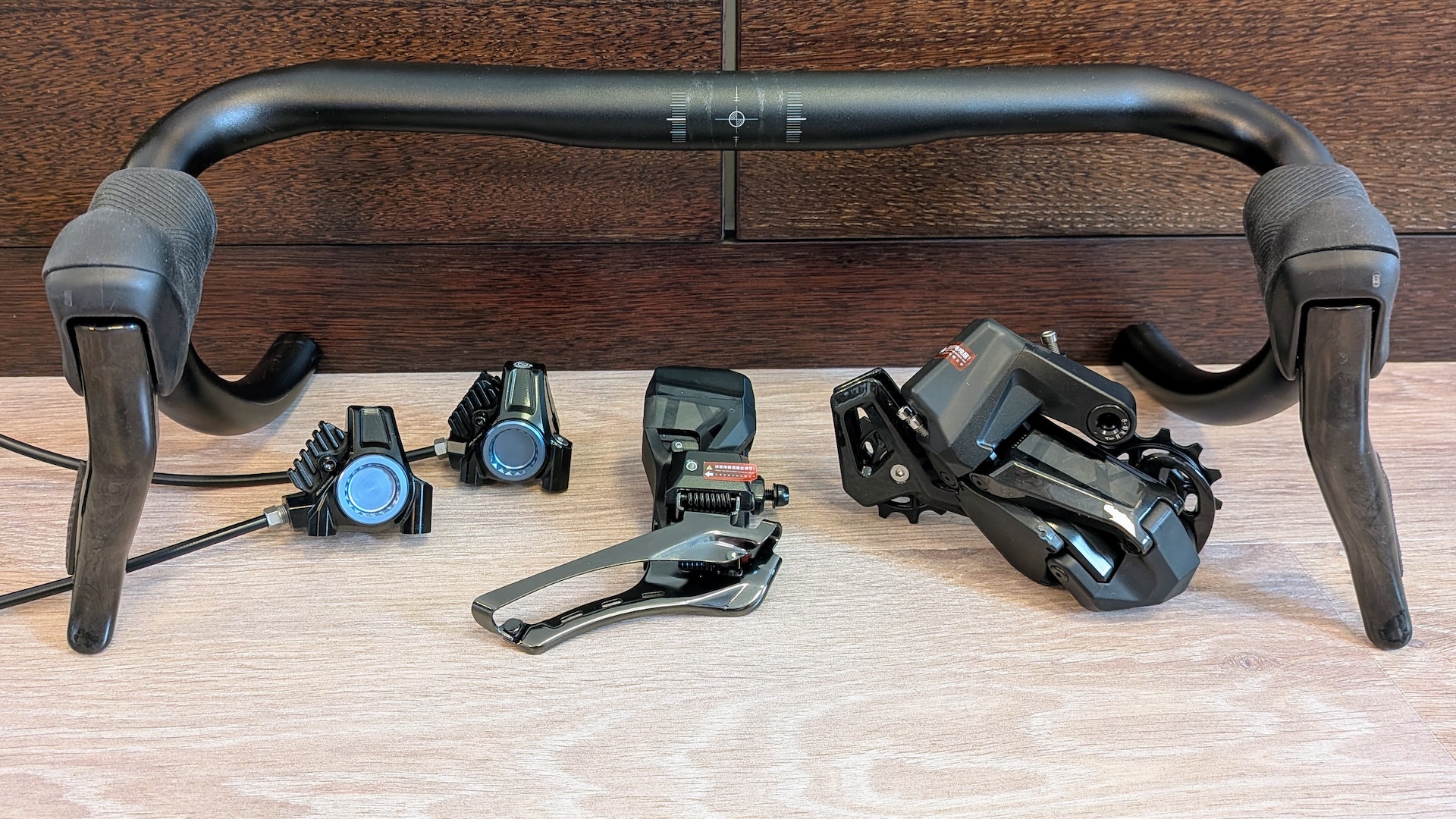
Nevertheless, Chinese manufacturers are actively developing in this area as well. As shown in the introduction of the WheelTop EDS system, this groupset offers an excellent price-to-value ratio and stands as a competitive alternative in its category.
I particularly like that the manufacturer has its own ideas, such as the single button on the left shifter. The non-removable batteries mounted on the derailleurs enable completely wireless shifting, which also makes installation very straightforward.
Step forward in training: Magene TEO P515 powermeter crankset
I’ve never had a power meter on my bike, and I didn’t really feel the need for one before. However, I thought that if I’m building a performance-oriented bike, it should also follow current trends, so I wanted to include a power meter.
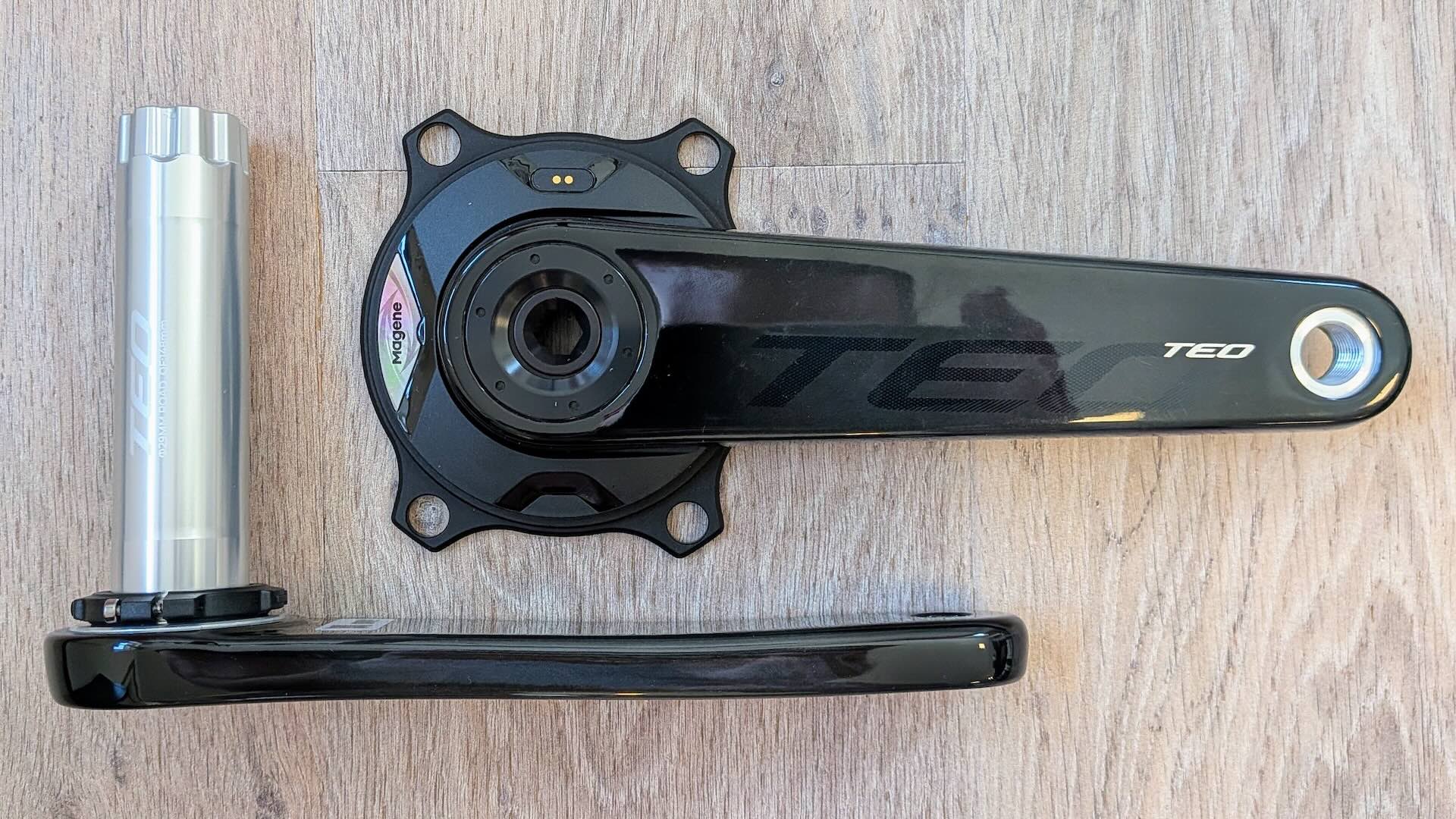
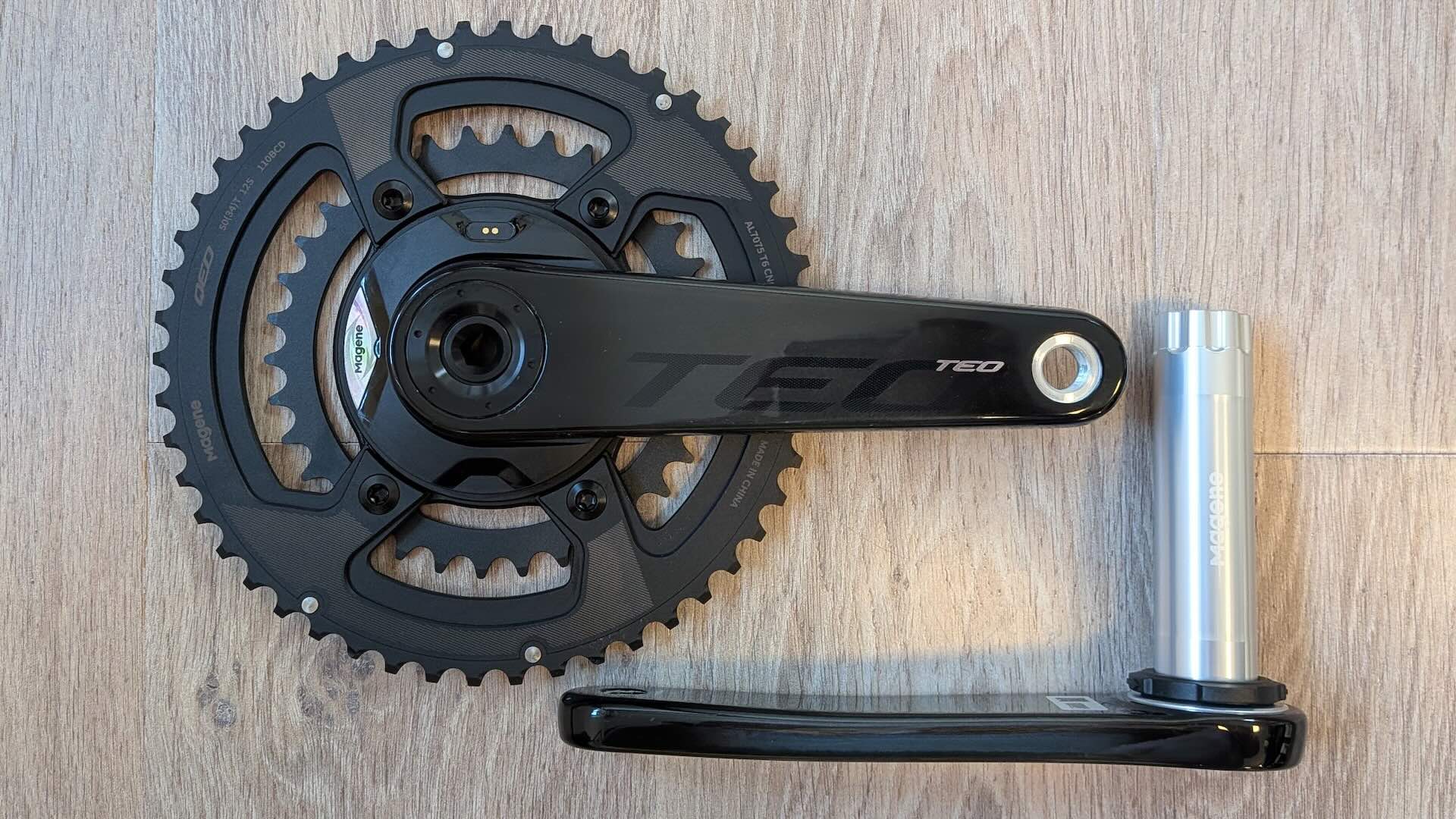
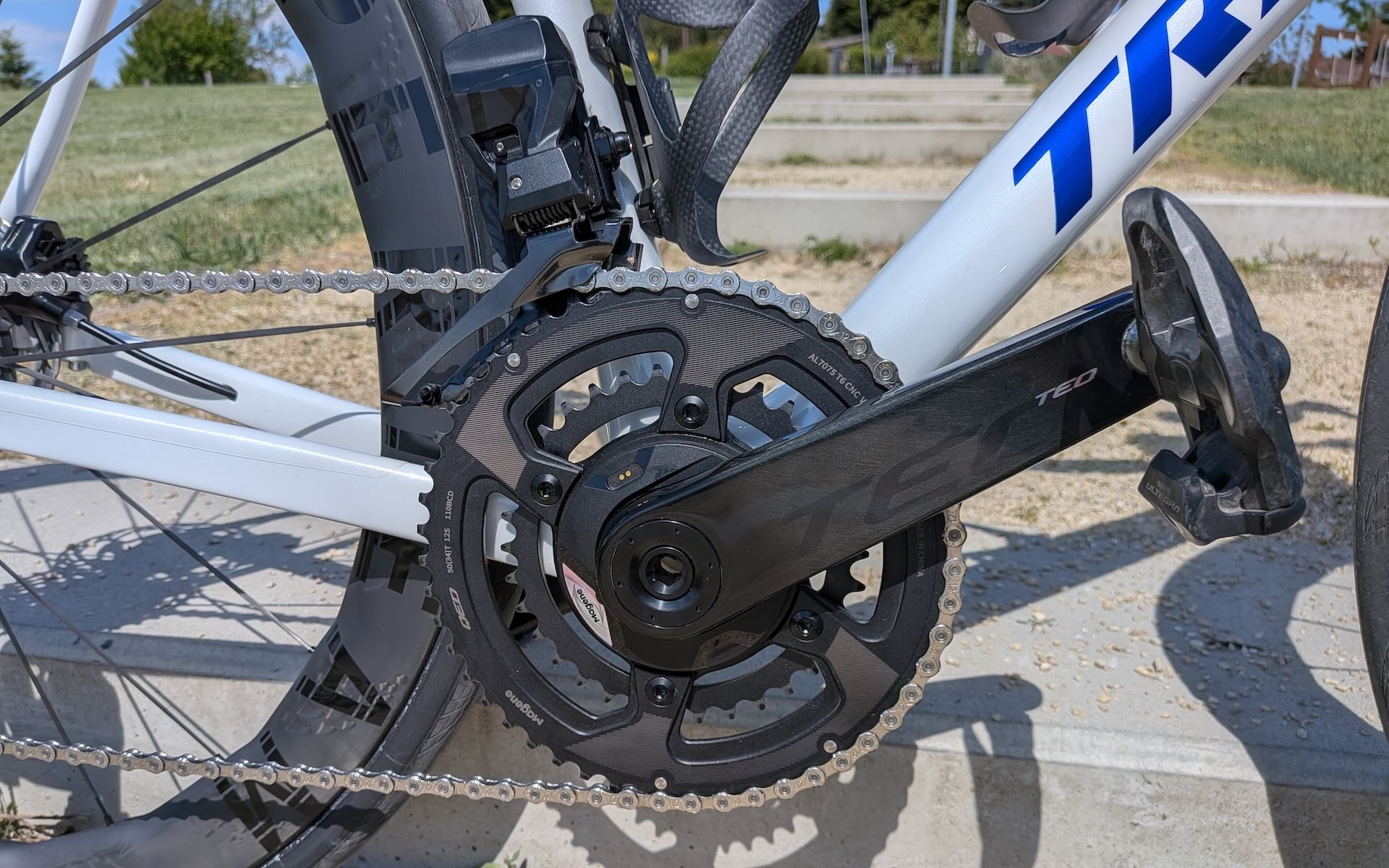
Magene is perhaps the most widely used Chinese alternative on the market, supported in part by its Shimano-compatible chainring mount. The TEO is their latest model, featuring a carbon crank, while the spindle follows the SRAM DUB standard with a 28.99 mm diameter, which is currently one of the most optimal solutions in terms of stiffness and compatibility.
The crank is available both with and without chainrings. I chose the version with chainrings, and I was very satisfied with the quality of both the crank and the rings right out of the box.
A proven component: Superteam S-All Carbon Ultra H2 wheelset
As I mentioned at the beginning, this wheelset is where the story started. I used Superteam’s flagship wheelset for 1,650 km on my previous bike. Despite being close to the manufacturer’s weight limit, the only issue so far has been a slight wobble in the front wheel.

I believe this wheelset has proven itself. The bearings are still spinning smoothly, and the freehub works perfectly. The alloy cassette body has been slightly marked by the cassette, but that was expected. Now it continues its journey on the new bike, ready for many more enjoyable kilometers together.
Accessories from China: the AliExpress section
Most of the accessories came from AliExpress. For the cassette and brake rotors, I chose ZRACE, as their products seemed the most promising to me.
I initially ordered a roughly 105-level cassette and a pair of basic rotors. Later, we agreed that they would join the project. The week after the build, the extremely lightweight ALPHA EX cassette and the rotors with alloy carriers arrived. For the first three rides, I used the components I had originally purchased.
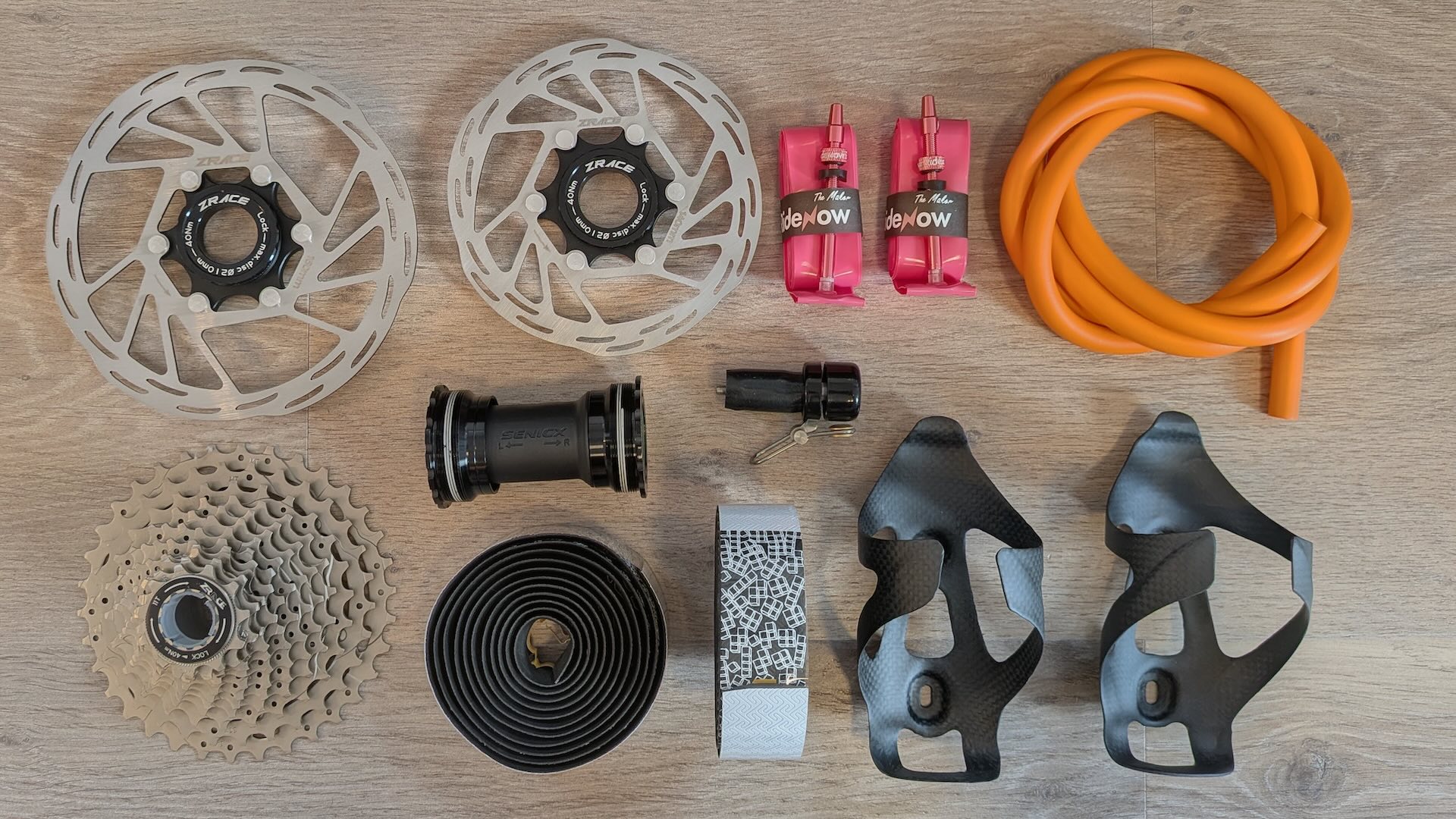
The inner tubes are, of course, TPU, and after last year’s struggles I chose RideNow’s premium models based on a colleague’s recommendation. The manufacturer was actually the first to support the project, providing several of their 36-gram Race Formula TPU tubes with metal valve stems.
Between the frameset and the Magene crankset, I installed a Senicx bottom bracket with steel bearings. For handlebar tape, I received a recommendation for Bucklos, and I also bought carbon bottle cages from Kocevlo. In addition, I picked up a small bell that can be installed as a bar-end plug, which has proven to be very useful.
Conscious exceptions: non-chinese parts
Of course, not every component comes from China, as suitable alternatives are not yet available in every category. When it comes to tyres, I’m not willing to compromise, so I stuck with my proven Continental Grand Prix 5000 in a 28 mm width on the Superteam rims.
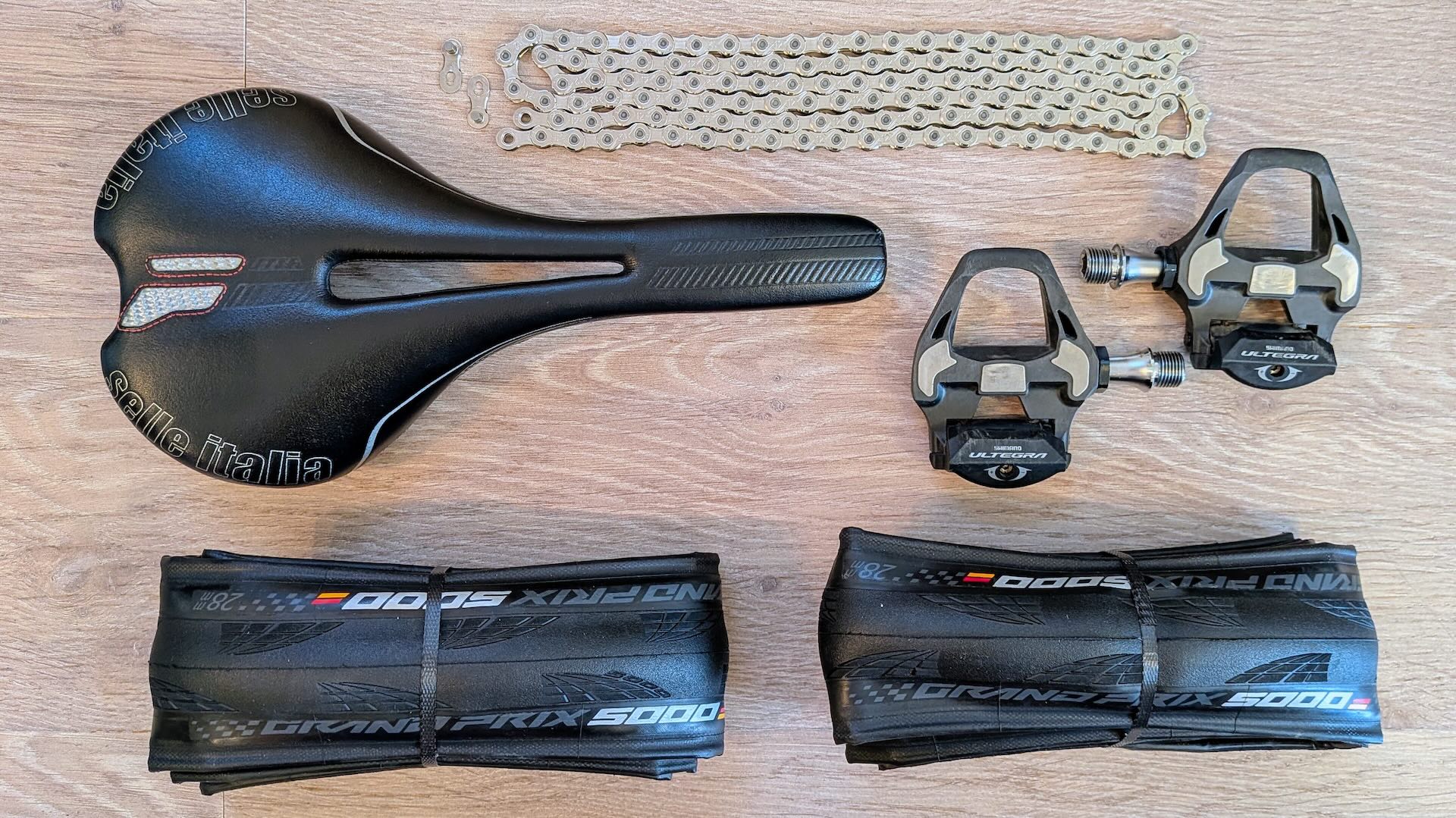
The chain is the same. There are Chinese alternatives, but based on what I’ve read, I decided to stick with the KMC X12. As for the saddle, there are good Chinese options as well, but I already have two identical Selle Italia Flite Flow saddles, and I used them on my previous two bikes too, so I stayed with it here as well.
In this category, bikes are typically delivered without pedals, so they are not considered an integral part of the build. In this regard, I am a bit specific, as my body geometry requires a longer pedal axle, meaning a wider Q-factor. For this reason, I stayed with the proven Ultegra +4 mm version.
Where does this build stand in terms of weight?
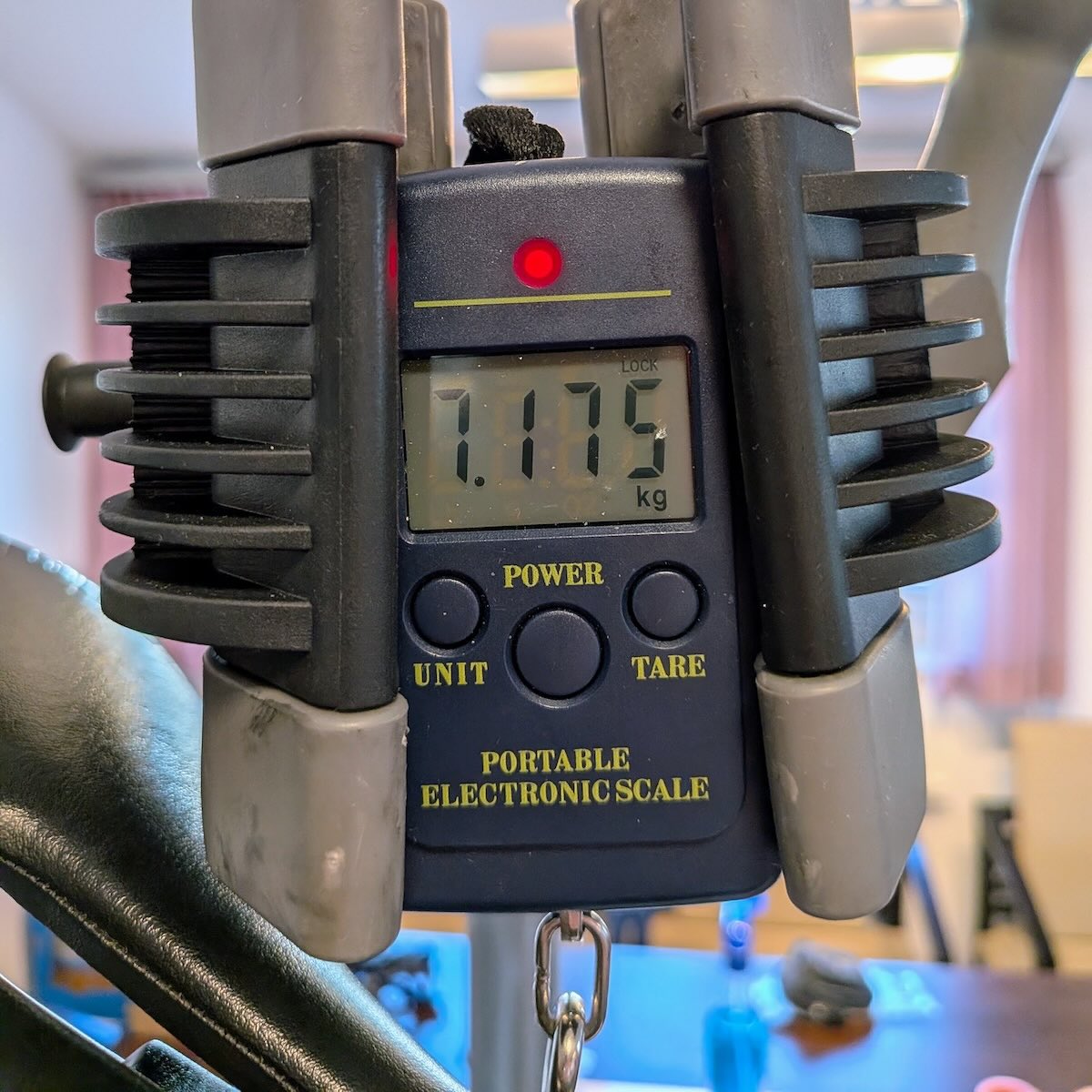
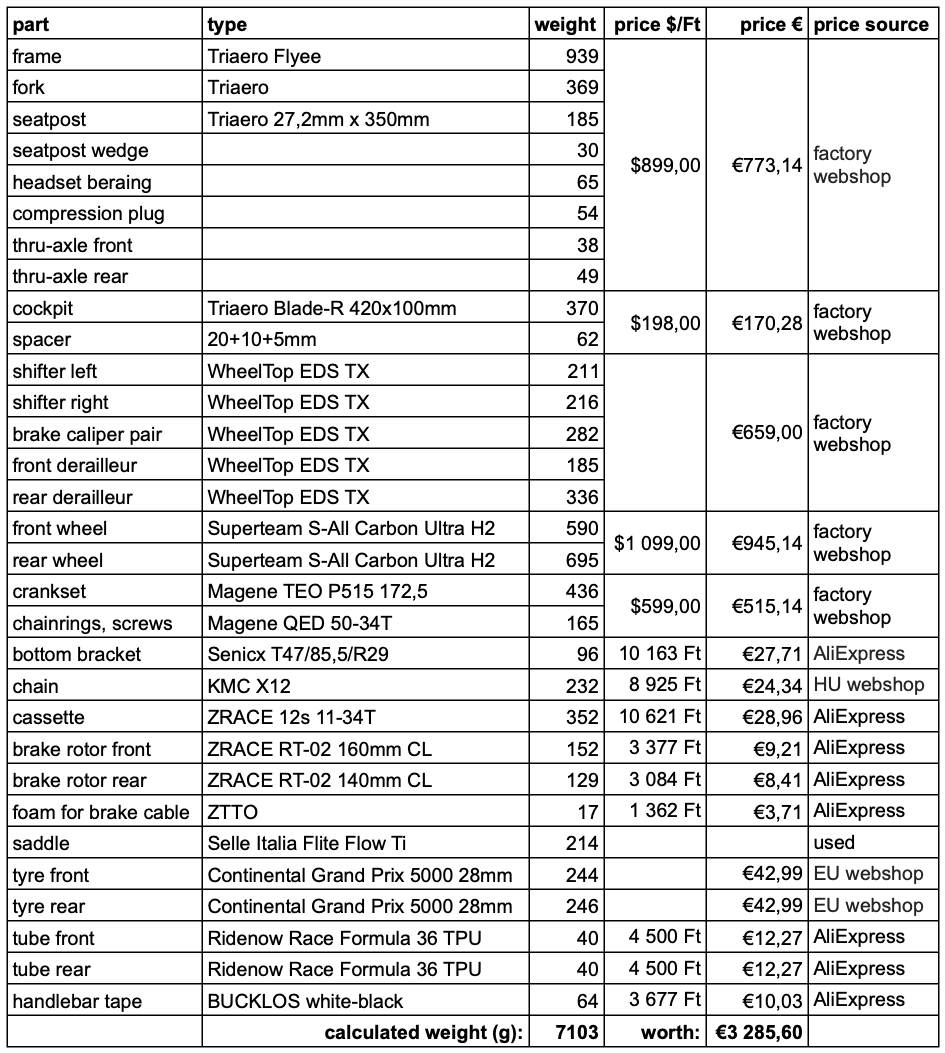
As the parts kept arriving, I became increasingly curious about the final weight of the bike. I can report that we got quite close to the 6.8 kg UCI limit. Without pedals, measured component by component, the total came to 7,103 grams, while a complete build on a hook scale showed 7,175 grams. The difference is likely due to the inaccuracy of the scales, but being under 7.2 kg is still quite impressive.
For comparison, a road bike with a similar weight from well-known Western brands typically costs around €5,000–6,000, usually equipped with an Ultegra or Force groupset.
How much does a road bike like this cost?
This is maybe the most important question, and it’s not really black and white. With my list of parts this bike worth around 3300 €, which is around 60% of the price range of those bikes I talked about earlier. This is a really big difference, but build requires parts and knowledge which can be additional cost when you don’t have it.
 But what do we actually get for our money? With a factory-built bike from a well-known Western brand, there is the prestige of the brand, a solid warranty background, and it’s also worth considering that such bikes are generally easier to sell on the second-hand market, often at a higher price, if you decide to upgrade later.
Weight Weenies, Attention!
Those who don’t consider bike weight a priority can feel free to scroll on. The rest, however, will appreciate just how much lighter (and cooler) the bike has become. Thanks to the CNC-machined steel–alloy cassette and the rotors from ZRACE, which closely resemble SRAM’s flagship models.
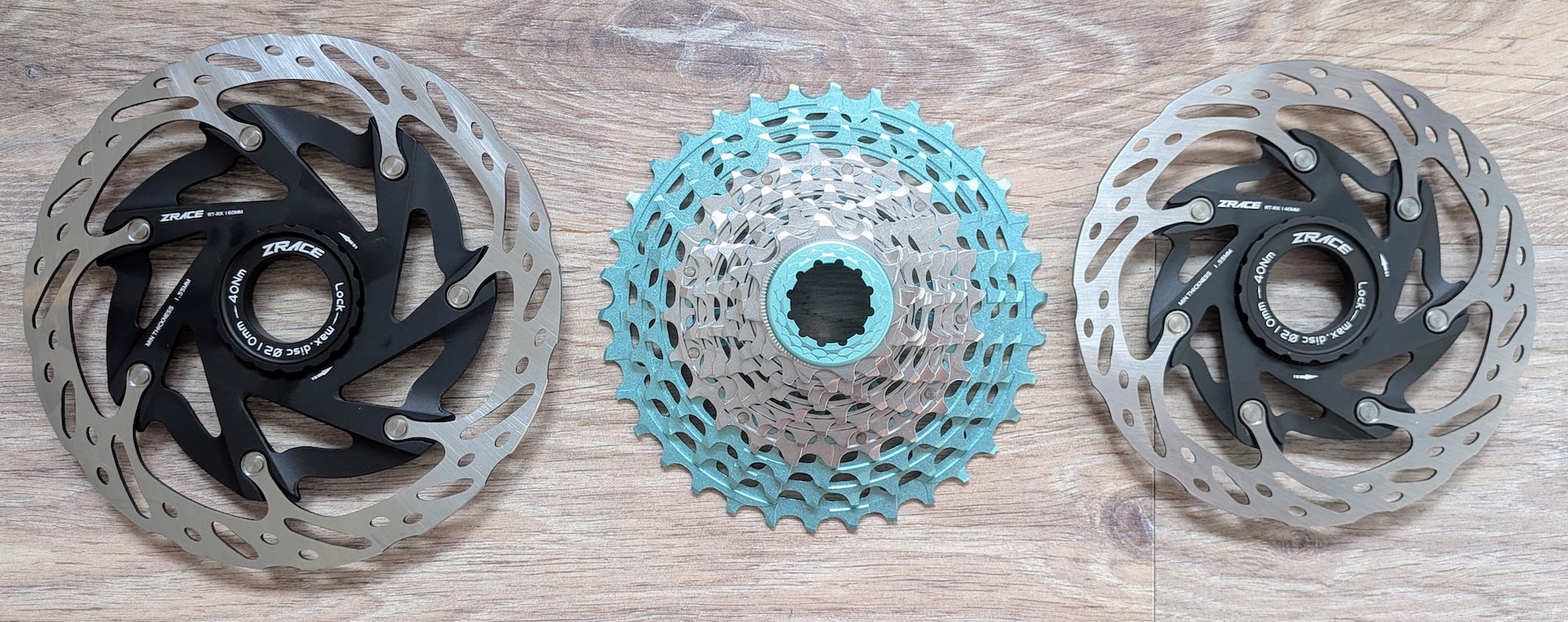
The cassette I originally bought is similar in weight to a 105-level model. The ALPHA EX, however, is surprisingly light: just 162 grams instead of 352. This is achieved by machining the smaller nine sprockets from a single piece of steel, while the largest three are made from a single piece of 7075 aluminium, with the two sections riveted together. The most surprising detail is that the interface with the freehub body is only supported at the two ends of the cassette. The sections in between are connected by a plastic spacer tube.
When it comes to rotors, weight is not the main priority. Alloy offers better heat dissipation, and its design also helps improve cooling through airflow. On top of that, I think it gives the bike a more professional look.
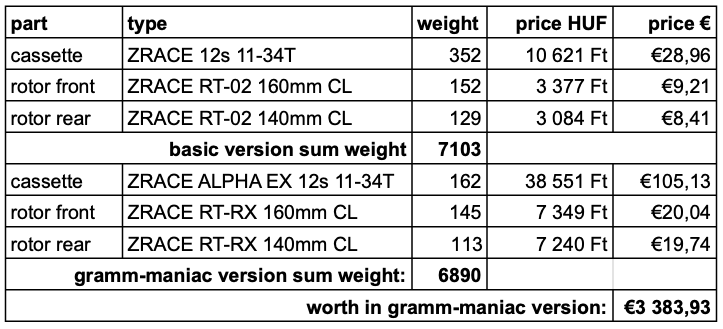
The total difference is 213 grams, which adds around €100 to the cost of the bike. In return, the calculated total weight drops to just 6,890 grams. Even when adjusted, the measured weight still comes out at around 6.96 kg, which is quite impressive.
What caused difficulties during the build?
The frameset was faced before painting, but after removing the masking, some paint edges remained around the machined surfaces. I carefully removed these with a knife. In addition, the left side of the bottom bracket thread needed some cleaning. I cleaned it using a toothpick, a toothbrush, and brake cleaner. After that, the bearing seated perfectly.
As for the WheelTop components, I initially expected the brakes to be the most problematic, but in practice, the assembly went smoothly. The fine-tuning of the derailleurs, however, was less intuitive at first, as it does not follow the logic of a mechanical system. The app is quite basic and not very user-friendly. Still, with patience, some research in forums, and a bit of AI-assisted analysis, I was able to set it up properly.
The rear derailleur is very sensitive to chain length. I ended up removing two additional links afterwards, so it’s definitely something to pay attention to. The derailleurs are also extremely sensitive to proper setup, especially the chain tension adjustment screw, as well as the front derailleur’s height and alignment. The EDS TX is clearly not a beginner-friendly system, but it can be set up properly. I’ll go into more detail in the full groupset test.
First impressions: a race machine has born
On the first city ride, I absolutely loved the bike. Then I took it out for a proper training ride, and for the first 15 km I really hated it. I had to stop several times to adjust the front derailleur. It was rubbing, and even small issues like that really annoy me.
After about an hour, I started to like the bike. I began to feel just how fast it is — a real race machine! The handling is excellent, it doesn’t tolerate nervous inputs at the handlebar. It’s also much more stable in crosswinds than my Van Rysel NCR CF, which I find quite slow in corners.
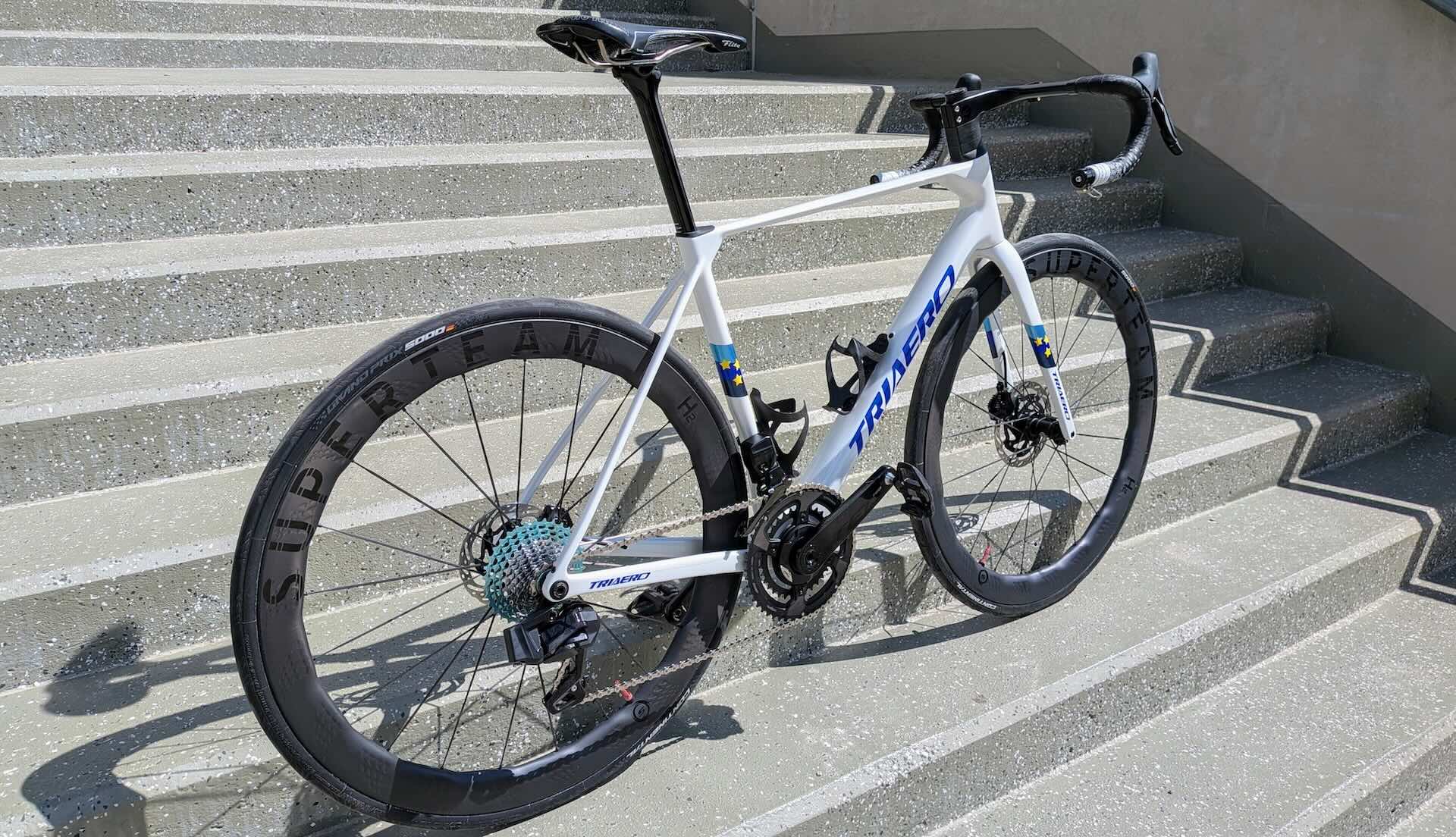
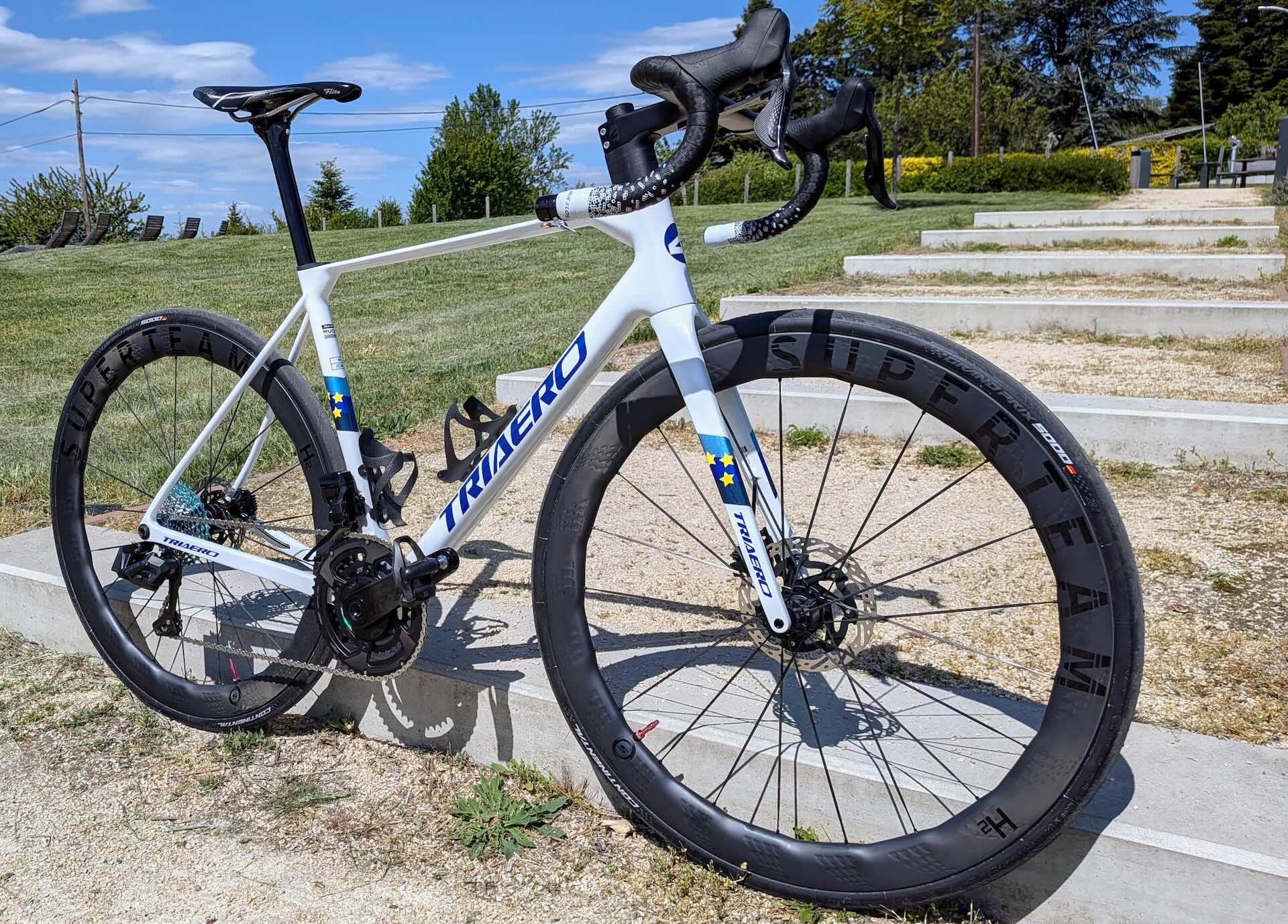
On the first ride, the bike immediately showed how well it handles corners. I was a bit concerned about the 420 mm handlebar, as it’s only 400 mm wide at the tops, but it turned out not to be an issue at all. The flare in the drops, however, adds a lot of stability when cornering at speed downhill.
Of course, it’s not all positive. You really have to grow into the bike — on the first ride I kept searching for the right hand position on the bars and put too much weight on them, which made my palms go numb. On the second ride, however, I was more conscious and started to engage my core, which made a big difference.
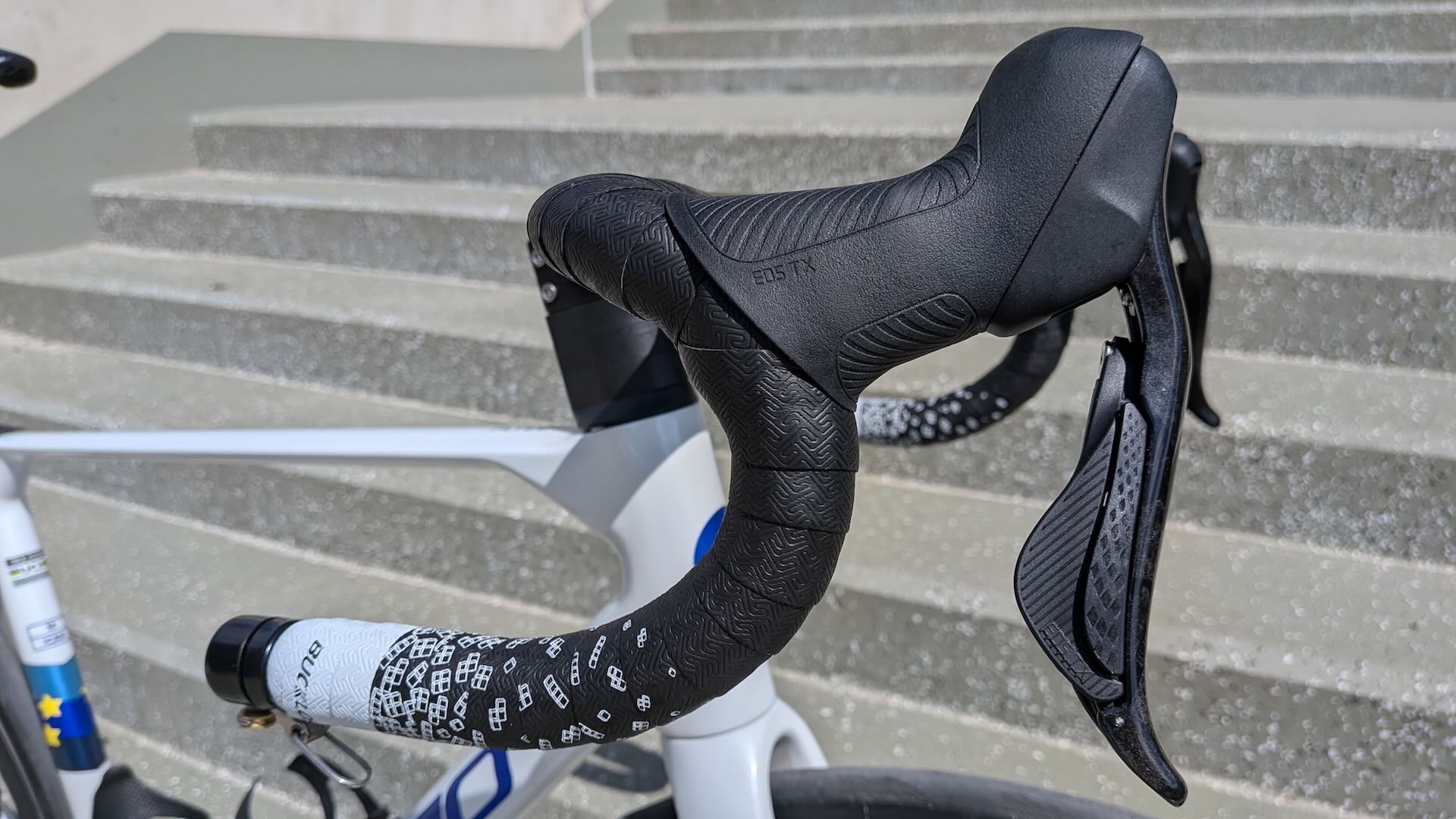
To be on the safe side, we left the steerer tube 10 mm longer and I’ve already prepared an extra spacer. The current setup is already at the highest handlebar position in the stock configuration. If I can’t adapt to it, I’ll add the extra spacer. If possible, though, I’d prefer to stick with this position.
Verdict
I already love the frameset, no need to overstate it. The cockpit is impressive as well, and I think I’ll grow to like it. The Magene power meter crank is also excellent — in my opinion, it’s the most premium-feeling Chinese component on the bike.
I’m still struggling with the WheelTop drivetrain — at this point it feels like I’ll either get used to it or give up on it. Unfortunately, some issues showed up quite early. If I can’t fix them, I’ll have to switch to a Shimano system. I actually want to use the bike.
It’s worth following the project, as the detailed tests will be coming one by one. There will be separate articles on the frameset, the cockpit, the power meter crank, and the drivetrain and braking system. I’ll also report on the longer-term experience.
Links
Parts used on the bike:
ICAN Triaero Flyee frameset
ICAN Triaero Blade-R cockpit
Superteam S-All Carbon Ultra H2 wheelset
WheelTop EDS TX groupset
Magene TEO P515 powermeter crankset
SenicX T47 bottom bracket
ZRace 12s 11-34T cassette
ZRace ALPHA EX 12s 11-34T CNC ultralight cassette
ZRace RT-02 centerlock rotors
ZRace RT-RX centerlock rotors
RideNow Race Formula 36 TPU inner tubes
Bucklos handlebar tape
ZTTO foam tube for cables
Kocevlo carbon bottle cage
More articles from this project:
Superteam S-All Carbon Ultra H2 review: Premium Chinese Carbon Wheelset
A New Challenger in Electronic Shifting: Inside the WheelTop EDS Platform and TX Road groupset
ICAN Triaero Flyee test – How performs a $899 chinese carbon road frameset?
ICAN Triaero Blade-R integrated cockpit test – The missing link of the Flyee frameset
WheelTop EDS TX review – A Competitive Chinese Road Groupset?

